



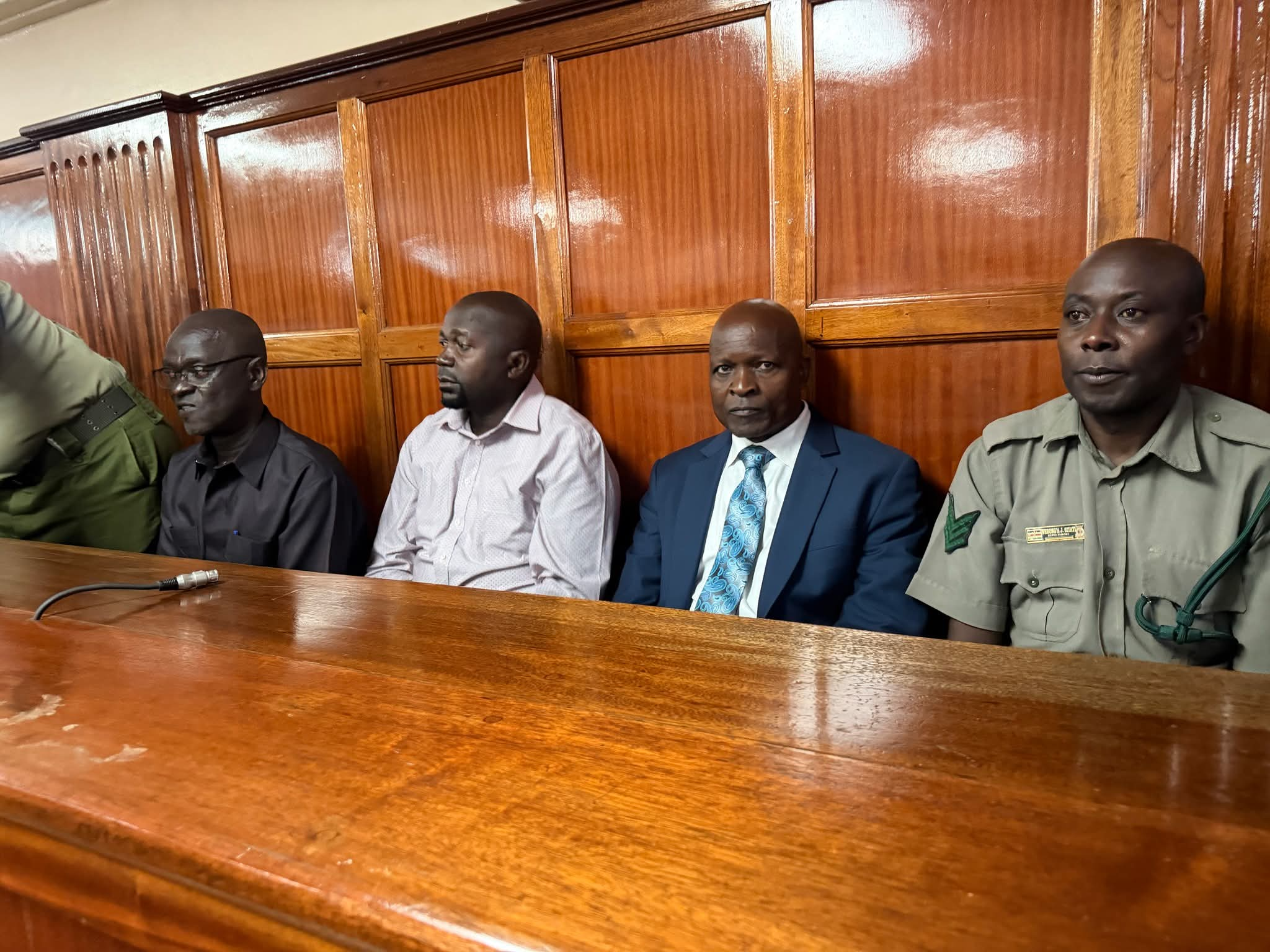
Former Migori Governor Zacharia Okoth Obado has been sentenced to 25 years in prison for the murder of university student Sharon Belyne Otieno, bringing a major milestone in one of Kenya’s most closely watched murder cases.
The High Court also sentenced Obado’s former personal assistant, Michael Juma Oyamo, to 25 years’ imprisonment, while former Migori County clerk Caspal Ojwang’ Obiero was handed an 18-year jail term.
The sentences were secured by the Office of the Director of Public Prosecutions (ODPP) following the trio’s conviction over Sharon’s murder.
Sharon, a 26-year-old university student who was seven months pregnant at the time, was killed between September 3 and 4, 2018, in the Owade area of Rachuonyo Sub-County, Homa Bay County.
Court Establishes Individual Roles In Murder
In her ruling, Lady Justice Cecilia Githua found that Obado and his two co-accused acted jointly with other individuals who were not before the court in executing a common criminal plan that resulted in Sharon’s death.
The judge established that each of the three played a distinct role in the events leading to the murder.
Obado was found to have provided the motive, instigation and financial resources that facilitated the killing.
Oyamo, his former personal assistant, was found to have coordinated the execution of the plan, while Obiero provided logistical support and helped conceal the crime.
The court further dismissed the significance of Obado’s absence from Migori at the time of the murder, explaining that criminal responsibility under the doctrine of common intention extends to individuals who participate in a joint criminal enterprise, even when they are not physically present at the scene.
In her judgment, Justice Githua stated that the evidence demonstrated that the accused persons acted in concert with others, each undertaking a specific responsibility in furtherance of the criminal enterprise.
Court Established Obado Was Father Of Unborn Child
The case also established that Obado was the biological father of Sharon’s unborn child.
Sharon’s pregnancy and her relationship with the former governor formed part of the circumstances examined during the prosecution of the murder case.
The killing attracted national attention because of the circumstances surrounding Sharon’s death, the identities of those accused and the lengthy court proceedings that followed.
Prosecution Presented 42 Witnesses
The prosecution built its case through testimony from 42 witnesses and the production of 81 exhibits, which formed part of the evidence considered by the court.
The three were convicted on July 23, 2026, after Justice Githua found that the prosecution had proved the murder charge beyond reasonable doubt.
They subsequently remained in custody as the court considered submissions on sentencing.
In arriving at the sentences, the court considered mitigation presented by the convicts, probation reports and victim impact statements.
The judge also considered submissions from Sharon’s family, who had sought compensation over the loss and the financial burden associated with the case.
However, the court declined to award compensation, citing insufficient evidence to establish the claim.
A Case That Gripped Kenya
Sharon’s murder became one of Kenya’s most prominent criminal cases, attracting widespread public attention and raising serious questions about the circumstances surrounding her death.
The sentencing marks another major chapter in the nearly eight-year legal battle over the killing.
The prosecution team comprised Catherine Mwaniki, Gikui Gichuhi, Betsy Gikonyo and Allan Mulama.
For Sharon’s family, the sentences bring a significant development in their long pursuit of justice following the loss of their daughter.
