


As national politics slowly reorganise ahead of the 2027 General Election, one truth is becoming increasingly clear: Ukambani is no longer a one-man political estate.
For decades, Kalonzo Musyoka has been the undisputed political face of the region — kingpin, negotiator, and perennial coalition dealmaker. But as alliances shift and new actors calculate their leverage, a quieter, more deliberate force is taking shape beneath the surface.

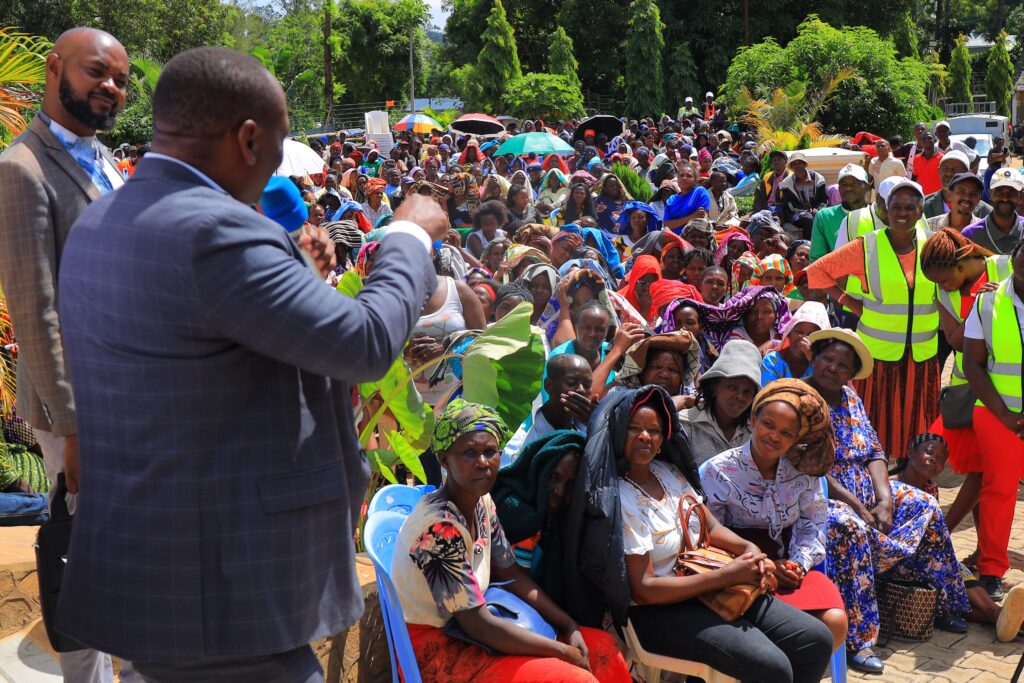
That force is Dr. Augustus Kyalo Muli and his National Liberal Party (NLP). Unlike the loud, headline-grabbing party launches common in Kenyan politics, NLP’s expansion in. Ukambani has been methodical and understated. Grassroots recruitment, local meetings, and targeted mobilisation have allowed the party to embed itself slowly — particularly in parts of Kitui County.
So much so that, in some constituencies, NLP and Wiper are now mentioned almost interchangeably in political conversations — an unthinkable scenario even two years ago.
Unverified but persistent reports circulating within regional political networks suggest that NLP may have mobilised close to 400,000 members in Ukambani alone. Whether the exact figure holds or not, the political signal is unmistakable: NLP is no longer fringe.
The Clan Card in a Region That Understands Numbers
What separates Augustus Muli from many regional party leaders is not just party growth — it is identity arithmetic.
Muli is the patron of the Anzauni clan, one of the largest and most organised clans in Ukambani, estimated to have around 400,000 members. In a region where clan cohesion still influences turnout and political loyalty, this is not a footnote — it is a foundation.
If Muli is able to effectively convert both clan allegiance and party membership into votes, he could realistically command between 500,000 and 800,000 votes in a national election.
That figure changes everything.
Challenger, Spoiler — or Strategic Broker?
This is where the political question sharpens.
Is Augustus Muli positioning himself as a direct challenger to Kalonzo Musyoka’s dominance in Ukambani? Or is he deliberately crafting the role of a spoiler — one who fractures the vote just enough to force negotiations?
Either way, the outcome is the same: Kalonzo’s traditional bargaining power weakens.For decades, Kalonzo’s strength at coalition talks has rested on a simple claim — that he delivers Ukambani as a bloc. The moment that bloc fractures, even partially, the price of his support drops.
Why National Coalitions Are Paying Attention
In modern Kenyan politics, half a million votes is not noise — it is leverage. A politician who can credibly promise 500,000 to 800,000 votes does not need to shout. They are automatically invited to the table. That table could include negotiations for a running mate slot, or at the very least, a senior, vote-bearing cabinet position in a future government.
And crucially, such leverage does not require winning the presidency — only strategic positioning at the right moment.
The Ukambani Equation Is Changing
Whether Augustus Kyalo Muli ultimately runs, aligns, or bargains, one thing is already clear: Ukambani’s political landscape is shifting.
The era of automatic, unquestioned loyalty to a single kingpin is fading. In its place is a more fluid, numbers-driven politics where emerging actors quietly accumulate bargaining chips long before the cards are shown.
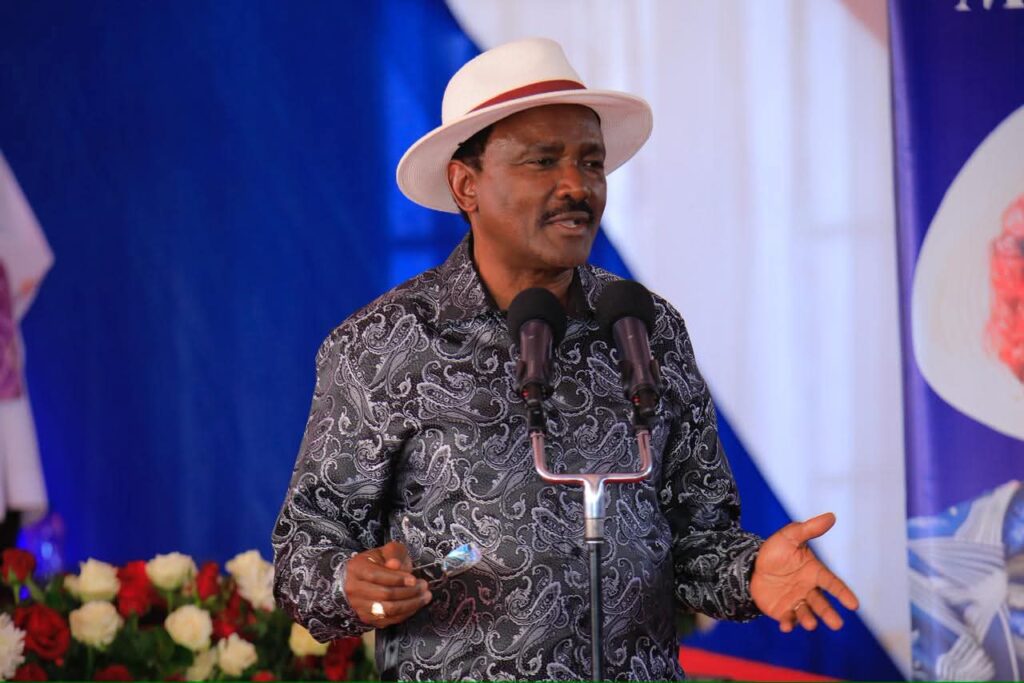
By 2027, the real question may no longer be whether Kalonzo is on the ballot — but how many votes he actually controls.
And in that new equation, Augustus Muli is no longer a footnote.
