


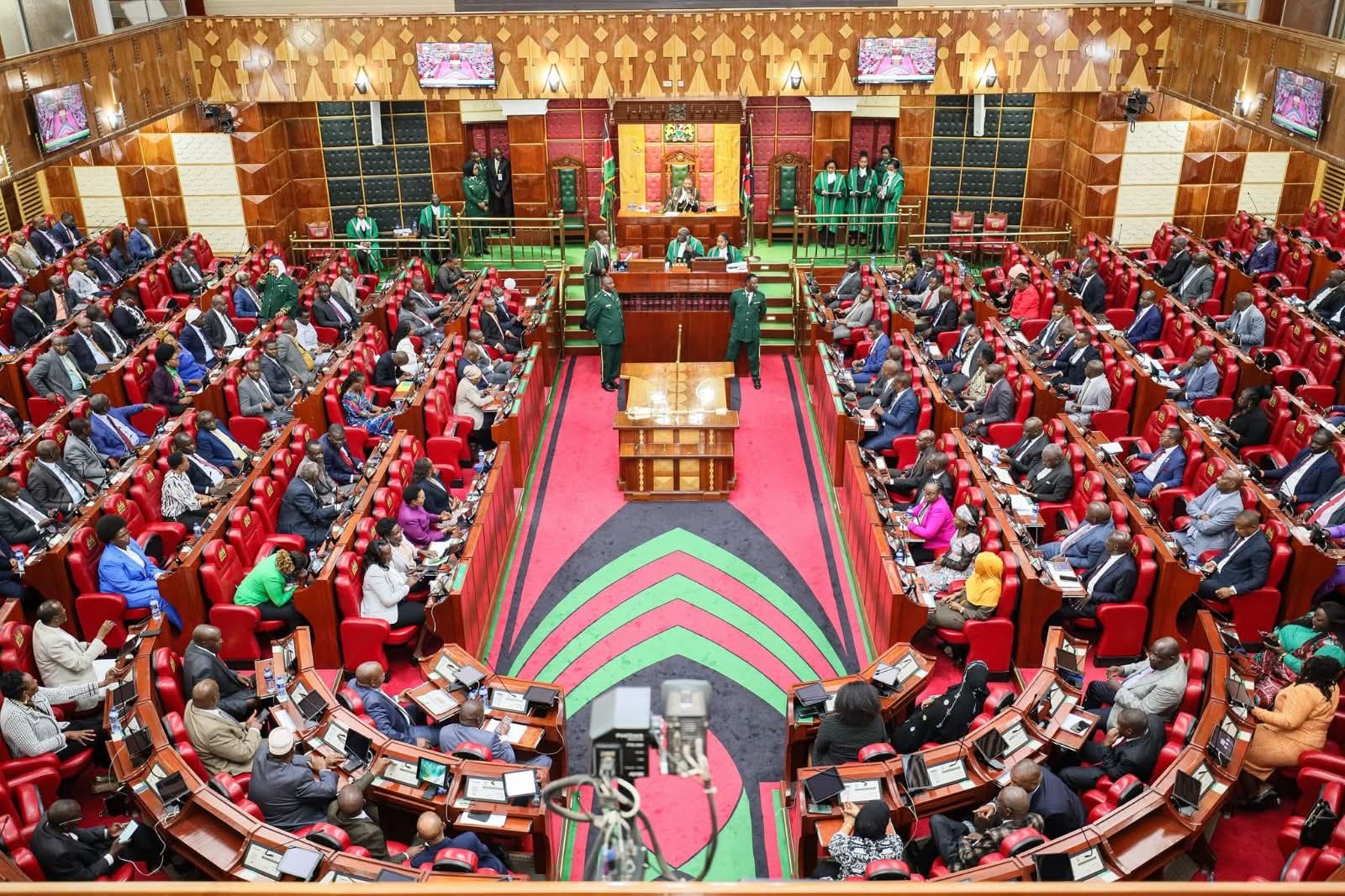
The National Assembly adjourned its Wednesday sitting prematurely following a quorum hitch, just hours into a tense day marked by nationwide anti-Finance Bill protests under the #June25th2025 banner.
The abandoned sitting stalled debate on six critical motions and four bills that were scheduled for discussion and possible passage. Lawmakers were notably absent from the chamber, with sources indicating fears over possible unrest near Parliament precincts as protests escalated in the capital.

This development comes exactly one year since protesters dramatically stormed Parliament in 2024 during similar anti-Finance Bill demonstrations—a moment that has since become symbolic in Kenya’s civil resistance calendar.

As protests swelled in several parts of the country, including Matuu in Yatta Sub-county, demonstrators lit bonfires and barricaded sections of the Garissa–Thika Highway to honor those who died during last year’s unrest. The protests brought transport operations to a standstill and stretched emergency response teams to the limit.

In Nairobi’s Central Business District, Kenya Red Cross teams were deployed early, offering first aid and emergency evacuation. The agency confirmed that three people had been admitted to Kenyatta National Hospital with injuries sustained during the demonstrations. Red Cross urged protestors to call their toll-free emergency line 1199 in case of distress.

In a stunning twist, the government through the Communications Authority of Kenya (CA) reportedly issued a directive ordering all local television and radio stations to suspend live coverage of the protests. The move sparked immediate outrage among press freedom advocates, with concerns raised over the state’s increasing control of information during public unrest.
The media blackout was condemned by multiple civil society organizations and independent journalists, who accused the state of attempting to suppress citizen voices and deny the public access to real-time information.
As tensions remain high and streets still smolder in protest zones, today’s events have not only disrupted legislative business but also raised serious questions about transparency, press freedom, and democratic space in Kenya.
