



The National Liberal Party’s (NLP) fourth-place finish in the Ol Kalou parliamentary by-election may not have delivered a parliamentary seat, but it offers a glimpse into the party’s longer-term strategy of transforming itself from a regional outfit into a national political force ahead of the 2027 General Election.
According to official results released by the Independent Electoral and Boundaries Commission (IEBC), NLP candidate Stephen Wanyoike Waithaka finished fourth behind the Democracy for the Citizens Party (DCP), the United Democratic Alliance (UDA) and Jubilee.

For an emerging political party, however, the significance of the contest extends beyond the final tally. By fielding a candidate in a constituency within the Mount Kenya region, NLP demonstrated its intention to compete for support outside its traditional base in Ukambani and establish a presence in one of Kenya’s most influential voting blocs.
The party has in recent months accelerated its national expansion drive, saying it has registered hundreds of thousands of members and established more than 40 branches across the country. The Ol Kalou contest therefore served as an opportunity to introduce the party’s agenda to new voters, strengthen grassroots structures and identify areas for future growth.
While DCP’s Sammy Douglas Kamau Waweru won the seat convincingly with 35,440 votes, followed by UDA’s Samuel Muchina Nyagah with 5,450 votes and Jubilee’s Wilson Mwaniki Kigwa with 198 votes, NLP leaders are likely to view the by-election through a different lens: one of building long-term political infrastructure rather than measuring success solely by immediate electoral victories.
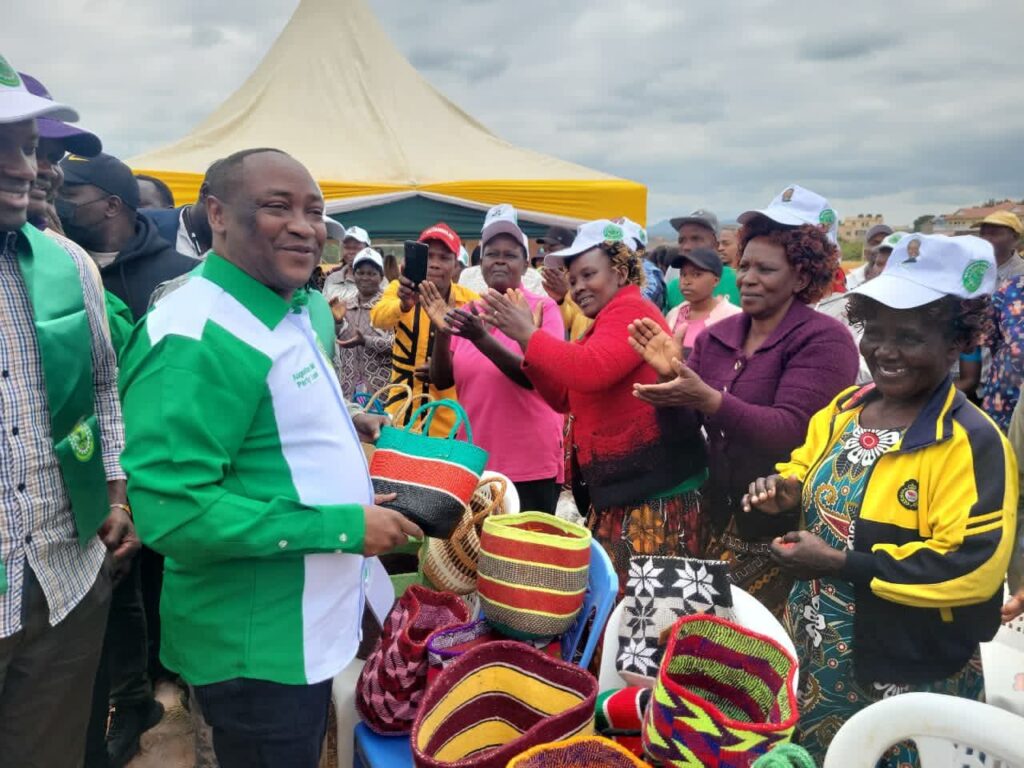
For newer political parties, by-elections often serve as testing grounds for party structures, candidate visibility and voter engagement. The experience gained in Ol Kalou could inform NLP’s strategy as it prepares to field more candidates across the country in the 2027 General Election.
Whether the party can translate its reported membership growth and expanding branch network into electoral success remains to be seen. However, its decision to contest in Mount Kenya signals an ambition to move beyond its regional roots and position itself as a national political player in Kenya’s evolving political landscape.
