


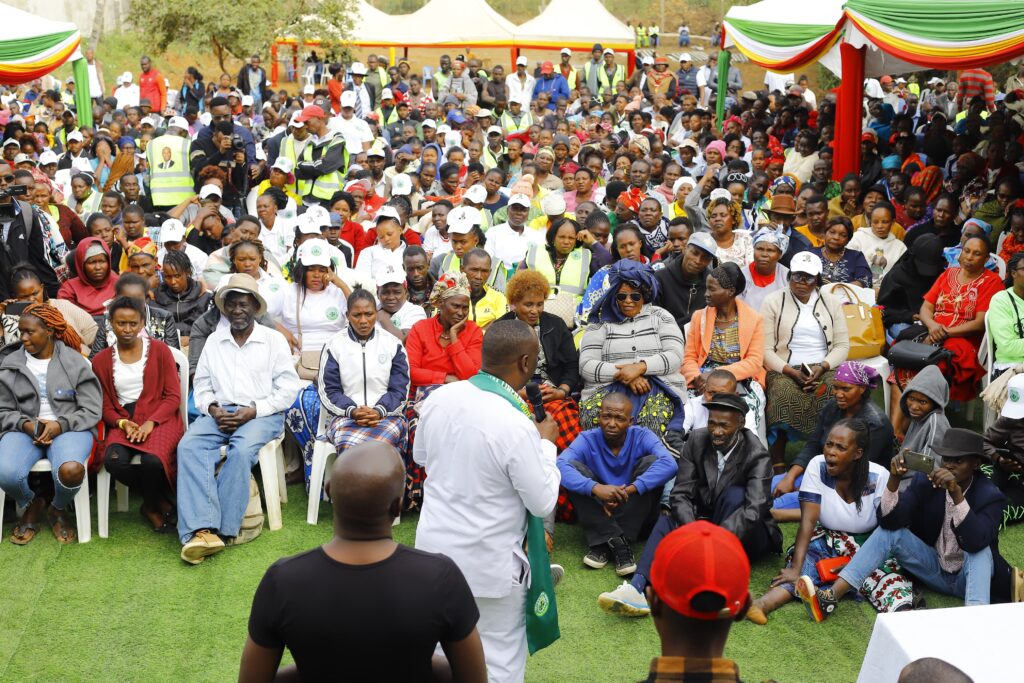
A political groundswell is reshaping Ukambani, with the National Liberal Party (NLP) under the leadership of Dr. Augustus Kyalo Muli emerging as a formidable third force. In just three months, NLP has registered over 130,000 members in Kitui County alone, opened party offices in all 40 wards, and sent a strong message to established parties that grassroots politics is once again defining Kenya’s political direction.

As rumours of a Wiper–UDA merger continue to gain momentum, NLP is capitalizing on the shifting ground and public frustration to expand its reach. The party now targets 200,000 registered members in Kitui and 400,000 across the Ukambani region by June 2026. Such numbers would position NLP not just as a protest outfit, but as a serious contender for elective seats at every level—from MCAs to governors.

The party’s growing confidence was on full display during the National Delegates Convention at Woods Hotel in Kitui, where more than 5,000 delegates from all 47 counties gathered and unanimously endorsed Dr. Muli as the official Party Leader. The move formalized his leadership and signaled NLP’s intention to contest the 2027 elections with a national face and a locally rooted structure.
NLP has relied on deliberate, consistent community engagement rather than top-down theatrics. It has mobilized through SACCOs, youth networks, boda boda associations, religious leaders, and clan structures—particularly the Anzauni Ndene clan, where Dr. Muli serves as National Patron. These organic networks have enabled the party to connect with voters in their daily lives, not just during campaign seasons.

Dr. Naomi Muthama, a political commentator says the impact is clear.
“What makes NLP different is not the leader’s name, it’s the method. They are working from the grassroots upward, not the top down. That’s why the old guard is nervous. These aren’t just rallies; they are neighborhood meetings and household registrations.”
Prof. Dominic Mutua from Embu University adds that NLP’s rise mirrors moments in Kenya’s political history where change was sparked from the periphery.
“This is how political waves begin. A party starts small, speaks to everyday needs, listens more than it talks. If NLP keeps this up, it won’t just win MCA seats—it could redefine the Ukambani political identity itself.”
Dr. Muli’s meetings with both President William Ruto and Raila Odinga last year boosted his national profile, but NLP has remained non-aligned—framing itself as an independent, people-first alternative outside the polarizing Kenya Kwanza and Azimio blocs.
Nearly 20 defectors from UDA, Jubilee, and Wiper have joined NLP in recent months, bringing with them valuable grassroots experience. The party now operates over 30 branches countrywide, including in Nairobi, Nakuru, Kiambu, Kakamega, Meru, and Kilifi—making it one of the most structurally prepared mid-tier parties heading into the next election.
NLP plans to field candidates in all 40 county assembly wards in Kitui, and expand its reach across Makueni, Machakos, and select urban constituencies. The response on the ground—from youth to elders—has been described as overwhelmingly positive, fueled by frustration with stagnation and a hunger for leadership grounded in the people’s lived realities.
Unless established parties recalibrate and reconnect with their bases, NLP is on track to trigger the most significant political realignment Ukambani has seen in decades. With 130,000 members signed up in just three months, what began as a whisper is now a movement with structure, strategy, and surging support.
