


Dr. Augustus Kyalo Muli, the National Liberal Party (NLP) leader, is steadily emerging as a central figure in Kenya’s shifting political landscape, positioning himself as a key voice for smaller political parties long overshadowed by dominant coalitions.
His recent nomination to represent small parties in the Independent Electoral and Boundaries Commission (IEBC) selection panel has not only elevated his national profile but also sparked a broader conversation about inclusivity, representation, and the balance of political power ahead of the 2027 General Election.

What initially appeared to be a routine nomination has since evolved into a high-stakes contest, drawing legal challenges and political resistance that underscore the growing influence of smaller parties in shaping Kenya’s democratic processes. At the heart of the dispute is a fundamental question: who gets to influence the composition of the body that will oversee the next election?
For years, Kenya’s political space has been largely dominated by major formations, often leaving smaller parties with minimal say despite their growing grassroots presence. However, Muli’s rise signals a potential shift—one where these parties are no longer content with symbolic participation but are now actively seeking a seat at the decision-making table.

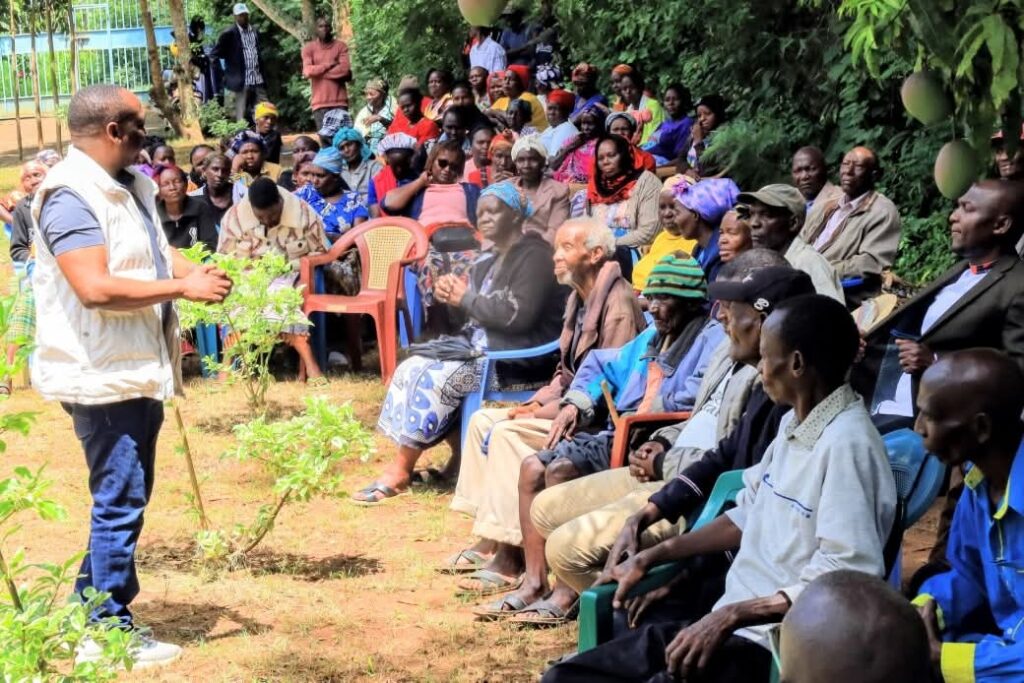
Back home in Kitui County, Muli’s growing stature has ignited political excitement among local residents and leaders. A section of his supporters has been urging him to contest the Kitui Central parliamentary seat in 2027, citing his expanding influence and reform-driven agenda. Others, however, are pushing for an even bigger leap—calling on him to enter the gubernatorial race and reshape the county’s leadership.
Despite the mounting pressure, Muli has consistently maintained that his immediate focus is not elective politics, but the strengthening of the National Liberal Party into a formidable political vehicle. He has emphasized the need to build a party that is ideologically grounded, nationally competitive, and capable of outlasting individual political cycles.
This long-term vision is further reflected in NLP’s growing international outlook. The party has recently taken steps to align itself with global liberal movements, including efforts to join international liberal networks—a move that signals an intention to anchor its policies on democratic values, governance reforms, and inclusive economic development.
Political observers note that such positioning could give NLP a unique identity in Kenya’s crowded political space, distinguishing it from personality-driven parties and aligning it with global standards of party organization and ideology.

In the Lower Eastern region, Muli’s influence continues to expand, with his message resonating among voters who feel sidelined by traditional political kingpins. His approach—anchored on institutional reform, inclusivity, and structured party growth—has begun to carve out a distinct path that challenges the status quo.
While legal hurdles and political opposition continue to shape the trajectory of his IEBC-related battle, Muli’s growing visibility points to a larger reality: the era of small parties being passive players may be coming to an end.
As Kenya inches closer to the next electoral cycle, figures like Dr. Augustus Muli could prove pivotal—not necessarily as headline presidential contenders, but as strategic actors capable of influencing alliances, policy direction, and ultimately, the credibility of the electoral process itself.

Whether he eventually bows to local pressure to vie for office or stays the course in building a national political movement, one thing is increasingly clear—Dr. Muli is no longer operating on the periphery of Kenyan politics.
He is steadily moving toward its center, carrying with him the ambitions of a new class of political players determined to be heard.
