


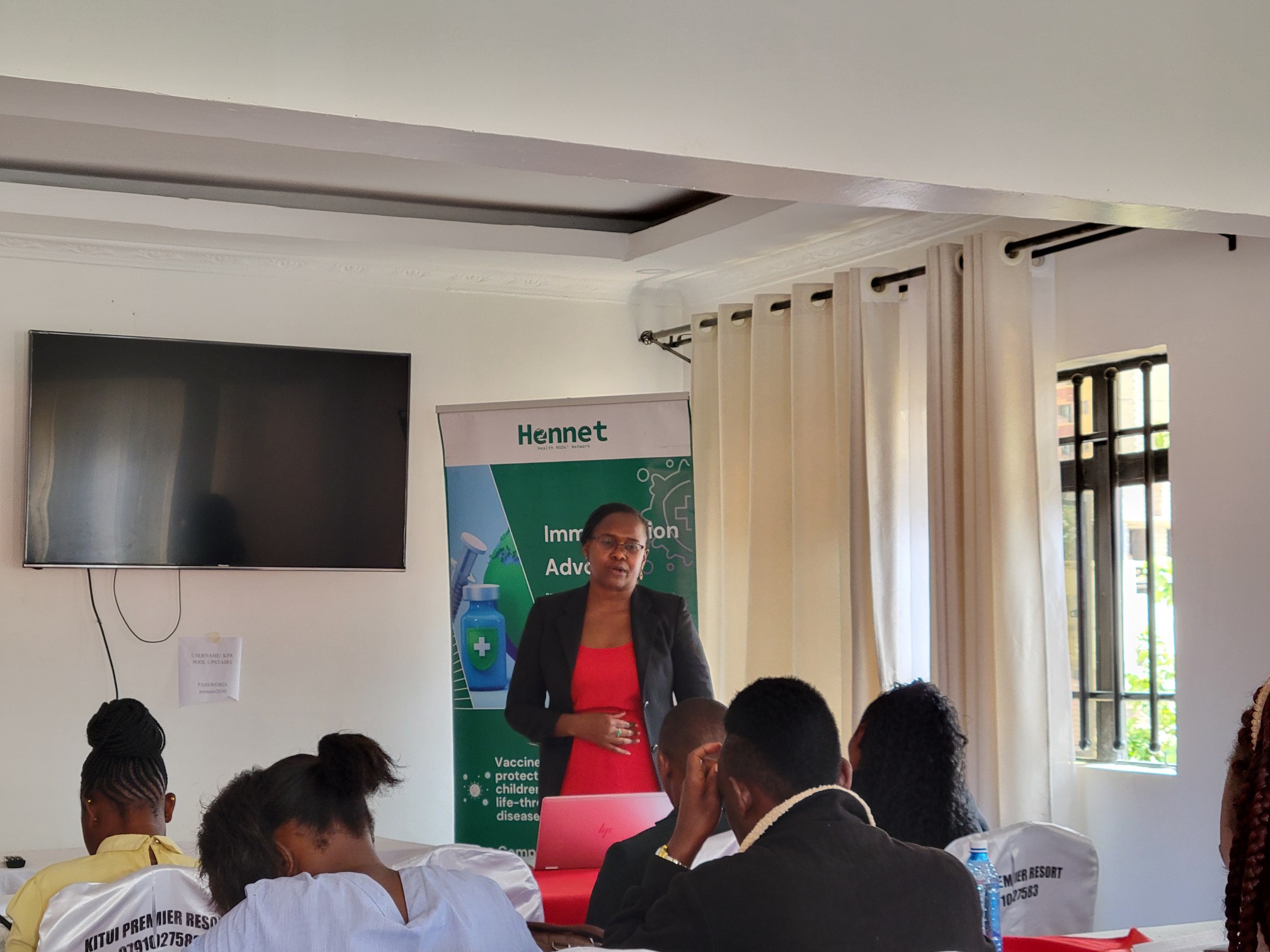
The Health NGOs Network (HENNET) is increasingly emerging as a powerful force in Kenya’s health sector, using advocacy to influence policy, mobilize resources, and expand access to essential services across the country.
Through sustained engagement with policymakers and close collaboration with communities, HENNET has played a key role in shaping national health decisions, including the recent release of Ksh 2.3 billion by the government to address last year’s vaccine stock-out crisis.
Speaking during a media conference organized through the Kitui Connect Youth Group, Ms. Lucia Waambua, HENNET’s Finance and Administration Manager, said the network’s strength lies in its ability to connect grassroots realities with national policy action. “Our advocacy is grounded in community experiences. When vaccines were not available, we documented the gaps directly from the ground and used that evidence to push for urgent government intervention,” she said.
HENNET’s approach combines evidence-based advocacy, budget engagement, and strong community linkages, ensuring that health policies are informed by real-time data and lived experiences. This model has enabled the network to not only influence funding decisions but also highlight systemic challenges in service delivery.
Despite progress, the network warns that accessibility remains a major concern, particularly in Level 2 health facilities, where immunization services have not been fully operational. HENNET is now shifting its advocacy focus toward ensuring that vaccines reach the lowest levels of care and that no facility is left behind.
At the community level, HENNET has also been championing inclusive healthcare policies, including the recognition of street families as indigents, a move that would allow them to access treatment and immunization services free of charge. This reflects the network’s broader commitment to ensuring that vulnerable and marginalized populations are not excluded from national health programs.
In addition, HENNET is actively engaging the national government in establishing a parliamentary caucus on immunization financing, as Kenya prepares for its transition from Gavi support by 2029. The transition, which is expected to inject approximately Ksh 12 billion into immunization programs through a cost-sharing model with UNICEF and the government, requires strong oversight and sustainable planning.
However, HENNET has raised concerns over the lack of a clear transition framework, warning that Kenya risks facing disruptions similar to those experienced when external partners such as USAID scaled down support.
The network is pushing for early planning, stronger accountability mechanisms, and sustained domestic financing to safeguard immunization gains.
Led by Executive Director Dr. Margaret Lubaale, HENNET continues to coordinate over 120 member organizations across all 47 counties, structured into eight regional blocks, ensuring that advocacy efforts are informed by grassroots realities while influencing national policy.
“Civil society plays a critical role in bridging the gap between policy and communities,” said Dr. Lubaale. “Through advocacy, we ensure that health systems respond to real needs and that every Kenyan, regardless of their situation, can access essential services.”
As the country works to strengthen its health systems, HENNET’s advocacy-driven model is proving vital in shaping policy, securing resources, and ensuring equitable access to vaccines and healthcare services for all.
