


Energy and Petroleum Cabinet Secretary Opiyo Wandayi on Monday told Parliament he was unaware of a controversial consignment of contaminated fuel, as he faced tough questions from lawmakers amid a deepening fuel crisis marked by shortages and growing public concern.
Appearing before the National Assembly’s Departmental Committee on Energy, Wandayi came under pressure to explain persistent “no fuel” notices at petrol stations, long queues across the country, and concerns over the integrity of the fuel importation process.
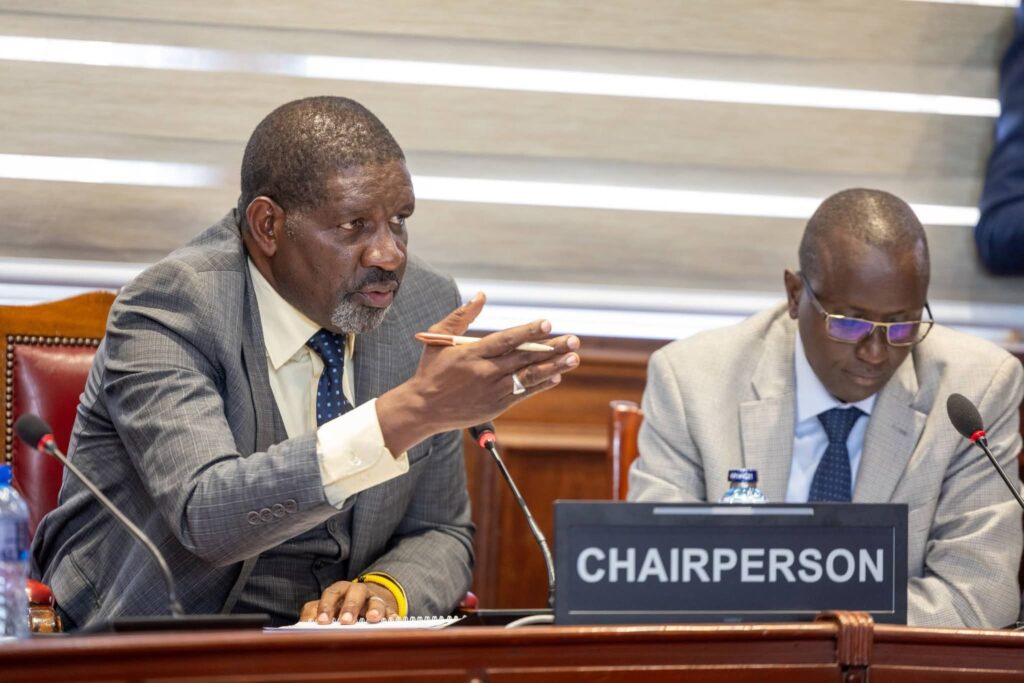
The session, chaired by Nakuru Town East MP David Gikaria, focused on fuel procurement under the Government-to-Government (G-to-G) framework, with legislators raising concerns about transparency, accountability and quality control.
At the centre of the probe is a consignment linked to One Petroleum, which was found to contain elevated levels of manganese, sulphur and benzene beyond limits set by the Kenya Bureau of Standards (KEBS).
Committee Vice Chair and Narok East MP Lemaken Aramat demanded clarity on whether the country suffered any financial loss and who should be held responsible.

“Tell us whether the country incurred losses and who should bear the cost,” Aramat said.
In his response, Wandayi distanced himself from the shipment, saying it was not part of the G-to-G arrangement and did not have his approval.
“I was not aware of what was happening regarding that consignment,” he told the committee.
However, the CS maintained that he was the first to raise the alarm over the matter, revealing that he escalated the issue to the highest level of government.
“I am the one who raised the alarm on this issue and briefed the Head of State on March 30,” Wandayi said.

He added that the contaminated consignment was excluded from the monthly pump price computation, noting that its inclusion would have pushed fuel prices up by about Sh14 per litre.
Even as the Ministry reported that the country holds over 183,000 cubic metres of petrol and 132,000 cubic metres of diesel, MPs questioned the accuracy of the figures, pointing to the situation on the ground.
Embakasi South MP Julius Mawathe said the data does not reflect the reality facing Kenyans.
“You can give assurances here, but the reality is that people are struggling to access fuel,” he said.
Wandayi attributed the shortages to panic buying and hoarding by some fuel retailers anticipating price increases.

He told the committee that the Energy and Petroleum Regulatory Authority (EPRA) had issued 25 show-cause letters to firms suspected of non-compliance, signaling a crackdown on errant players within the supply chain.

Garissa Woman Representative Amina Udgoon called for greater transparency in the fuel procurement and pricing framework, warning that any gaps in oversight could have wide economic implications.
“Fuel is the backbone of our economy. Any opacity in its procurement and pricing is unacceptable,” she said.
Committee Chair David Gikaria said the committee would review the submissions and consider conducting an inspection of Kenya Pipeline Company (KPC) facilities to verify fuel stock levels.
The developments place the Energy Ministry under increased scrutiny as it seeks to restore public confidence in the country’s fuel supply amid rising concern over availability, pricing and quality.
m
