


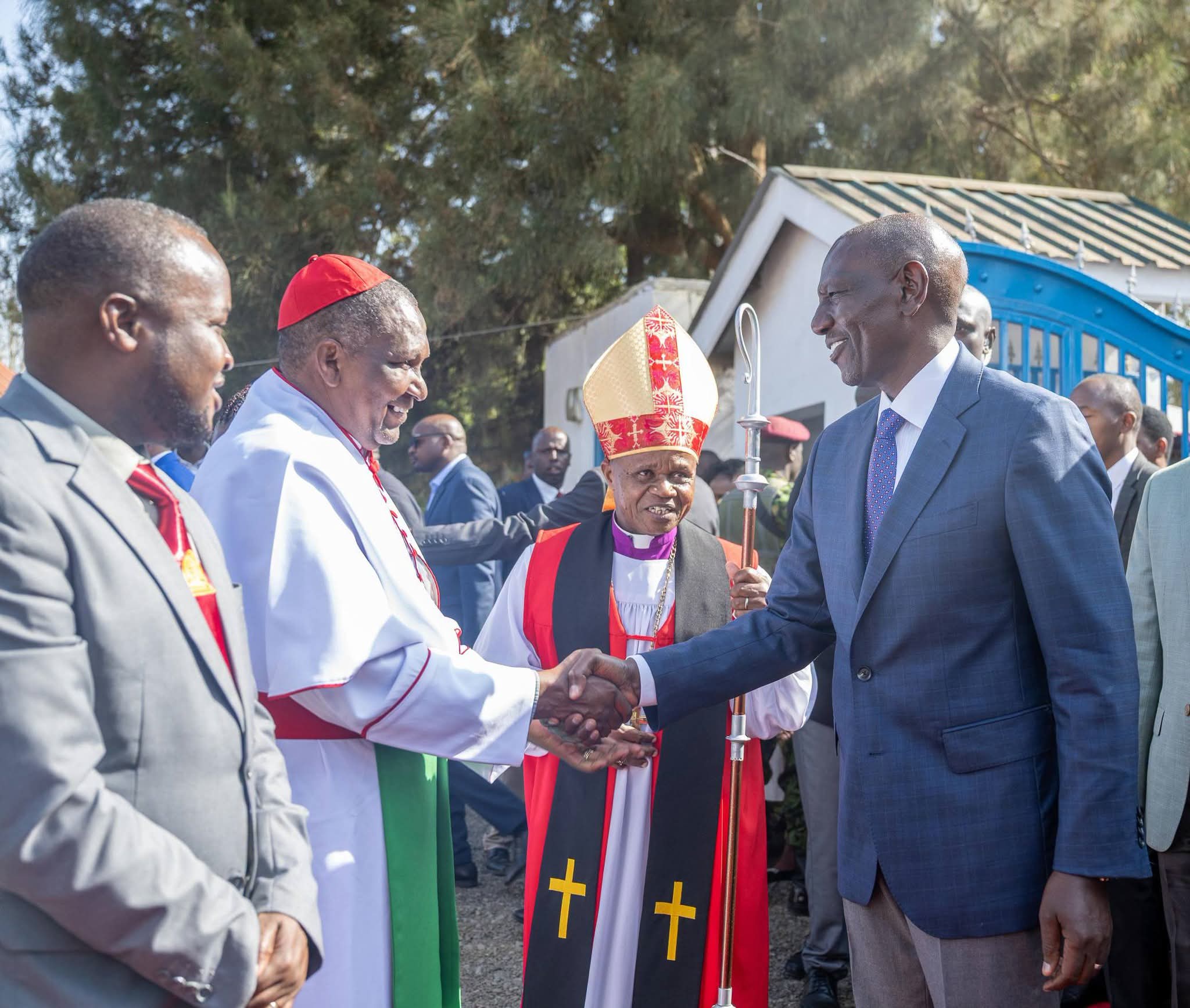
President William Ruto’s recent engagements with churches across Ukambani are increasingly drawing political attention, with analysts questioning whether the Head of State is quietly using faith-based institutions to expand his influence in a region that has for decades remained firmly behind Wiper leader Kalonzo Musyoka.
In less than a month, the Kenya Kwanza administration has intensified its interactions with church leaders in Machakos, Kitui and across the wider Lower Eastern region, signalling what appears to be a carefully coordinated outreach to one of the country’s most politically significant voting blocs.
The latest developments have come at a time when Kalonzo Musyoka has repeatedly declared that he will personally contest the presidency in 2027 instead of backing another opposition candidate, setting the stage for a direct battle for the Kamba vote.
The Church Outreach Begins
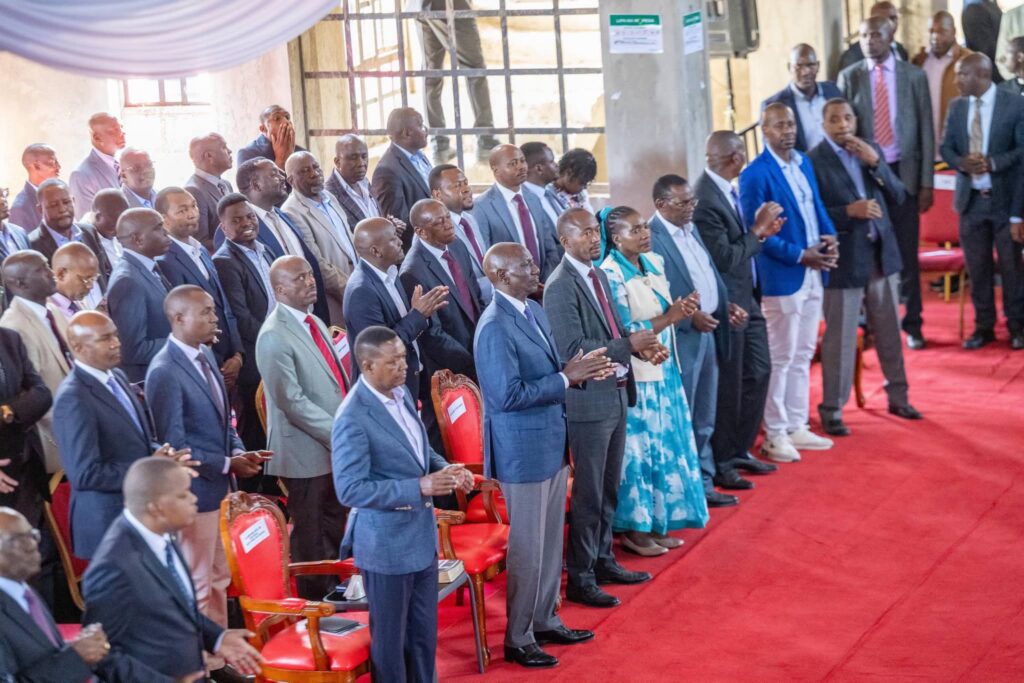
President Ruto’s renewed engagement with the region’s churches became more visible during his visit to Machakos, where he attended a church service and reaffirmed his administration’s commitment to working closely with faith-based organisations as partners in development and national unity. The visit was widely viewed as part of a broader effort to strengthen ties with religious leaders in Ukambani.
July 12: The High-Profile Kitui Visit
The outreach gained further momentum on July 12, when President Ruto attended a Sunday service and fundraiser at ACK St. Martin’s Cathedral in Kitui Town.
During the event, the President donated his contribution towards church projects and used the occasion to assure residents that his government would not discriminate against any region based on how it voted.
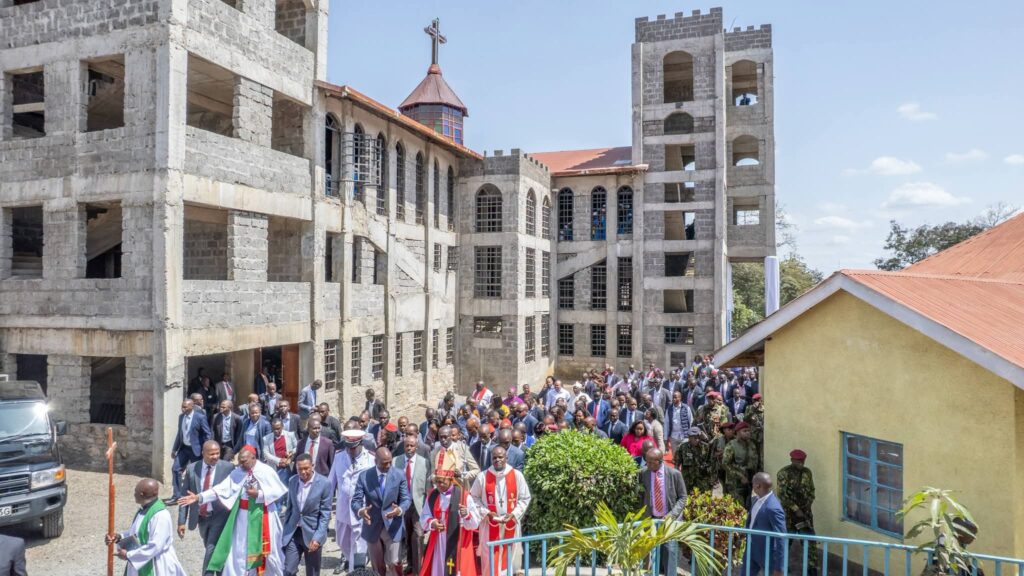
He urged leaders to abandon politics of exclusion and ethnicity, insisting that every Kenyan deserves an equal share of development because all citizens contribute taxes. He also appealed for unity, saying division had slowed the country’s progress.
The donation, among the largest by the President to a church in the region, underscored his administration’s growing engagement with religious institutions in Ukambani.
The Outreach Continues
Just weeks after the Kitui visit, the government’s engagement with church leadership continued.
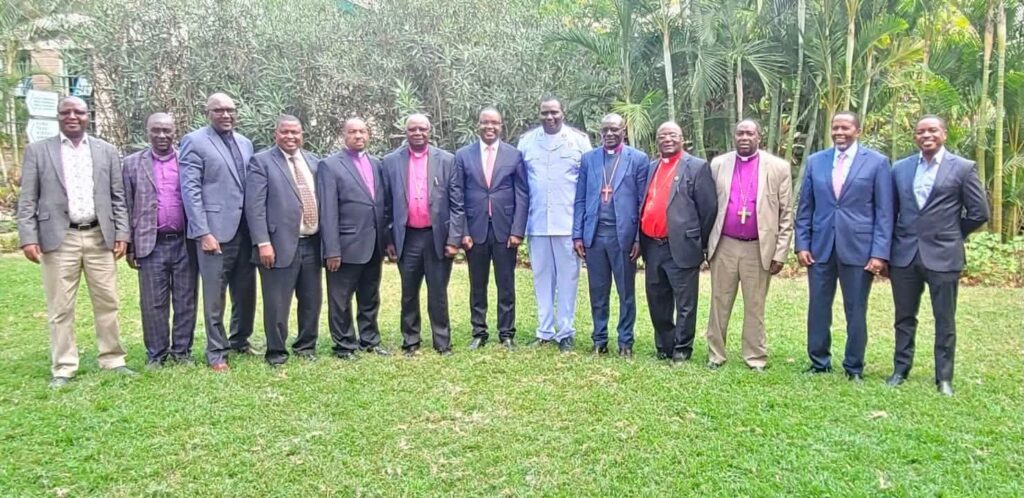
On Monday, Professor Emmanuel Mutisya, who chairs the Presidential Technical Advisory Group, led a consultative meeting with the Ukambani Church Leaders Alliance, chaired by Archbishop Timothy Ndambuki.
The meeting focused on leadership, governance, civic education, community empowerment and socio-economic transformation.
Participants agreed to establish structured partnerships between professionals and churches, with plans to hold forums bringing together clergy, youth, women, National Government Administration Officers, village managers and professionals across Ukambani.
According to the advisory team, the church remains the most trusted institution within many communities and possesses unmatched grassroots networks capable of promoting civic education, responsible citizenship and ethical leadership.
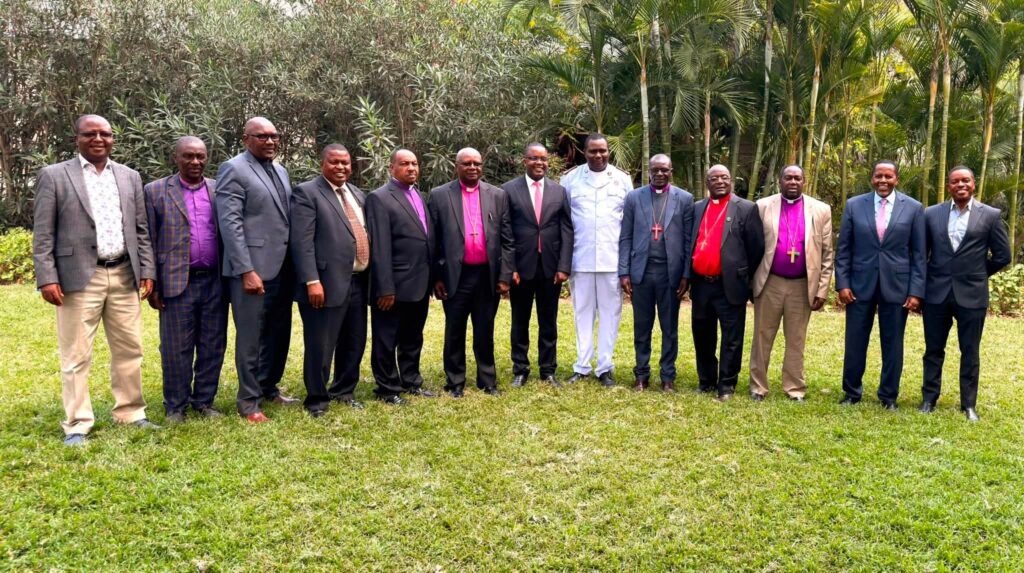
The meeting was attended by Archbishop Timothy Ndambuki alongside Bishops Patrick Munuve, Francis Matui, Charles Kababu, Jackson Muema, Joshua Kimuyu, Meshack Mukwilu, Major Leonard Kasyoka and Bishop Kiema Musyoka.
Another Government Team Meets Bishops
Almost simultaneously, Livestock Development Principal Secretary Jonathan Mueke also hosted the House of Bishops, led by Chairman Bishop Charles Kimolo.
Their discussions similarly centred on strengthening collaboration between government and faith-based organisations in promoting patriotism, civic education and national development.
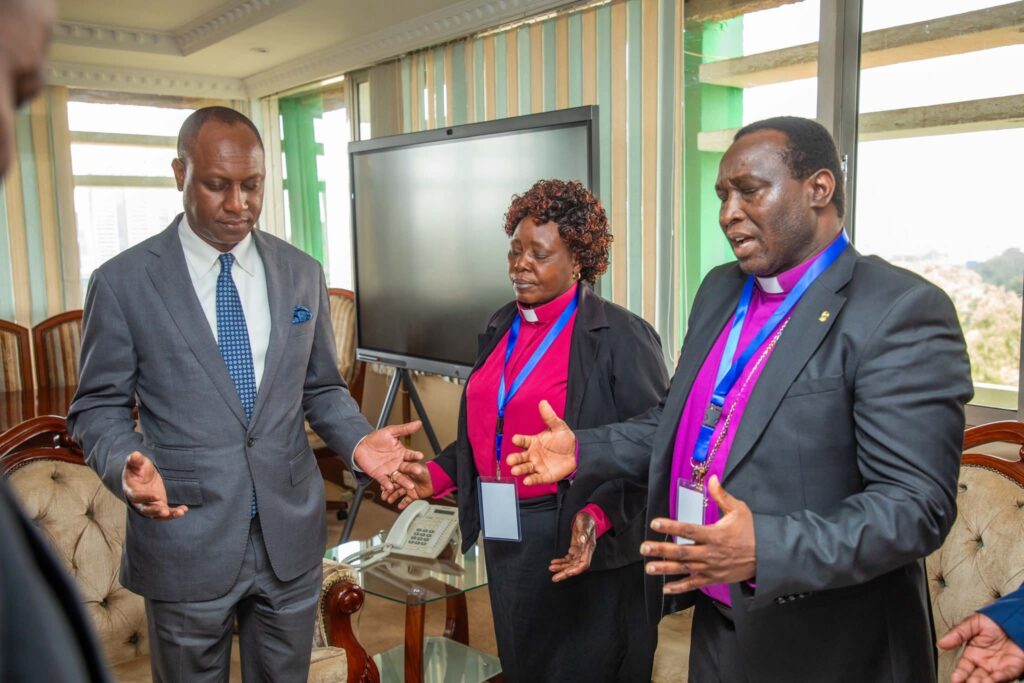
Mueke described churches as critical partners in building an informed and patriotic citizenry capable of supporting Kenya’s long-term development agenda.
Why the Church Matters in Ukambani Politics
For decades, churches have remained among the most influential institutions in Ukambani.
Beyond spiritual guidance, clergy command significant respect within communities and regularly shape public opinion on governance, leadership, morality and social issues.
Unlike political rallies that often attract supporters from one side of the political divide, churches bring together thousands of congregants from diverse backgrounds every week, making them one of the most effective platforms for community engagement.
Political observers say that any presidential candidate seeking to improve performance in Ukambani cannot ignore the influence of faith-based institutions.
Ruto’s Political Challenge
Despite appointing several leaders from Ukambani to senior government positions and increasing development visits to the region, President Ruto still faces a significant political hurdle.
In the 2022 General Election, the three Lower Eastern counties—Kitui, Machakos and Makueni—voted overwhelmingly for the Azimio coalition under Raila Odinga, backed by Kalonzo Musyoka, leaving Ruto with only a relatively small share of the presidential vote across the region.
Now, with Kalonzo expected to appear on the presidential ballot himself in 2027 rather than support another candidate, Kenya Kwanza faces an even steeper challenge in penetrating what has long been regarded as the Wiper leader’s political stronghold.
Whether the government’s sustained engagement with church leaders is purely part of its development agenda or also serves as a long-term political strategy remains open to interpretation.
What is clear, however, is that the church has become an increasingly prominent platform in the Kenya Kwanza administration’s engagement with Ukambani as political realignments ahead of the 2027 General Election begin to take shape.
