



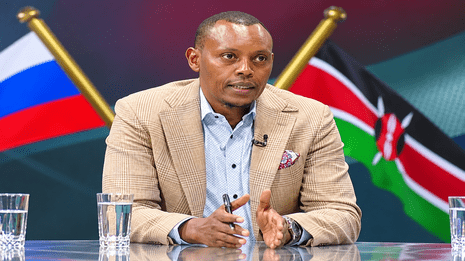
Belgut Member of Parliament Nelson Koech found himself on the defensive after being challenged to explain President William Ruto’s decision to attend the Russia-Africa Summit in Moscow, years after the Head of State questioned the wisdom of African leaders travelling to meet one foreign leader.
Koech, a vocal defender of the President and Chairperson of the National Assembly’s Departmental Committee on Defence, Intelligence and Foreign Relations, faced difficult questions during a live interview on Citizen TV’s Daybreak on Monday, November 2, 2026, as the discussion turned to Ruto’s apparent change of position on African leaders attending international summits hosted by individual countries.
The confrontation brought renewed attention to remarks Ruto made in 2023, when he criticised the practice of African presidents travelling in large numbers to meet leaders of powerful foreign nations, arguing that the continent risked compromising its dignity and bargaining power.
📊 Channel 15 News Opinion Poll
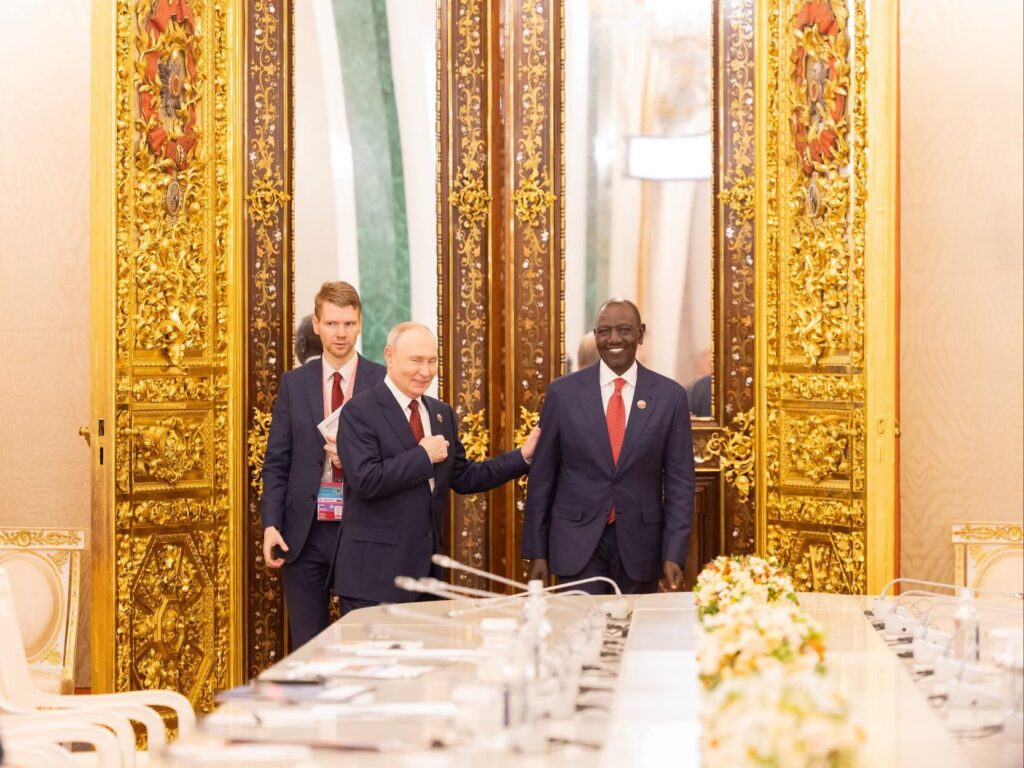
The President had questioned why African leaders should assemble to meet one foreign head of state instead of engaging collectively through continental institutions.
His remarks included criticism of the Russia-Africa summit format, which he viewed as an example of African leaders having to travel abroad to meet one powerful individual.
However, three years later, Ruto is in Moscow attending the Third Russia-Africa Summit, putting his earlier position under renewed scrutiny.
It was this apparent contradiction that Koech was asked to explain.
“The President said that it is not intelligent for African heads of state to be going to meet one gentleman. What has changed three years later?” the interviewer posed.
But instead of directly addressing the apparent shift in the President’s position, Koech sought to steer the discussion towards what he considered more important issues.
“Today the conversation is different. We should be talking about much more than that kind of discussion. Let’s get into a more serious discussion,” Koech responded.
The response did little to settle the question, with the journalist pressing him on accountability.
“You don’t like questions of accountability,” the interviewer remarked.
“There is no accountability there,” Koech responded.
The exchange placed the Belgut legislator in an uncomfortable position as he sought to defend a diplomatic engagement that appears to contrast with the President’s earlier public criticism of similar gatherings.
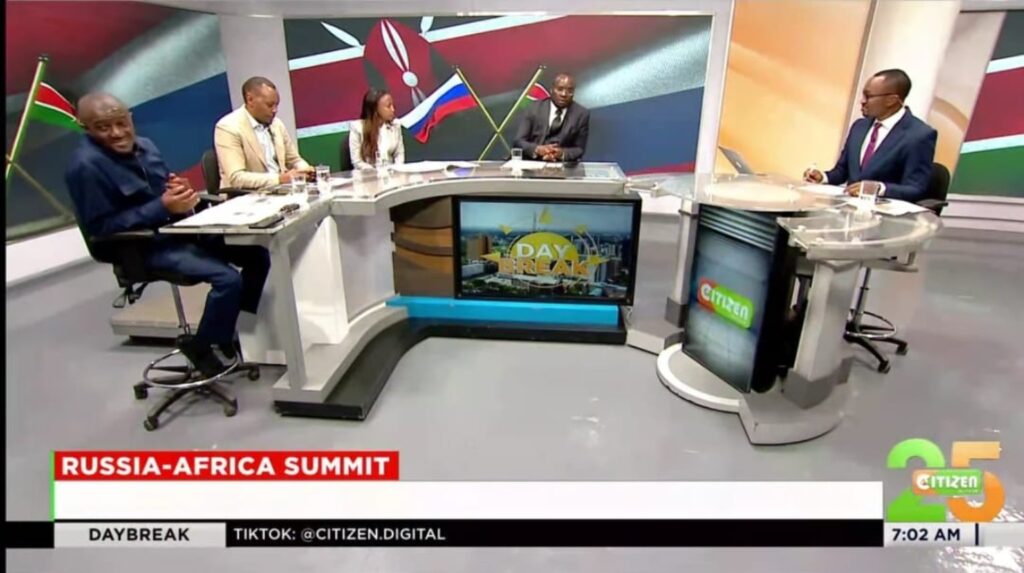
Ruto’s Moscow visit comes at a particularly sensitive time for Kenya, with growing concerns over nationals who were reportedly recruited into the Russian military and ended up in the ongoing war against Ukraine.
The fate of Kenyans caught up in the conflict has become a major issue, with families demanding government intervention and clear answers about the safety and possible repatriation of their relatives.
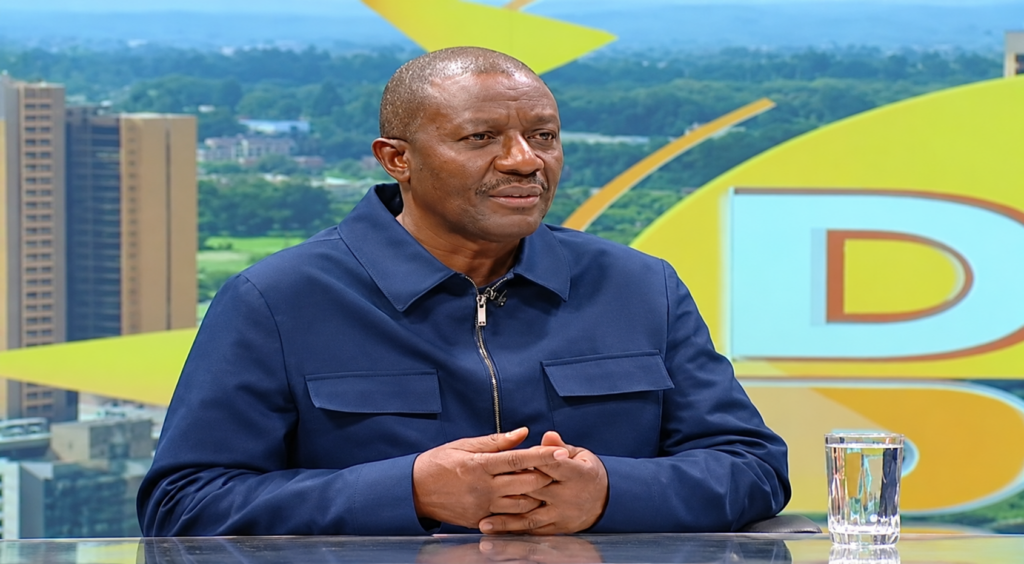
During the interview, Makueni Senator Dan Maanzo expressed disappointment with the government’s handling of the matter, arguing that Russia had the capacity to facilitate the return of Kenyans if there was sufficient political will.
“I am disappointed in President Ruto. Russia is such a powerful state and if they wanted all Kenyans rounded up and put in a plane back to Kenya then that would have happened,” Maanzo said.
Kirinyaga Woman Representative Njeri Maina also challenged the government’s emphasis on preventing further recruitment, arguing that the immediate concern should be the fate of Kenyans who had already travelled to Russia after allegedly being promised civilian jobs.
“Whether or not Kenya is designated as a non-source for mercenaries is neither here nor there, because they were told they were going to be drivers or security persons up until they got there,” she said.
Maina insisted that the government must provide a clear timeline for bringing affected Kenyans home and prioritise their safety.
“What we are demanding is to be told when these Kenyans are coming home and the priorities put in place to safeguard the safety of the Kenyans in Russia,” she added.
Koech, however, maintained that Kenya had compelling reasons to sustain diplomatic relations with Moscow, pointing to the number of Kenyans working and studying in Russia.
“There is every reason why Kenya must continue to engage with Russia. There are many Kenyans working and studying in Russia,” he said.
When asked what Kenyans were studying in Russia, Koech argued that education should not be viewed solely through the lens of employment.
“Sometimes academia is not about employment but expanding skills,” he responded.
The debate exposed the competing positions within Kenya’s political leadership, with government allies defending continued engagement with Russia while critics demanded greater accountability over the safety of Kenyans caught up in the conflict.
Kalonzo, Gachagua emerge in heated political exchange
Away from the Russia question, the interview turned to the country’s evolving political alignments ahead of the 2027 General Election, with Koech taking aim at Wiper Party leader Kalonzo Musyoka over his continued association with the opposition.
Asked why President Ruto appeared keen on bringing Kalonzo into his political camp, Koech argued that the veteran politician had spent too long in opposition.
“It is wrong for a senior person like Kalonzo to still lead his supporters to the opposition. He has been there for long enough and is almost a career Deputy President and running mate,” Koech said.
His remarks appeared to challenge Kalonzo to reconsider his political position and explore working with the President.
However, Maanzo dismissed the possibility of a political understanding between the two leaders, insisting that Kalonzo had already made his position clear.
“No. There is nothing direct. He has already said no and a no is a no,” Maanzo said when asked whether there had been a direct approach to Kalonzo to join Ruto.
Maanzo further referenced Kalonzo’s position on the deaths of young Kenyans during anti-government protests, saying the Wiper leader had declared that he would never dance on the graves of Gen Z protesters who died under Ruto’s administration.
Maina was equally dismissive of the possibility of a Ruto-Kalonzo political partnership, arguing that the two leaders were moving in opposite political directions.
“William Ruto and Kalonzo Musyoka are on completely different trajectories; where the President is on a downward spiral and Kalonzo Musyoka on an upward spiral,” she said.
She questioned what the President’s political camp could offer Kalonzo, arguing that the Deputy President position had been politically devalued.
The discussion also touched on the relationship between former Deputy President Rigathi Gachagua and Kalonzo, with Koech suggesting that Gachagua’s political manoeuvres could eventually lead him back to Ruto’s camp.
Koech questioned why Gachagua had visited Kalonzo’s political ally’s stronghold in Wamunyoro rather than the Wiper leader’s residence, interpreting the move as a sign of political weakness.
“I would have expected Rigathi Gachagua to have visited Kalonzo Musyoka’s residence. For him to have gone to Wamunyoro, somehow, shows that he went as a weaker person,” he said.
In a pointed prediction, the Belgut MP claimed that Gachagua could eventually become the first opposition figure to reconcile with Ruto’s government after the next General Election.
“Do not be surprised to find out that Rigathi Gachagua will be the first one to have a handshake with William Ruto’s government after the next general election,” Koech said.
Sifuna’s presidential candidature question
The discussion further examined speculation surrounding Nairobi Senator Edwin Sifuna and whether he had been settled on as the presidential candidate for the emerging opposition alliance.
Asked whether a decision had been made to front Sifuna for the presidency, Maina dismissed the suggestion, saying no such agreement had been reached.
“There is no such decision because if it were, there would be an announcement,” she said.
She explained that the parties associated with the proposed United Alternative Government had yet to sign a coalition agreement, making it premature to declare any candidate as the alliance’s presidential flagbearer.
“There is no coalition agreement yet between any of the parties in the United Alternative Government. Maybe it’s been floated but it has not been decided,” Maina added.
The exchanges offered a glimpse into the growing political contest ahead of 2027, with Ruto’s allies defending his diplomatic and political decisions while opposition-aligned leaders questioned his record, the government’s handling of Kenyans caught up in the Russia-Ukraine war and efforts to win over influential opposition figures.
