


The Migwani Ward by-election in Kitui County is emerging as a political contest between the Wiper Democratic Movement and the ruling United Democratic Alliance (UDA), with the November 17 poll offering an early indication of the political alignments taking shape ahead of the 2027 General Election.
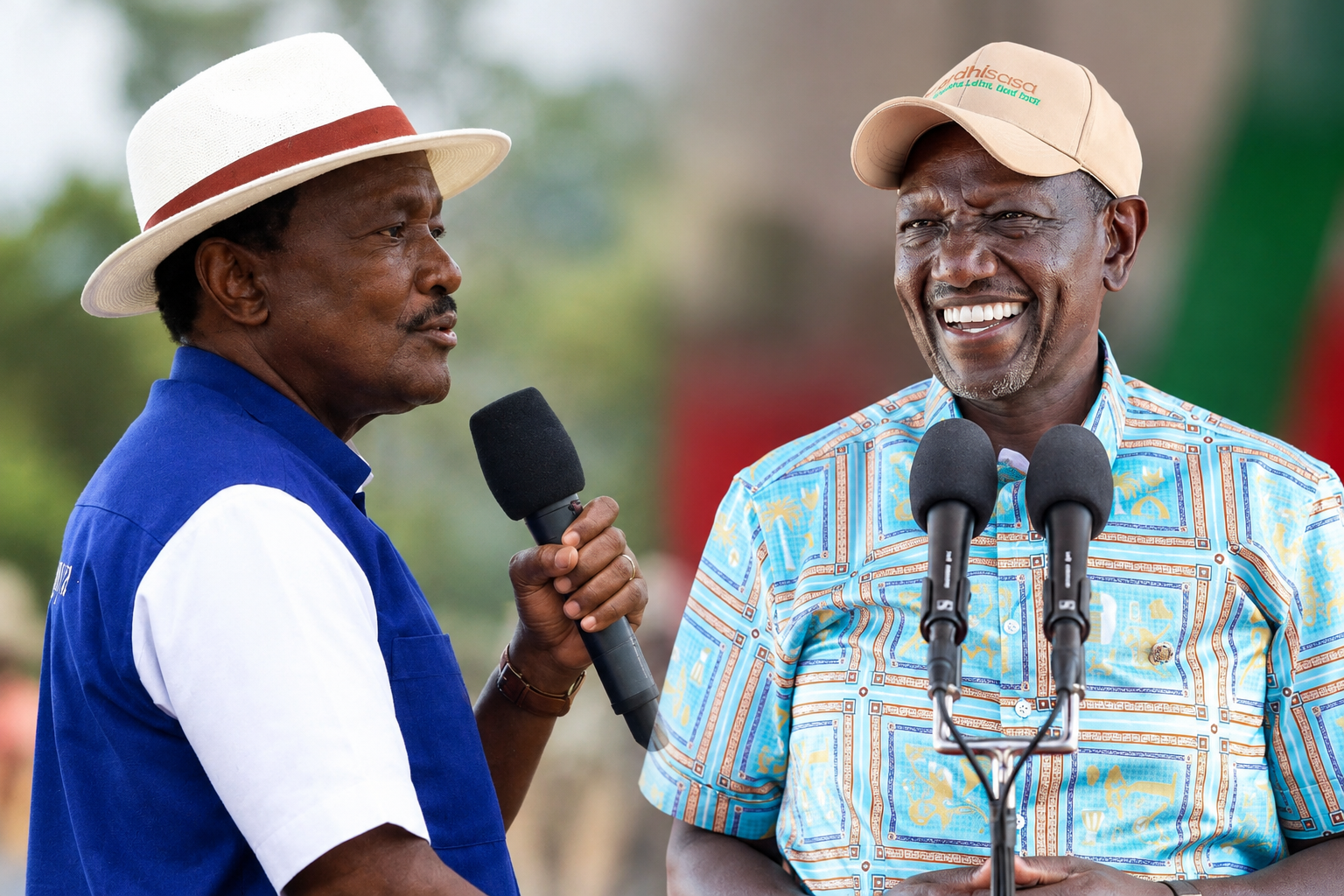
The contest has drawn national attention as Wiper leader Kalonzo Musyoka seeks to maintain his party’s traditional influence in Ukambani, while President William Ruto’s allies see an opportunity to strengthen UDA’s presence in a region that has long been associated with the opposition leader.
The seat fell vacant following the resignation of former Migwani MCA Harrison Maluki Mawia on August 6, 2026, after he was appointed Clerk of the Kitui County Assembly. Mawia was elected on a Wiper ticket in 2022 but has since been associated with leaders aligned with the President’s camp.
The circumstances surrounding his departure have added another political dimension to the by-election, placing the contest at the intersection of local representation and the wider struggle for influence in Kitui.
Wiper seeks to defend its political base
For Wiper, the Migwani contest presents an opportunity to demonstrate that its grassroots support remains intact as Kalonzo positions himself within the opposition’s broader calculations for the 2027 presidential election.
Former MCA Patrick Munyithya Kani, Munywoki Mwangangi and Susan Mueni Nzoka are among those reported to be seeking the Wiper nomination. The party’s eventual nominee will have the responsibility of carrying its flag in a contest that could test its internal cohesion and mobilisation structures.
Kalonzo has urged residents to accept development projects from the national government while making their political choices independently at the ballot box, underscoring the distinction between benefiting from government programmes and supporting a particular political party.
A strong showing by Wiper would provide the party with an opportunity to reinforce its position in Kitui, while a loss would raise questions about its ability to retain support amid shifting political alliances.
UDA eyes an opening in Ukambani
UDA, meanwhile, is seeking to translate its growing network of political allies in the region into electoral support.
The party has linked its campaign to the national government’s development agenda, including the ongoing tarmacking of the Kwa Siku-Migwani-Mbondoni road.
Among the reported UDA aspirants are Raphael Mwinzi Maluki and Mûtûa Muthui. The party scheduled its Migwani nomination exercise for October 9, although its final nominee requires confirmation.
The campaign is also unfolding against the backdrop of political differences between Kalonzo’s camp and leaders supporting closer cooperation with the Ruto administration.
Mwinzi Maluki has urged voters to look beyond party labels and assess candidates on their individual qualities, arguing that leadership should be judged on character and capability.
The position reflects the broader debate over whether local elections should be determined primarily by party loyalties or by candidates’ records, development priorities and engagement with residents.
Other parties complicate the contest
Although Wiper and UDA are emerging as the principal political forces in the race, the contest is not exclusively a two-party affair.
The National Liberal Party (NLP), led by Dr Augustus Kyalo Muli, has unveiled Andrew Kaleli as its candidate, while the National Economic Development Party (NEDP), associated with former Nairobi Governor Mike Sonko, has also announced Catherine Mwende.
The entry of these parties introduces additional competition and means the eventual distribution of votes will depend on the candidates presented, their grassroots networks and the issues that resonate with Migwani residents.
NLP has also used its entry into the race to call for peaceful campaigning and vigilance by the Independent Electoral and Boundaries Commission (IEBC) and security agencies.
The presence of additional candidates notwithstanding, the wider political contest between Wiper and UDA is likely to remain a central feature of the campaign because of the national figures and competing political interests associated with the two parties.
An Early Indicator ahead of 2027
Beyond the ward seat, the November 17 election is being watched as an early measure of political organisation ahead of the 2027 General Election.
For Kalonzo, the contest offers an opportunity to demonstrate the continued strength of his regional political base as he pursues a wider opposition agenda. For Ruto’s allies, it presents an opening to test whether government development initiatives and local political alliances can translate into electoral gains in Kitui.
However, the outcome of a single ward election will not necessarily determine the direction of politics across Ukambani. Local candidates, personal loyalties, development concerns and party nominations can influence voting patterns in ways that do not automatically translate into presidential or countywide results.
The contest will therefore be closely watched for what it reveals about grassroots mobilisation, party loyalty and the ability of competing political camps to organise voters ahead of the next general election.
The IEBC has scheduled the Migwani Ward MCA by-election for Tuesday, November 17, 2026, with the formal nomination process set for October 21 and 22.
As campaigns gather momentum, Migwani is becoming an important political testing ground, with Wiper seeking to protect its established support base and UDA looking to demonstrate that its ambitions in Ukambani can extend beyond political alliances into the ballot box.
