


Margaret Nduta Macharia, a 37-year-old Kenyan woman who was on death row in Vietnam for drug trafficking, has been spared the death penalty after a successful appeal to the country’s Supreme Court. Her sentence has now been commuted to life imprisonment, offering a ray of hope for her family and opening a potential path to clemency or repatriation.
Nduta was arrested in July 2023 at Tan Son Nhat International Airport while transiting through Vietnam en route to Laos. Vietnamese authorities found more than two kilograms of cocaine concealed in a false compartment of her suitcase. Under Vietnam’s zero-tolerance drug laws, possession or trafficking of over 600 grams of heroin or cocaine is punishable by death.
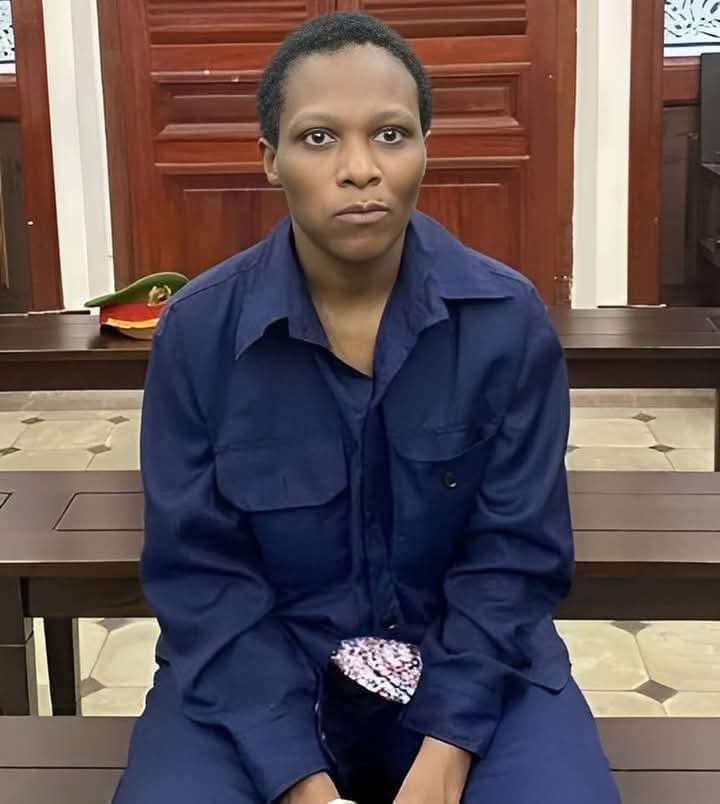
In March 2025, a lower court convicted her and sentenced her to death. The case sparked outrage and concern in Kenya, prompting urgent diplomatic intervention. Kisii Senator Richard Onyonka appealed publicly to President William Ruto to step in, while Kenya’s Ministry of Foreign Affairs engaged Vietnamese officials. Foreign Affairs Principal Secretary Dr. Korir Sing’Oei confirmed that high-level talks were initiated with Vietnam’s Deputy Foreign Minister Nguyen Minh Hang.
Following these diplomatic efforts, Vietnam’s Supreme Court reviewed the matter and ruled to replace the death sentence with life imprisonment. While still a severe punishment, the commutation has been received with relief by Nduta’s family in Murang’a County.

Her mother, Purity Wangari, welcomed the news with tears of gratitude. “This is a miracle. All we ask now is that the government helps bring her home. I would rather she serve her sentence here than die in a foreign country,” she told local media.
Nduta now has the option to apply for presidential clemency, a legal process through which the Vietnamese President may reduce her sentence further or facilitate a repatriation agreement with Kenya, allowing her to serve the remainder of her sentence closer to her family.

Her case has sparked public debate in Kenya. While many sympathize with her plight, citing the possibility that she may have been lured by an international drug syndicate, others have argued that individuals must be prepared to face the consequences of violating foreign laws.
Discussions online have reflected this divide. “The death sentence for a crime like hers seems excessive,” said one user on Reddit. “She should be punished, but bring her home.” Another user countered, “She had over two kilos. In Southeast Asia, that’s a death sentence. People know the risks.”
The Kenyan government has reaffirmed its commitment to safeguarding the rights of its citizens abroad and said it would continue engaging Vietnamese authorities through diplomatic channels.
Margaret Nduta’s fate now rests with the Vietnamese presidency, and her family remains hopeful that one day, she might be reunited with them—even if under custodial supervision.
As the process for clemency unfolds, her story continues to highlight the harsh realities of global drug trafficking laws, the vulnerabilities of those caught up in international smuggling networks, and the complex diplomacy required to bring justice and mercy into balance.
