


“We wish to inform you that tomorrow we will be killed with our families.”

Those chilling words, borrowed from journalist Philip Gourevitch’s famous account of the Rwandan genocide, are among the first lines appearing in a petition that has now shaken the Kenyan government and triggered a major High Court intervention over an alleged Ebola quarantine arrangement linked to the United States.
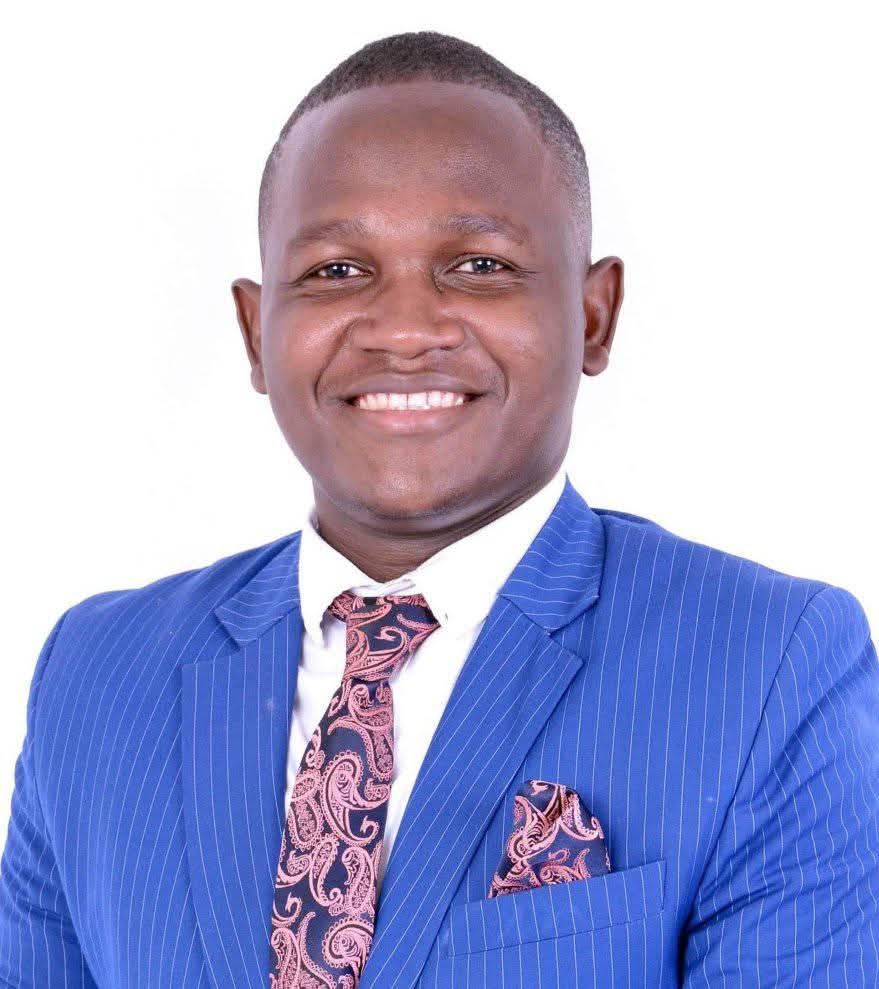
Behind the hard-hitting constitutional petition is youthful Kenyan advocate Joshua Maldzo Nyawa — a rising legal mind born in the coastal town of Bofu on October 1, 1996.
The petition, filed by Katiba Institute before the High Court in Nairobi, successfully persuaded the court to temporarily stop the establishment or operationalisation of any Ebola exposure, quarantine, isolation or treatment facility allegedly tied to a foreign arrangement pending further hearings.
In the dramatic introduction of the petition, Nyawa invokes historical lessons from genocide and global epidemics to argue that governments have a constitutional duty to act cautiously whenever there is foreseeable risk to human life.
“Where authorities receive credible warnings of grave and potentially mass harm but do not act upon them with urgency, the consequences can be irreversible,” part of the petition reads.
The filing references globally known works including And the Band Played On and The Coming Plague to support the argument that delayed or poorly scrutinised public health responses can result in catastrophic consequences.
The bold legal drafting immediately drew public attention online, with many Kenyans expressing shock at both the language used in the petition and the broader claims surrounding the alleged arrangement.
Yet beyond the viral court filing is the story of a young advocate quietly building his profile within Kenya’s constitutional and human rights legal circles.
Nyawa specialises in Constitutional Law, Human Rights Law, Election Law and Administrative Law. He previously worked at Prof Tom Ojienda and Associates Advocates for two years and four months, gaining experience in complex litigation and constitutional practice.
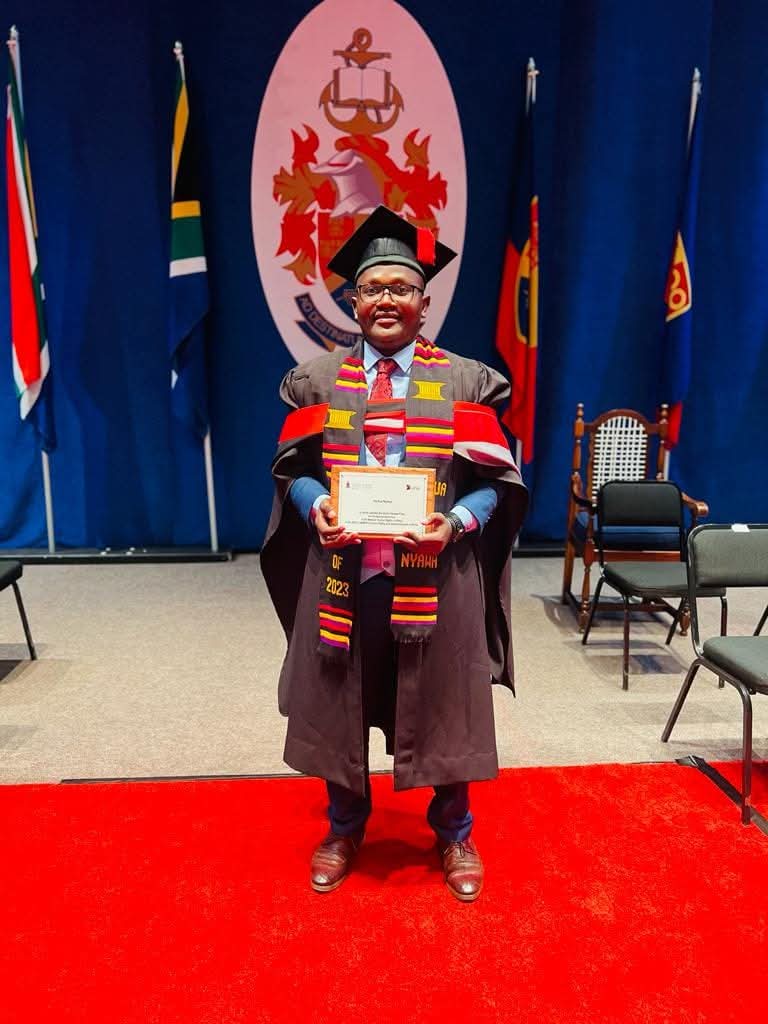
After leaving the Kenya School of Law on August 4, 2022, the youthful advocate pursued further studies at the University of Pretoria’s Centre for Human Rights in South Africa.
In a Facebook post shared on December 8, 2023, Nyawa announced that he had graduated with a Master of Laws (LLM) in Human Rights and Democratisation in Africa with distinction.
He also revealed that he had won the prestigious Victor Dankwa Award for being the best student in one of the programme’s core modules, alongside the Dean’s Essay Competition Award for 2023.
“Looking forward to an interesting career in this field of law,” he wrote at the time while thanking mentors, lecturers, colleagues and family members who supported his journey.
Now, barely three years after leaving law school, Nyawa finds himself at the centre of one of Kenya’s most controversial constitutional cases in recent months.

On Thursday, Lady Justice Patricia Nyaundi issued conservatory orders restraining the government from establishing or facilitating any Ebola-related facility linked to the alleged arrangement until the matter is heard and determined.
The court also barred the admission or transfer into Kenya of persons exposed to or infected with Ebola under the alleged arrangement before the inter-partes hearing.
The case is expected to return to court on June 2 as public debate intensifies over constitutional safeguards, national sovereignty and public health security.
For many observers, however, one of the most striking aspects of the unfolding case remains the dramatic opening words crafted by the young advocate from Bofu — words that instantly transformed an ordinary court petition into a national conversation.
