


Any serious interrogation of Kenya’s 2027 presidential contest must start with one immutable fact: William Ruto did not merely win Mt. Kenya in 2022 — he was carried by it.
Out of the roughly 3.8 million valid votes cast in the region, Ruto secured about 2.94 million, translating to approximately 77 per cent. Raila Odinga managed about 848,000 votes, roughly 22 per cent. That margin alone formed the single largest pillar of Ruto’s national victory.

But elections are not won on history — they are won on current political reality. And Mt. Kenya’s political reality has fundamentally shifted.
When the Mobilisation Machine Collapsed
The 2022 Mt. Kenya vote did not move on autopilot. It was aggressively mobilised, zealously guarded and emotionally framed as a regional project. At the centre of that effort stood Rigathi Gachagua, a political mobiliser who understood the mountain’s psychology: grievance-driven, transactional and deeply suspicious of outsiders.
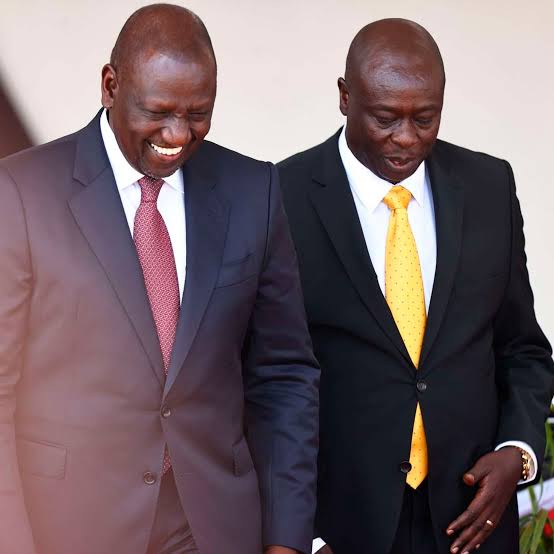
That machinery collapsed the moment William Ruto and Gachagua parted ways.
In his place now stands Kithure Kindiki, a respected administrator but not a political mobiliser of comparable intensity.

In a region that votes less on policy and more on perceived political respect and protection, the transition has left a vacuum — and Mt. Kenya does not tolerate vacuums for long.
A Restless Mountain Finds New Political Vehicles
That unease is now crystallising into organised political alternatives. Rigathi Gachagua’s Democracy for the Citizens Party (DCP) has entered the field as an explicitly Mt. Kenya–centric outfit, framing itself as the voice of a betrayed region. At the same time, Uhuru Kenyatta’s Jubilee Party is undergoing a calculated revival, reactivating dormant but intact grassroots structures across the mountain.

Both parties are fishing from the same political river — voters who delivered power in 2022 and now feel politically sidelined.
The consequence is unavoidable: William Ruto is no longer facing a united Mt. Kenya bloc, but a fragmented, emotionally charged region with multiple centres of political loyalty.
The Brutal Mathematics of Losing the Mountain
Speaking exclusively to Channel 15 News, US-based Kenyan data analyst Andrian Mutua says the numbers leave little room for sentiment.
“Mt. Kenya was not just another region in 2022. It accounted for nearly three million votes for William Ruto. Remove that support, and the coalition immediately enters a high-risk zone,” Mutua explains.
According to Mutua, compensating for a weakened Mt. Kenya performance would require Ruto to outperform his 2022 results in several regions by margins that Kenyan electoral history has rarely, if ever, recorded — including opposition strongholds where voting patterns are deeply entrenched.
“You would need near-total dominance in places where he previously struggled, while assuming turnout remains constant. That’s a dangerous assumption,” Mutua notes.
The 35 Per Cent Lifeline
All paths lead back to one hard conclusion: William Ruto must secure at least 35 per cent of the Mt. Kenya vote in 2027.

Anything below that threshold places his re-election bid in serious jeopardy. At that point, even significant gains elsewhere may not mathematically compensate for the loss, especially with additional candidates such as Kalonzo Musyoka and Fred Matiang’i expected to split regional blocs further.
Fail to hit that mark, and the presidency begins to drift from competitive to distant.
The Mountain’s Final Word
Mt. Kenya is no longer politically settled. It is uneasy, fragmented and increasingly receptive to alternative narratives — particularly those framed around betrayal, exclusion and broken political bargains.
If the region votes overwhelmingly against William Ruto — propelled by Gachagua’s DCP, a resurgent Jubilee, and deep voter discontent — then 2027 may not be a tight contest at all.
In the end, the numbers tell a sobering story: the mountain that lifted William Ruto to power still holds the power to send him home.
And in Kenyan politics, no region votes permanently — only conditionally.
