


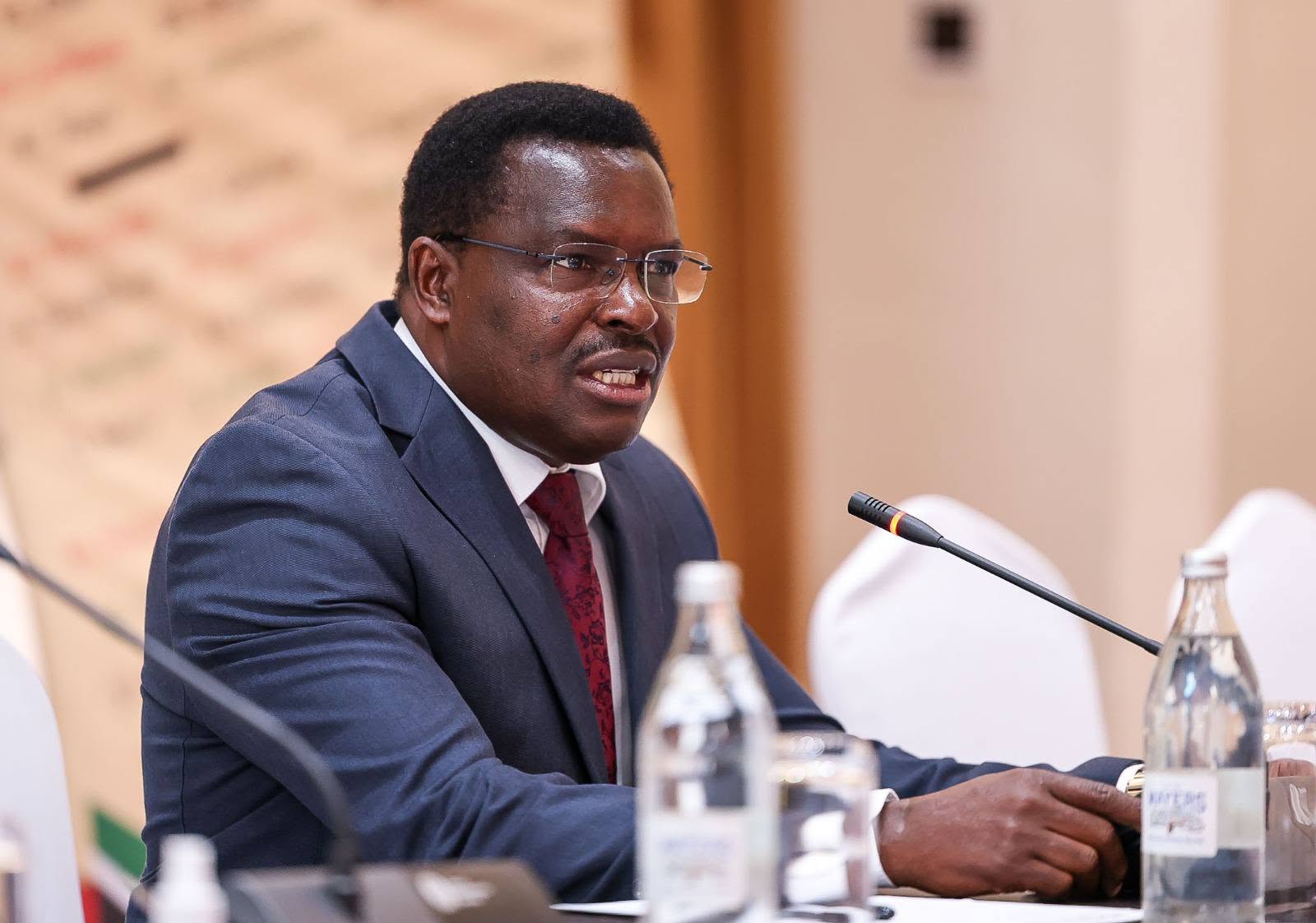
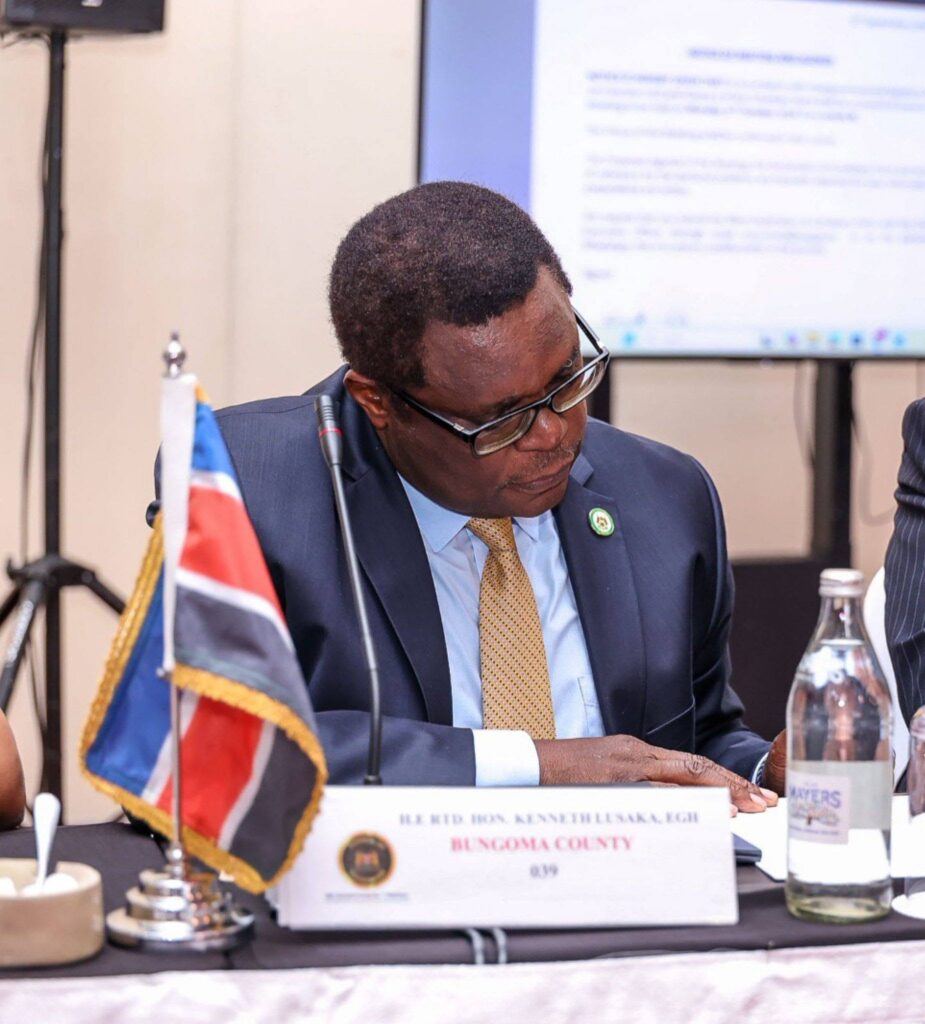
Tharaka Nithi Governor Muthomi Njuki has been elected the new chairperson of the Council of Governors (CoG), with Bungoma Governor Kenneth Lusaka as his deputy and Baringo Governor Benjamin Cheboi retaining the whip position.
Njuki was elected on Monday, October 12, 2026, during a full council meeting in Nairobi, ushering in a new leadership team tasked with coordinating the interests of Kenya’s 47 county governments and strengthening the country’s devolved system of governance.
The election followed a consensus arrangement among governors, with the new executive leadership expected to steer the council’s engagement with the national government on matters affecting county administrations.
Njuki succeeds Wajir Governor Ahmed Abdullahi, who served as CoG chairperson for two consecutive one-year terms from October 2024 to October 2026.
Under the new arrangement, Lusaka will serve as vice-chairperson, while Cheboi will continue as the council’s whip, providing continuity in the organisation’s leadership.
The leadership transition comes at a critical time for county governments, which continue to navigate questions surrounding funding, the implementation of devolved functions, intergovernmental relations and the delivery of essential public services.
𝐂𝐨𝐮𝐧𝐭𝐢𝐞𝐬 𝐒𝐞𝐞𝐤 𝐒𝐭𝐫𝐨𝐧𝐠𝐞𝐫 𝐕𝐨𝐢𝐜𝐞
The Council of Governors brings together the heads of all 47 county governments and provides a platform for consultation, coordination and the development of common positions on issues affecting devolution.
Established following the implementation of the 2010 Constitution, the council plays a central role in representing county interests in engagements with the national government and other institutions.
Its responsibilities include promoting consultation between the two levels of government, facilitating cooperation among counties and helping resolve disputes arising from the exercise of their respective functions.
The new leadership will therefore be expected to coordinate governors’ positions on county financing, resource allocation and the effective implementation of devolved services.
The council also works through technical committees covering sectors such as health, agriculture, education, finance, infrastructure, environment and security, enabling county governments to develop common approaches to shared challenges.
𝐍𝐞𝐰 𝐋𝐞𝐚𝐝𝐞𝐫𝐬𝐡𝐢𝐩, 𝐊𝐞𝐲 𝐓𝐚𝐬𝐤𝐬 𝐀𝐡𝐞𝐚𝐝
Njuki’s election places him at the forefront of the governors’ collective engagement with the national administration, while Lusaka will support the coordination of the council’s work.
Cheboi’s continued service as whip is expected to support coordination within the council as the new executive leadership begins its term.
The incoming team will be required to build consensus among governors representing counties with different development priorities, revenue capacities and service-delivery challenges.
Their ability to maintain a common position on matters affecting devolution will be significant in discussions over the resources and administrative arrangements required to deliver county functions.
The leadership change also marks the end of Abdullahi’s tenure, during which he led the council’s collective engagement on issues affecting county governments.
As the new team takes charge, county residents will be looking to their respective administrations to translate intergovernmental negotiations and policy commitments into improved services and tangible development outcomes.
Channel 15 News — The Full Story First.
