



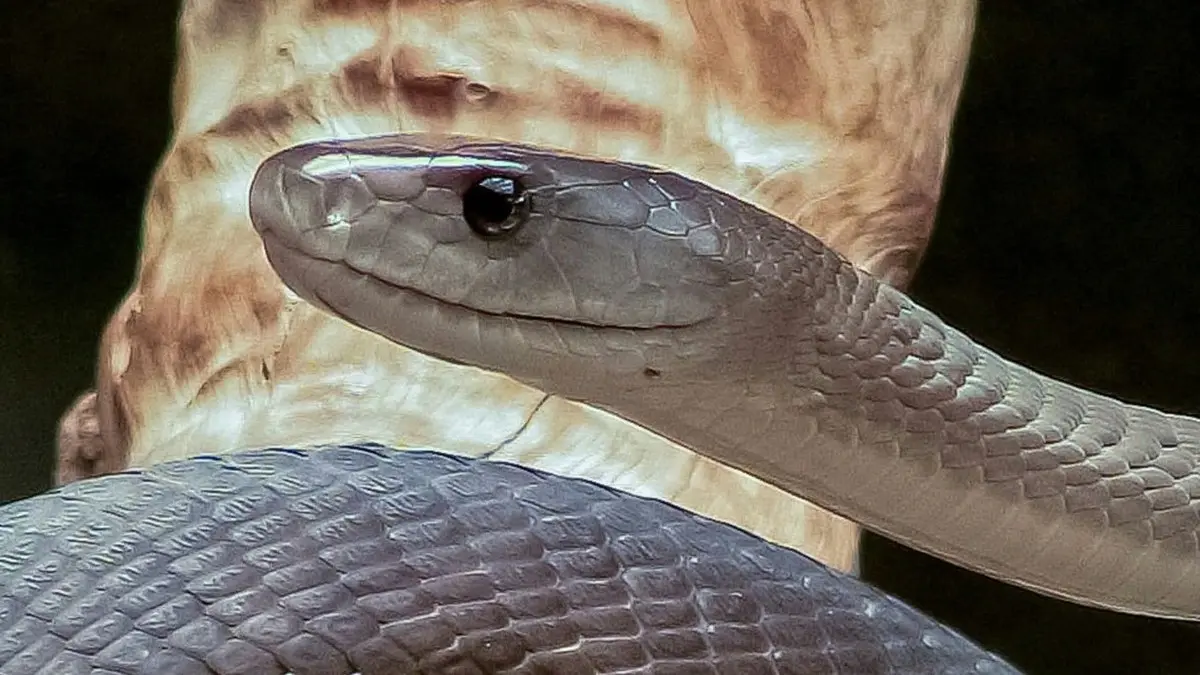
An extraordinary historical account by UK-based historian, journalist and researcher Odhiambo Levin Opiyo recalls how a deadly snake reportedly killed eight people in two days along the Mwingi–Mumoni road before two Akamba traditional experts were called in to end the terror.
Long before modern communities began raising alarm over snake bites in Ukambani, encounters between humans and venomous snakes were already presenting serious challenges to residents of the region.
An extraordinary historical account shared by United Kingdom-based historian, journalist and researcher Odhiambo Levin Opiyo has brought to light an unusual incident dating back to 1907, when a deadly snake reportedly terrorised residents and colonial administrators in the then Ukambani region.
📊 Channel 15 News Opinion Poll
According to Opiyo, the incident involved a particularly aggressive snake that lived in a tree beside the road connecting Mwingi and Mumoni, not far from Gai.
The snake was unlike the ordinary reptiles encountered by residents. Rather than remaining hidden in the bushes, it reportedly launched attacks on unsuspecting passers-by, swooping down from the tree like an eagle, striking its victims on the head before retreating to its hiding place.
Its attacks were devastating.
Within just two days, the snake had reportedly killed eight people, turning the road into a feared passage that people could no longer use safely.
The situation became so alarming that even the colonial administrators operating in the area were reportedly unable to contain the threat.
Colonial administrators turn to traditional Akamba experts
As fear spread among the local population and colonial officials, the government reportedly directed the British District Commissioner to deal with the dangerous reptile.
However, according to Opiyo’s account, the District Commissioner was reluctant to undertake the assignment, apparently fearing for his own safety.
Instead of confronting the snake himself, he sought the intervention of Akamba traditional snake experts.
Two men were eventually identified to handle the dangerous task.
Their approach was unusual. One of the men positioned himself directly beneath the tree, deliberately exposing himself to attract the snake’s attention and lure it out of its hiding place.
The second man was tasked with capturing the reptile once it descended.
The operation eventually succeeded, with the two men managing to capture and kill the snake, bringing an end to the terror that had gripped the area.
The mystery behind traditional snake resistance
What reportedly astonished the colonial officials was not simply the successful killing of the snake but the apparent confidence and expertise demonstrated by the two Akamba men while handling a highly venomous reptile.
Their performance prompted the colonialists to seek an explanation for what appeared to be an extraordinary ability to handle dangerous snakes without suffering their effects.
They subsequently sought out an elderly traditional practitioner believed to possess knowledge of a special procedure that supposedly made individuals resistant to snake venom.
The traditional practitioner reportedly explained that the process involved a specialised form of traditional surgery, during which small cuts were made at several points on the body.
These included the upper parts of the feet, just above the toes, the upper thighs, buttocks and shoulders.
A special powder was then applied to the cuts, with each finger of the hand reportedly used to smear a different incision.
To demonstrate what he claimed was the effectiveness of the procedure, the practitioner allegedly allowed one of the individuals who had just undergone it to be bitten by a highly venomous snake.
The colonial officials reportedly waited for the individual to develop signs of poisoning, but, according to the account, nothing happened.
The practitioner further claimed that those who underwent the procedure could handle different types of snakes.
He explained that an individual could supposedly incapacitate a snake by moving the index finger of the right hand around its head three times.
Traditional knowledge that remained a guarded secret
The colonial officials, fascinated by the apparent abilities of the traditional practitioners, sought to establish the identity of the herbs and ingredients used in the preparation.
However, the elderly practitioner was reportedly unwilling to disclose the secrets immediately.
He informed them that revealing the knowledge required following a particular procedure and paying a price.
The account ends with the traditional practitioner’s knowledge remaining guarded, offering a glimpse into the specialised traditional practices and indigenous knowledge systems that existed within Akamba communities.
More than a century later, the story offers a fascinating historical perspective on how communities in Ukambani confronted dangerous wildlife and relied on indigenous expertise to deal with threats that even colonial administrators reportedly struggled to manage.
While the account raises questions about the traditional practices described, it also highlights the importance of documenting indigenous knowledge and preserving oral histories before they disappear.
As snake encounters continue to concern communities in Ukambani, the 1907 account serves as a striking reminder that the relationship between people and dangerous reptiles in the region stretches back generations.
