


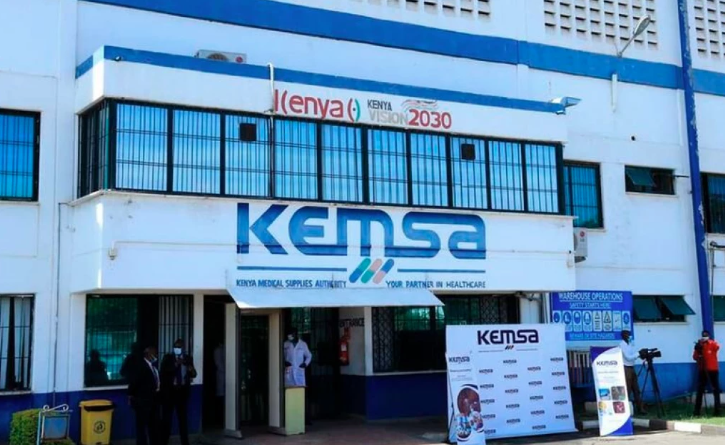
The Kenya Medical Supplies Authority (KEMSA) has lost a Sh1 billion court battle in a dispute over a contract involving the supply of HIV drugs, dealing a significant blow to the State agency tasked with managing the country’s medical commodities.
The High Court ordered that Sh1 billion be released from KEMSA’s bank account to settle payment owed to a supplier following a protracted legal dispute over a procurement deal targeting fixed-dose antiretroviral (ARV) combinations used in Kenya’s HIV programme.
The contract, initiated to plug urgent gaps in the country’s HIV treatment pipeline, was intended to ensure uninterrupted access to life-saving medication for thousands of patients.
However, what began as an emergency procurement arrangement later escalated into a courtroom battle after KEMSA denied responsibility for the procurement and declined to honour payment.

The supplier, UCL, moved to court demanding settlement of its dues, arguing that it had fulfilled its contractual obligations. In its defence, KEMSA maintained that it was not liable for the disputed payment, raising questions over the circumstances under which the agreement was entered into.
In its ruling, the court sided with the supplier and directed that Sh1 billion be lifted from KEMSA’s accounts to satisfy the claim — a decision that could have broader implications for the agency’s financial stability and procurement credibility.
The case adds to mounting scrutiny surrounding public health procurement in Kenya, particularly in the management of donor-funded and government-supported HIV treatment programmes. Analysts warn that prolonged disputes over medical supply contracts risk disrupting service delivery and undermining public confidence in essential health institutions.
Kenya runs one of the largest HIV treatment programmes in sub-Saharan Africa, with hundreds of thousands of patients dependent on consistent access to antiretroviral therapy.
The ruling now places KEMSA under renewed pressure to address governance, accountability and transparency concerns in its procurement processes as the country works to safeguard continuity in HIV treatment services.
