


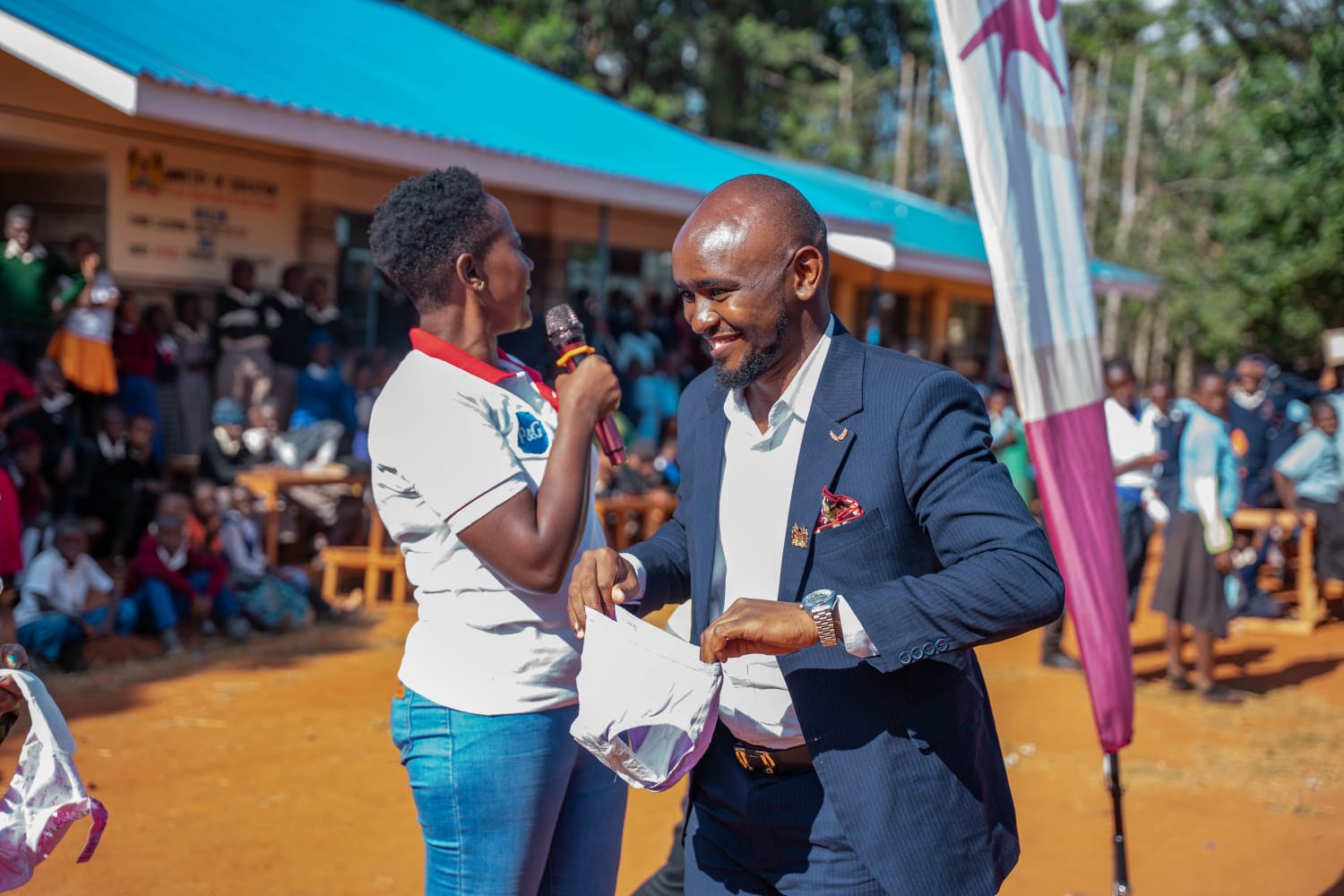
Since 2021, Peter Musya has helped reach more than 7,000 girls with sanitary products, mentorship and menstrual health education—earning a unique title in classrooms across Kitui and Machakos.
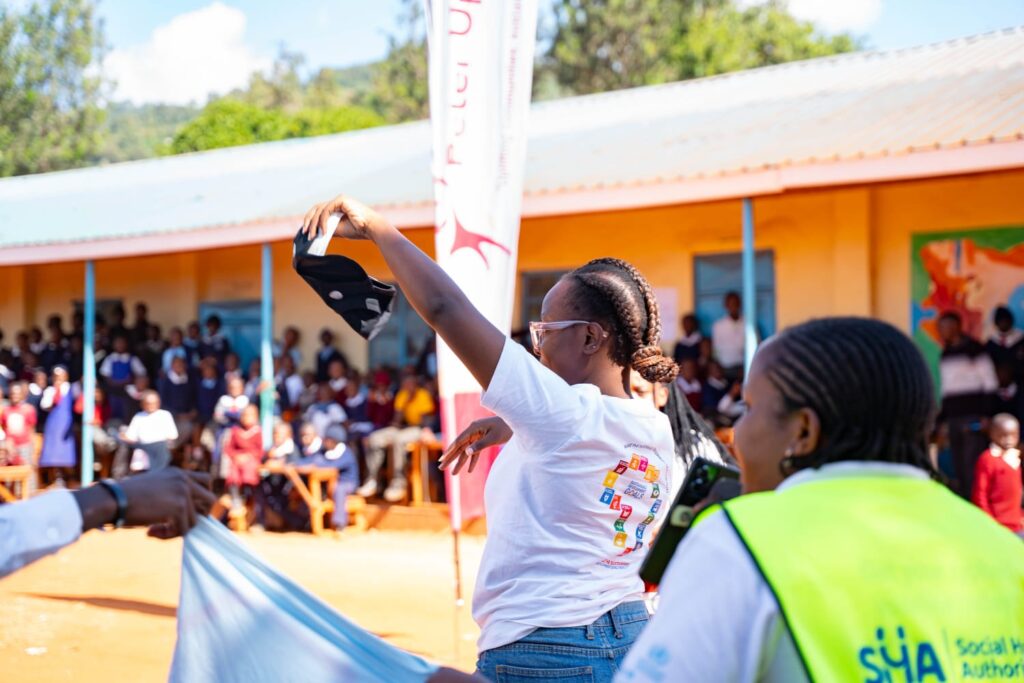
In a open field in Ngomeni, Machakos County tucked deep , a group of teenage boys and girls listens attentively as a youthful man speaks openly about a subject that many communities still struggle to discuss.
There is no embarrassment in the room. No whispers. No nervous laughter.
The discussion is about menstruation.
The speaker is Peter Musya, a son of Mwingi Central, Kitui County, whose growing campaign against menstrual poverty has earned him an unusual nickname across Lower Eastern Kenya:
“The Period Man.”
It is a title he never sought.
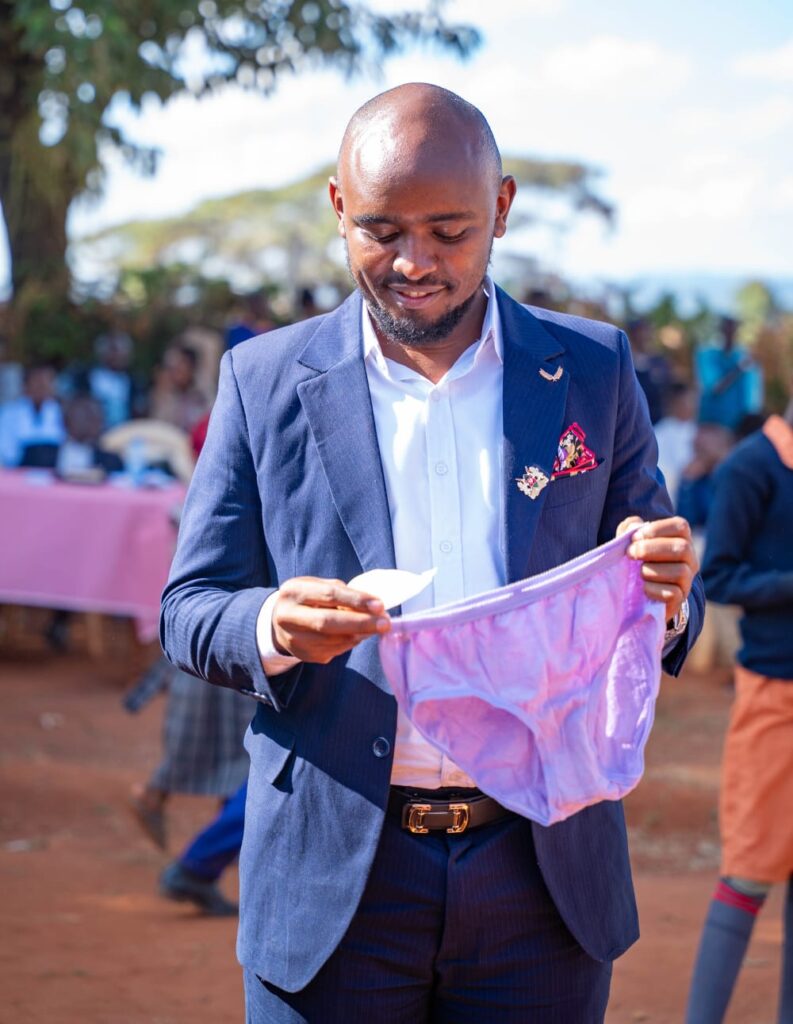
Yet for hundreds of girls who have met him in schools across Kitui and Machakos counties, the name has become synonymous with dignity, confidence and a chance to remain in school.
At a time when many girls in rural Kenya still miss classes because they cannot afford sanitary products, Musya has built a grassroots movement that is slowly changing lives—and challenging long-held cultural silence around menstruation.
A Mission Born in Rural Kitui
Growing up in Mwingi Central, Musya witnessed firsthand the hardships faced by families in drought-prone communities where every coin matters.
School fees, food and household essentials often came before menstrual products.
For many girls, that meant missing school during their monthly periods.
Others resorted to improvised materials that compromised both comfort and dignity.
Those realities stayed with him.
Years later, they inspired the creation of the Uplift Charity Foundation, an organisation focused on menstrual health education, sanitary pad distribution, mentorship and youth empowerment.
“No girl should miss school because of her period,” Musya says.
“It is a natural biological process and should never become a barrier to education.”
Reaching More Than 7,000 Girls
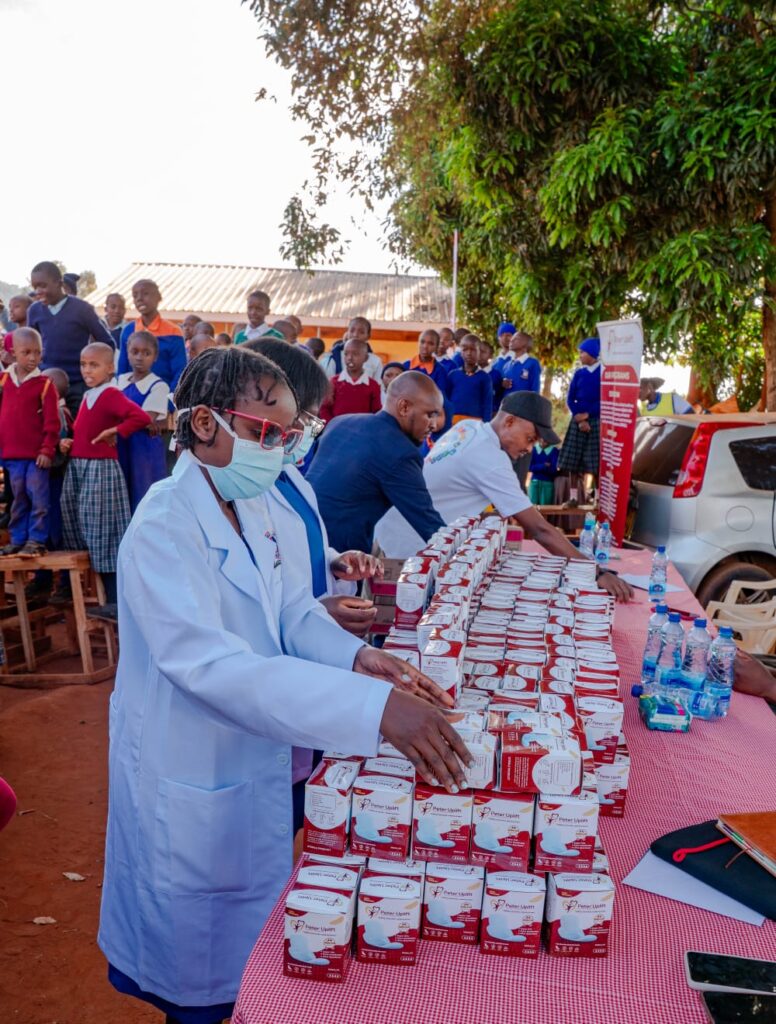
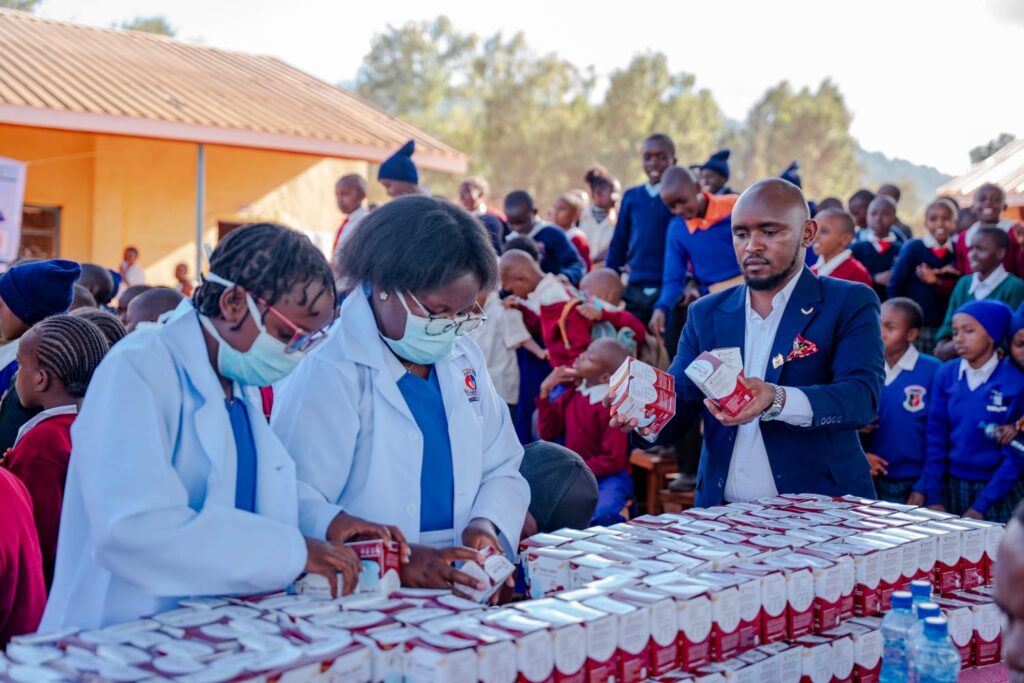
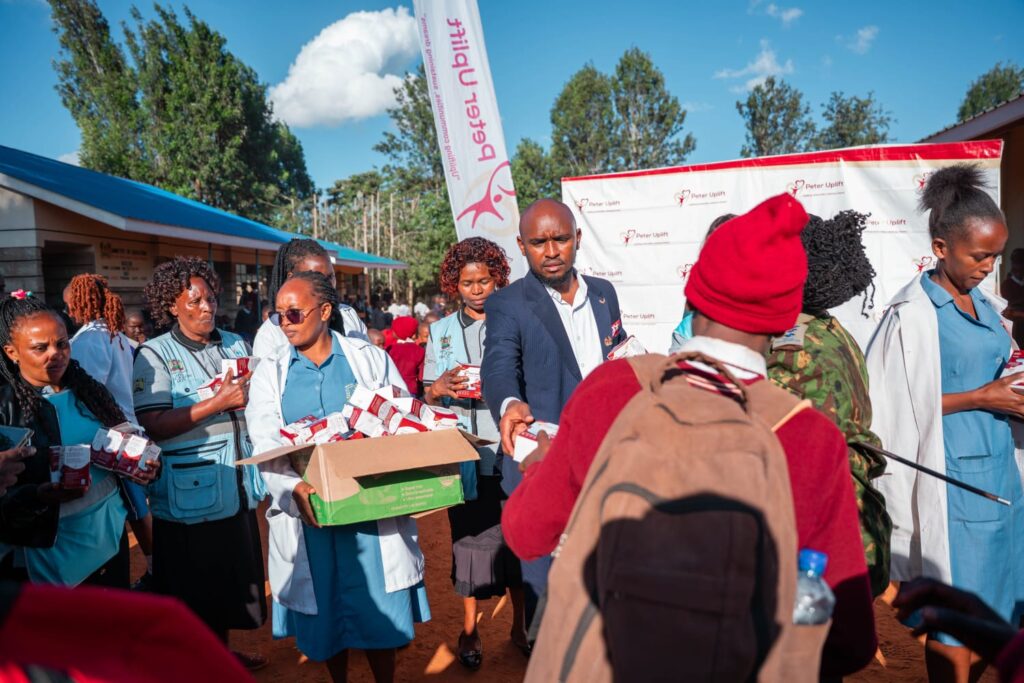
According to figures released by the foundation, Musya’s menstrual health programmes have reached more than 7,000 girls since 2021 through sanitary pad distribution, reproductive health awareness and mentorship initiatives.
The outreach has extended across schools in Kitui County, including Mwingi Central and neighbouring areas, as well as rural schools in Machakos County where menstrual poverty remains a persistent challenge.
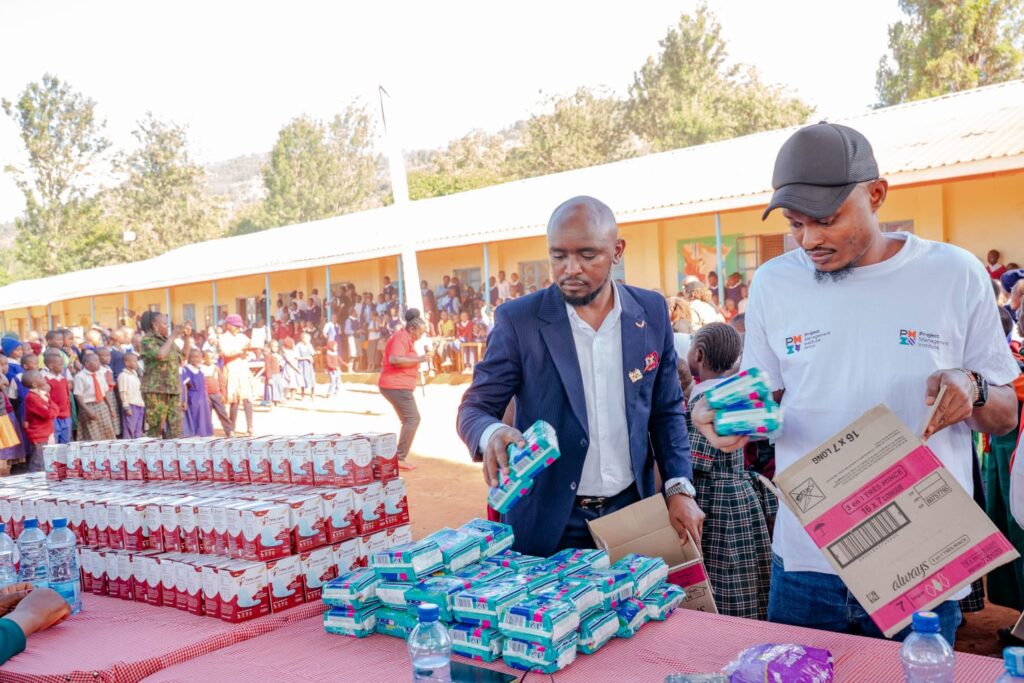
Teachers and school administrators who have hosted the programmes say the interventions have helped girls remain in class and participate more confidently in school activities.
While independent verification of total sanitary pad distributions remains ongoing, the impact of the initiative is increasingly visible in communities where access to menstrual products remains limited.
What began as a local effort has steadily grown into one of the region’s most recognisable grassroots campaigns on menstrual dignity.
The Hidden Cost of Menstrual Poverty
Across Lower Eastern Kenya, menstrual poverty continues to affect thousands of learners.
Education stakeholders say many girls still miss several days of school each month because they lack sanitary products or access to adequate sanitation facilities.
The consequences extend beyond attendance.
Repeated absenteeism often affects academic performance, self-confidence and school retention rates.
Gender advocates argue that menstrual health is not simply a hygiene issue but an education and social justice issue.
For girls living in arid and semi-arid regions already affected by poverty and climate-related hardships, the challenge can be especially severe.
Breaking a Long-Standing Taboo
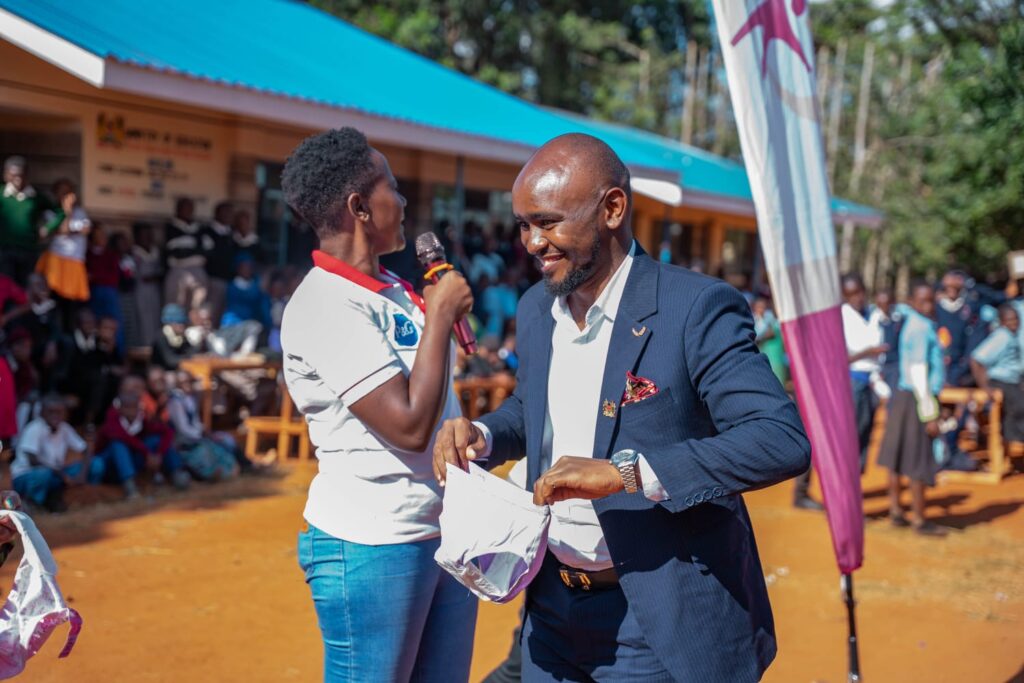
What makes Musya’s approach different is that he is a man openly leading conversations on menstruation.
In many rural communities, menstrual health has traditionally been viewed as a private topic discussed only among women and girls.
That cultural reality initially made some community members uncomfortable.
Today, however, it has become one of the programme’s defining strengths.
Musya’s sessions often include boys alongside girls, helping reduce stigma and build understanding among young learners.
Teachers say the approach is gradually changing attitudes in schools where menstruation was once rarely discussed in public.
By encouraging open conversations, the programme is helping create environments where girls no longer feel ashamed of a natural biological process.
More Than Pads
Although sanitary towel distribution remains a key component of the initiative, Musya insists the work is about much more than products.
His foundation combines menstrual health programmes with mentorship sessions designed to inspire learners, improve self-esteem and encourage school completion.
The focus is on restoring dignity while creating opportunities for long-term educational success.
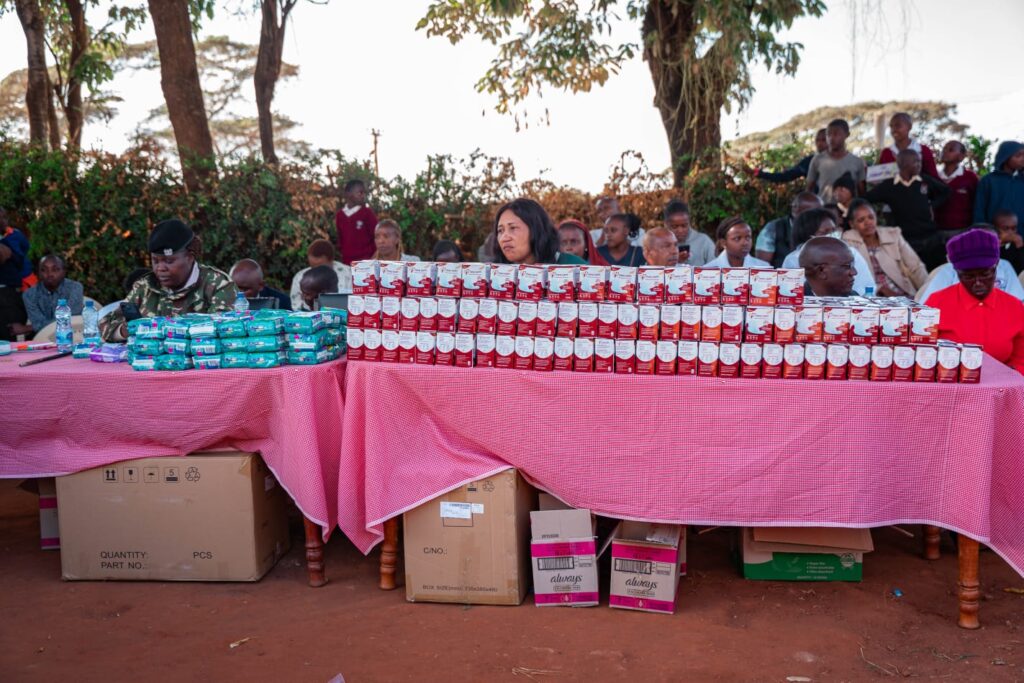
For many girls, receiving sanitary products is only the beginning.
The broader goal is ensuring they remain confident, present and engaged in the classroom.
Joining a Growing Movement
Musya’s work places him among a growing number of Kenyan advocates seeking to end menstrual poverty.
Across the country, organisations such as My Flow Foundation, Binti Foundation, PadMad Kenya and STADA Pads have championed menstrual health and dignity for girls through education and product access programmes.
Collectively, these initiatives have reached tens of thousands of girls nationwide.
Yet advocates argue that significant gaps remain, particularly in rural communities where affordability and access continue to be major barriers.
The challenge, they say, requires sustained support from government, private sector partners and community organisations.
A Title He Never Chose
Despite increasing recognition, Musya remains focused on the mission rather than the spotlight.
The nickname “The Period Man” emerged organically from the schools and communities he serves.
Today, he embraces it because of what it represents.
“If speaking about periods helps even one girl stay in school with confidence, then I will continue speaking,” he says.
Across classrooms in Kitui and Machakos, that message continues to resonate.
One conversation at a time.
One school at a time.
One girl at a time.
And in a region where menstrual health was once rarely discussed openly, a son of Kitui is helping rewrite the story—turning silence into awareness, stigma into confidence and basic support into lasting dignity.
