



Counties are reporting significant strides in Early Childhood Development and Education (ECDE), with pre-primary enrolment rising by 3.88 per cent to 2.95 million learners in 2025 — a milestone that underscores the expanding reach of devolved education services.
Data presented by the Council of Governors shows that 48,721 ECDE centres are now operational across the country, providing access to foundational learning for millions of children.
In the past year alone, counties constructed more than 5,950 new classrooms and recruited over 50,104 ECDE teachers, signaling a deliberate effort to strengthen early learning systems from the grassroots.
Beyond bricks and mortar, counties are increasingly embracing holistic programming that integrates nutrition, Water, Sanitation and Hygiene (WASH), and climate resilience into pre-primary education.
Education officials argue that this integrated approach is not only improving enrolment and retention but also enhancing overall learning outcomes and child welfare.However, even as the gains become evident, governors have sounded the alarm over a widening funding gap that threatens to slow momentum.

According to the Council, the ECDE function was never comprehensively costed at the time of its transfer to counties under devolution. While the minimum annual requirement for the sector stands at KSh22.08 billion, counties collectively allocated approximately KSh6.81 billion in the 2024/25 financial year — leaving a deficit of over KSh15 billion.
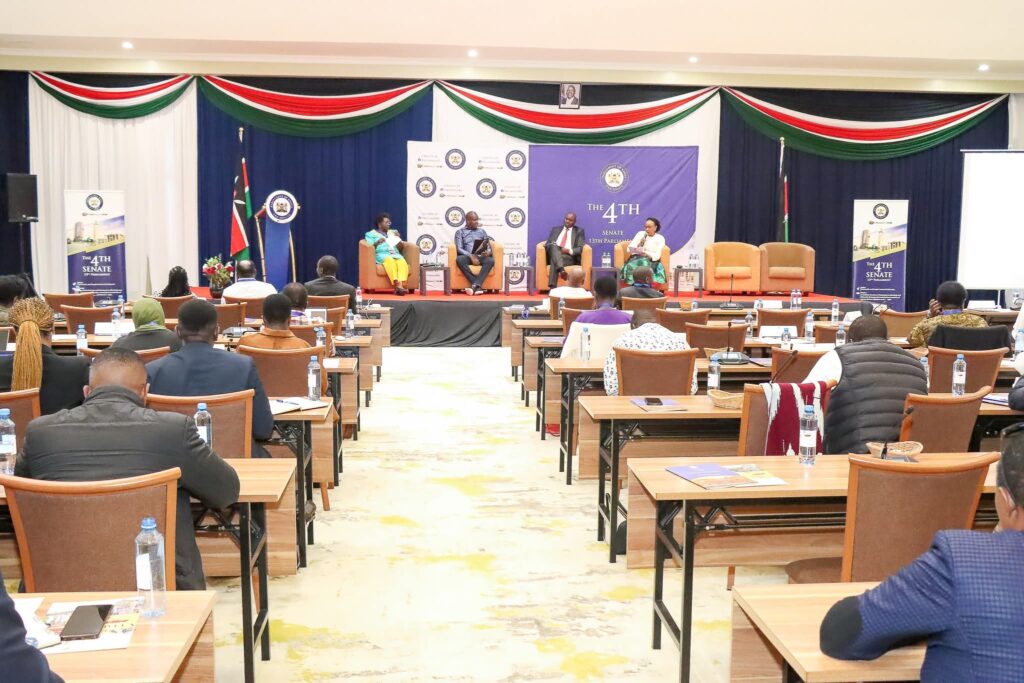
The funding challenge has intensified calls for a review of the revenue-sharing framework. The Council of Governors has urged the Senate of Kenya to bridge the financing gap and reconsider the proposed Early Childhood Education Index in the revenue-sharing formula, warning that it could inadvertently disadvantage certain counties if not carefully calibrated.

At the same time, governors are pushing for reforms in the Technical and Vocational Education and Training (TVET) landscape. They argue that overlaps between National Polytechnics under the national government and County Vocational Training Centres offering craft and artisan-level courses have created unhealthy competition, undermining grassroots skills development and causing inefficiencies in resource use.
To address these concerns, the governors are calling for rationalization of the TVET sector and amendments to the Basic Education Act to clearly define counties’ roles in the registration, management and quality assurance of pre-primary education.
As the matter moves to legislative and intergovernmental platforms, the latest figures paint a picture of steady progress tempered by structural and financial constraints — a test of how Kenya’s devolved units can sustain and scale early learning reforms in the face of limited resources.
