



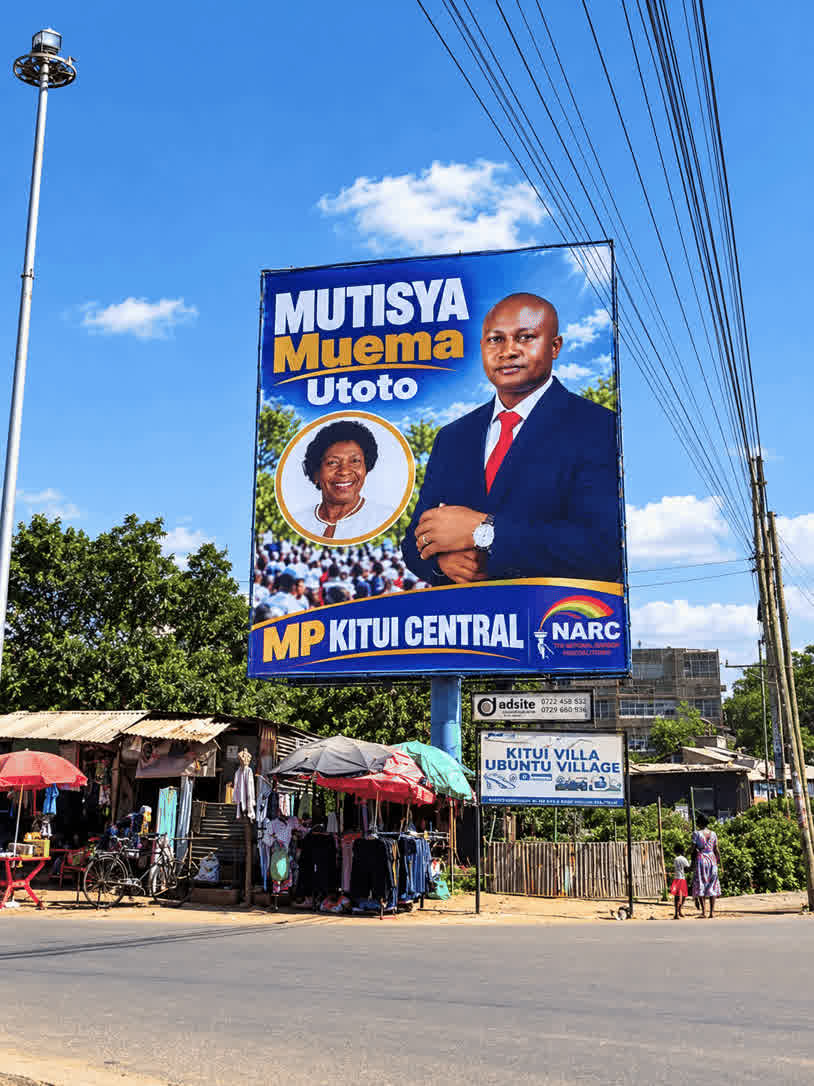
A political billboard promoting Mutisya Muema, alias Utoto, as a prospective Member of Parliament for Kitui Central has raised questions about compliance with electoral laws ahead of the 2027 General Election, following a warning by the Independent Electoral and Boundaries Commission (IEBC) against premature campaigning.
The billboard, positioned at the busy Kalundu–Riverside junction in Kitui town, features Muema’s image and political branding under the National Rainbow Coalition (NARC), whose party leader, Charity Ngilu, is also eyeing a second term as Kitui Governor in the 2027 elections.
Its presence has brought the question of early political advertising into focus, particularly after IEBC warned that campaign billboards, posters and political caravans displayed outside the prescribed campaign period could violate electoral regulations.
📊 Channel 15 News Opinion Poll
The emerging question is whether the billboard could attract the attention of electoral authorities and what consequences, if any, Muema could face if the display is found to breach the law.
IEBC Warns Against Early Campaigns
On August 20, 2026, IEBC Chairperson Erastus Edung Ethekon announced that the official campaign period for the August 10, 2027 General Election would begin upon the registration of candidates, but not before May 29, 2027.
Campaigns are scheduled to end on August 7, 2027, 48 hours before polling day.
Ethekon warned that campaigning outside the prescribed period would be unlawful, specifically identifying campaign posters, billboards, political caravans and other forms of electioneering.
The Commission urged political parties, candidates and their supporters to comply with the electoral laws and regulations, warning that violations could attract sanctions.
The warning puts campaign-style displays across the country under scrutiny as political aspirants position themselves ahead of the next General Election.
What Does the Law Say?
Section 2 of the Elections Act, 2011, defines the campaign period by reference to the period specified in a notice issued by the Commission in relation to an election.
The Electoral Code of Conduct, contained in the Second Schedule to the Elections Act, sets standards for political parties, candidates and other participants in the electoral process. Section 110 of the Act requires those participating in an election to subscribe to and observe the Code.
IEBC has indicated that breaches of the prescribed campaign rules may attract sanctions under the applicable legal framework.
However, the presence of a billboard does not automatically disqualify an aspirant from contesting an election. The specific circumstances, the applicable provisions and the enforcement process would need to be established before determining the consequences for an individual candidate.
In Muema’s case, clarification from IEBC would establish whether the billboard at Kalundu–Riverside falls within the conduct the Commission has prohibited and whether any action has been initiated.
Political Commentator Questions Compliance
Local political commentator Peter Mutua has been identified for comment on the billboard and the legal questions surrounding early campaign advertising.
Mutua’s proposed position is that IEBC should clarify whether the display breaches the prescribed campaign timetable and apply the rules consistently to all political aspirants.
“The billboard at the Kalundu–Riverside junction raises a legitimate question about compliance with the law ahead of the 2027 General Election. IEBC has clearly stated that campaigning must not begin before May 29, 2027, and has specifically included campaign billboards among the activities prohibited outside the prescribed period.
“Section 2 of the Elections Act defines the campaign period by reference to a notice issued by the Commission. The Commission therefore needs to clarify whether this particular billboard amounts to premature campaigning and what action, if any, the law permits.
“We should not rush to declare that an aspirant has automatically lost the right to contest. Any sanction must follow the applicable law and due process. The same rules should apply equally to all aspiring candidates, regardless of their political party or influence.”
Editorial note: These remarks are proposed wording and must be confirmed by Peter Mutua before publication as a direct quotation to Channel 15 News.
Could Muema’s 2027 Bid Be at Risk?
IEBC’s warning raises the possibility of enforcement action against political actors found to have breached campaign regulations. The applicable sanctions would depend on the nature of the violation and the relevant legal provisions.
The distinction is important: a billboard may attract scrutiny, but it would be premature to conclude that Muema faces automatic disqualification without establishing the legal basis for such a sanction.
The issue also raises questions about consistency in enforcement, particularly as other aspirants begin promoting their political ambitions ahead of the official campaign period.
Channel 15 News will seek clarification from IEBC on whether it considers the billboard at Kalundu–Riverside a violation of the prescribed timetable, what measures could apply and whether any action has been taken.
Muema and NARC will also be given an opportunity to respond.
As the 2027 political contest gathers momentum, the billboard presents a test of how the electoral rules governing early campaigns will be interpreted and enforced across the political divide.
Channel 15 News — The Full Story First.
