



Kenya’s economy is on the brink of a cash-flow crisis after the Controller of Budget (CoB), Dr. Margaret Nyakang’o, sounded the alarm over Kshs. 524.84 billion in pending bills, warning that the ballooning arrears are pushing Small and Medium Enterprises (SMEs) to the edge of collapse.
Appearing before the Budget and Appropriations Committee, Dr. Nyakang’o painted a grim picture of the government’s financial indiscipline, saying the non-payment of contractors, suppliers, and pension obligations has left businesses starved of liquidity, threatening massive job losses, business closures, and eroded investor confidence.
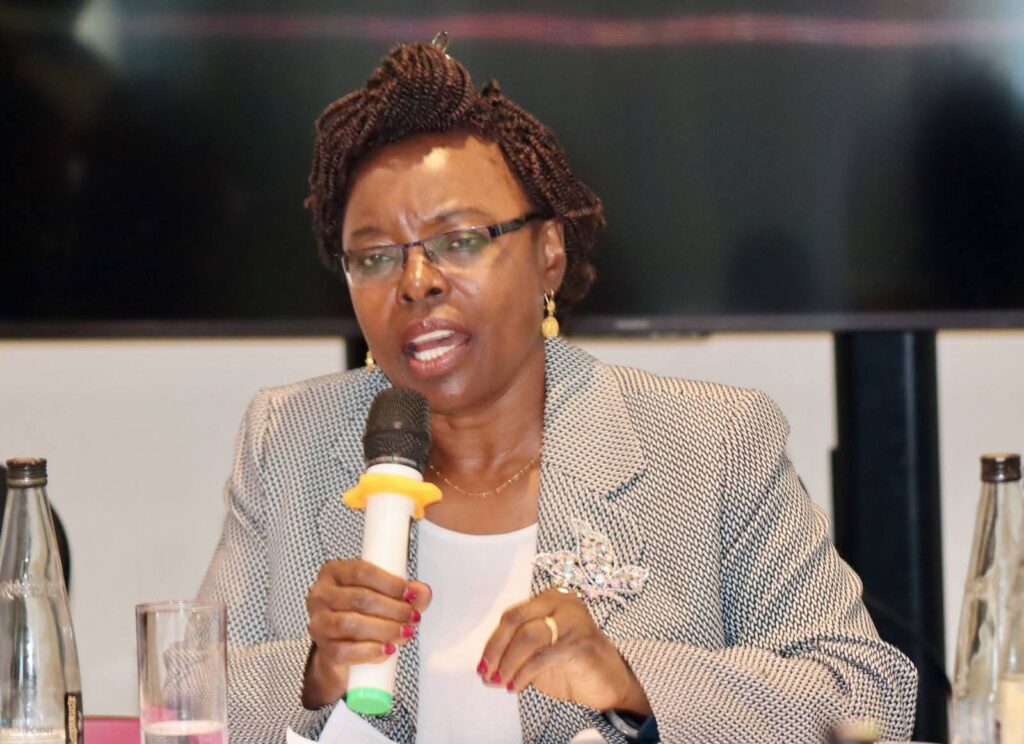
“As of June 30, 2025, State Corporations alone owed Kshs. 404.33 billion—77 per cent of the total—while Ministries, Departments, and Agencies (MDAs) accounted for Kshs. 120.51 billion,” Nyakang’o revealed, warning that the crisis has worsened compared to last year’s Kshs. 516.27 billion.
The CoB cautioned that unless the National Treasury urgently verifies and settles eligible pending bills, Kenya risks plunging SMEs into bankruptcy, with ripple effects across the economy.

Adding fuel to the fire, Nyakang’o accused the Treasury of breaching the law by relying heavily on Article 223 withdrawals to bypass budget approval processes. She disclosed that in FY 2024/25, Kshs. 83.96 billion was withdrawn under the controversial clause, with her office approving Kshs. 66.54 billion—an action she said contravenes Public Finance Management Regulations, 2015.
“This points to glaring weaknesses in budget planning and execution,” she told MPs, warning that unchecked spending is undermining fiscal discipline and starving critical services.

The session also heard from Central Bank Governor Dr. Kamau Thugge, who defended the rollout of a revised Risk-Based Credit Pricing Model from September 1, 2025. The model, he said, will usher in a common reference rate across all banks, making borrowing costs more transparent and aligned with monetary policy.

Despite the fiscal storm, Dr. Thugge struck an optimistic note, projecting GDP growth at 5.2% in 2025 and 5.4% in 2026, buoyed by agriculture, services, and an industrial rebound.
But for now, the CoB’s warning has put the government under pressure to act fast, as mounting unpaid bills threaten to cripple SMEs—the backbone of Kenya’s economy.
