


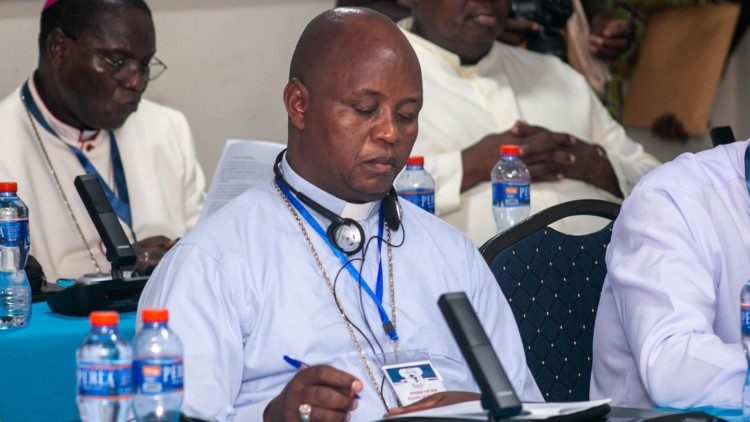
Accra, Ghana – Kitui Diocese’s His Lordship Rt. Rev. Joseph Mwongela has joined seven other Kenyan bishops and a host of newly appointed Catholic bishops from across Africa in a high-level seminar organized by the Symposium of Episcopal Conferences of Africa and Madagascar (SECAM).
The week-long seminar, held from February 13 to 17, 2025, in Accra, Ghana, is a crucial event aimed at equipping new bishops with deeper knowledge of SECAM’s mission and fostering greater episcopal unity across the continent. Themed “Knowing and Owning SECAM,” the event brought together approximately 50 bishops to strategize on collective responsibility and strengthen the Church’s role in addressing Africa’s pressing spiritual and socio-economic challenges.
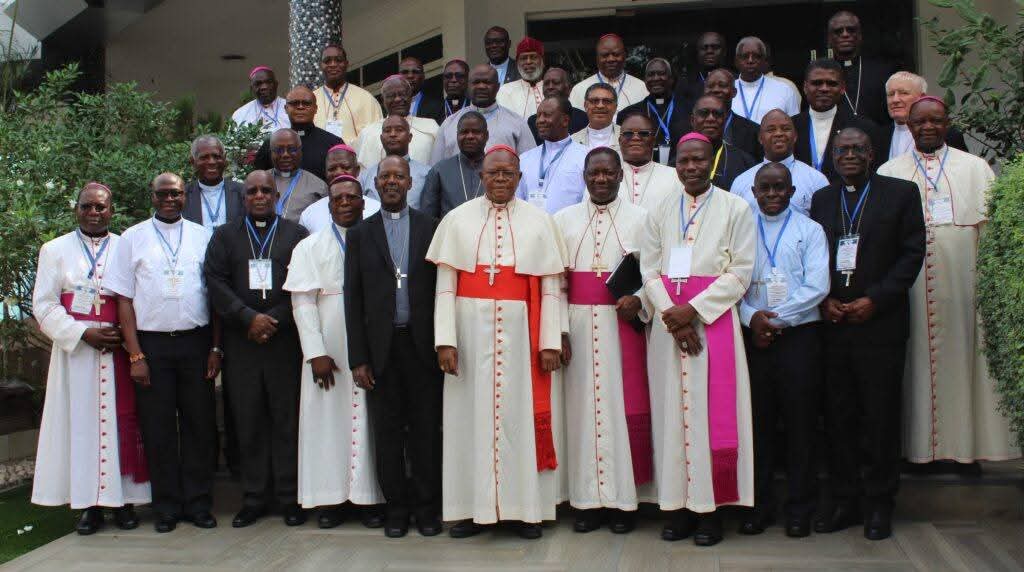
Bishops Called to Bold Leadership in the Face of Africa’s Challenges
Cardinal Fridolin Ambongo Besungu, the Archbishop of Kinshasa and President of SECAM, set the tone for the seminar in his powerful opening address, urging bishops to “embrace their mission beyond their dioceses” and actively shape the future of the African Church.
He emphasized the need for solidarity among African bishops, highlighting that SECAM serves as the African Church’s voice at the Vatican and on the global stage. Key discussions revolved around:
✅ Strengthening inter-diocesan collaboration
✅ Advocating for social justice and governance accountability
✅ Tackling urgent pastoral challenges such as migration, youth disengagement, and interfaith dialogue
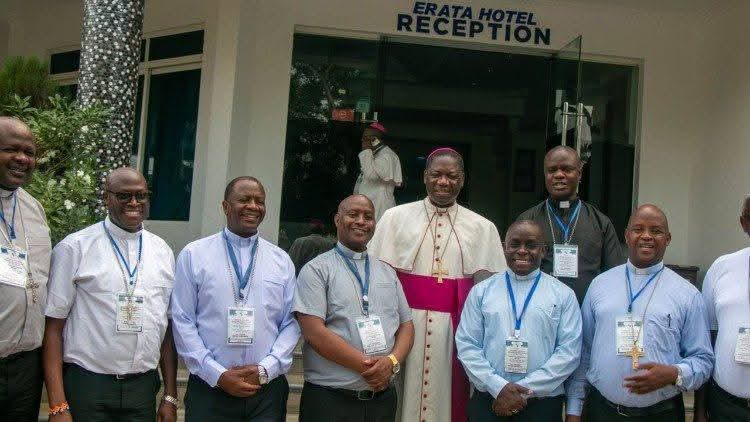
As Africa faces political instability, economic hardships, and deepening social crises, the Church is being called to rise as a beacon of hope and a moral authority in governance, peacebuilding, and poverty alleviation.
Bishop Mwongela’s Role in Shaping the Future of the Church
For Bishop Mwongela, the SECAM seminar presents a pivotal moment in his leadership. His engagement in this high-profile meeting signals his commitment to fostering a more united and self-reliant African Church.
The Kitui Bishop actively participated in discussions on pastoral strategies for evangelization, the synodal path of the Church, and SECAM’s role in advocating for Africa’s unique concerns on the international stage.
With SECAM tracing its roots back to 1969 during Pope St. Paul VI’s visit to Kampala, the institution has remained a pillar of African Catholicism, championing Church-led solutions to issues such as peacebuilding, poverty eradication, and ethical governance.
What This Means for the Future of the African Church
As Bishop Mwongela and his fellow bishops return to their dioceses, the impact of this seminar will be felt in how they translate SECAM’s vision into tangible action. The emphasis on inter-diocesan cooperation, grassroots evangelization, and proactive social engagement is set to shape the trajectory of the African Church in the coming years.
Bishop Mwongela’s presence in this exclusive gathering solidifies Kitui Diocese’s place in the larger African Catholic mission, reinforcing his commitment to a Church that is not just spiritual but also an active force for social transformation.
As Africa grapples with complex modern challenges, the bishops’ renewed unity under SECAM could mark the dawn of a more influential, self-sustaining, and globally engaged African Church.
