



A peaceful march through the streets of Kitui on Thursday became a powerful call to end gender-based violence and femicide as residents, civil society organisations, county officials and security agencies united to demand stronger action against the rising killings of women.
The Community Mental Health Walk Against Gender Violence, organised by Savana Kitui CBO, brought together hundreds of participants who called for justice for victims, better protection for survivors and greater public awareness on the devastating effects of gender-based violence.

The event was led by Savana Kitui officer Josephat Kelly, who urged communities to break the culture of silence surrounding domestic violence and abuse, saying every resident has a role to play in preventing violence before it turns fatal.
“Enough is enough. Every life lost is one too many. We must speak up, report abuse early, support survivors and work together to protect women, girls and vulnerable members of our communities,” Kelly said.

The walk comes amid growing concern over a series of killings involving women in Kitui County. Human rights activists estimate that at least eight women have been killed in suspected gender-based violence and femicide-related incidents in the county over the past three months, although the figure has not yet been independently verified through official police statistics.

The concern mirrors a wider national crisis. According to Kenya’s Technical Working Group on Gender-Based Violence and Femicide, 34 percent of women and 27 percent of men have experienced physical violence during their lifetime.
Independent monitoring by Africa Data Hub and Africa Uncensored documented at least 220 women and girls killed in Kenya in 2025—an average of about one woman every day. The reports further show that most victims are killed by people known to them, including intimate partners, relatives or close acquaintances.

While women account for the overwhelming majority of reported femicide victims, experts caution that men are also affected by gender-based violence, particularly physical and psychological abuse. However, Kenya does not currently maintain comprehensive national statistics on GBV-related deaths involving men, making the true scale of the problem difficult to establish.

Participants in Thursday’s march called for faster investigations and prosecution of perpetrators, stronger enforcement of protection orders, expanded mental health and psychosocial support services for survivors, and sustained public education campaigns aimed at preventing violence before it escalates.
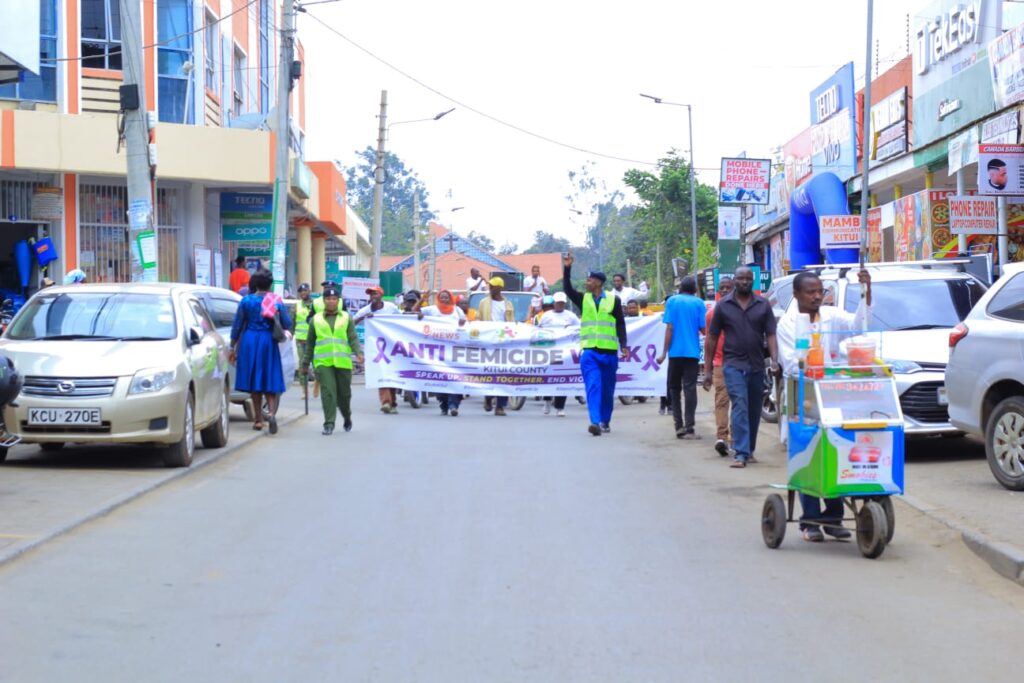
The organisers also stressed that gender-based violence is not solely a women’s issue but a community challenge that requires families, schools, religious institutions, local leaders and law enforcement agencies to work together to identify early warning signs and intervene before lives are lost.
Where to Get Help
Victims and survivors of gender-based violence are encouraged to report incidents immediately to the nearest police station, the Kitui County Police Gender Desk, local health facilities, or accredited gender-based violence recovery centres where they can access emergency medical care, counselling, psychosocial support and legal assistance.

Community members are also urged to report suspected abuse involving neighbours, relatives or children before it escalates into serious injury or death.
The event was organised by Savana Kitui CBO in partnership with the County Government of Kitui, Kitui County Police Gender Desk, Sauti ya Mwananchi, Urgent Action Fund Africa, with Channel 15 News serving as the official media sponsor.
— Channel 15 News | The Full Story First
