


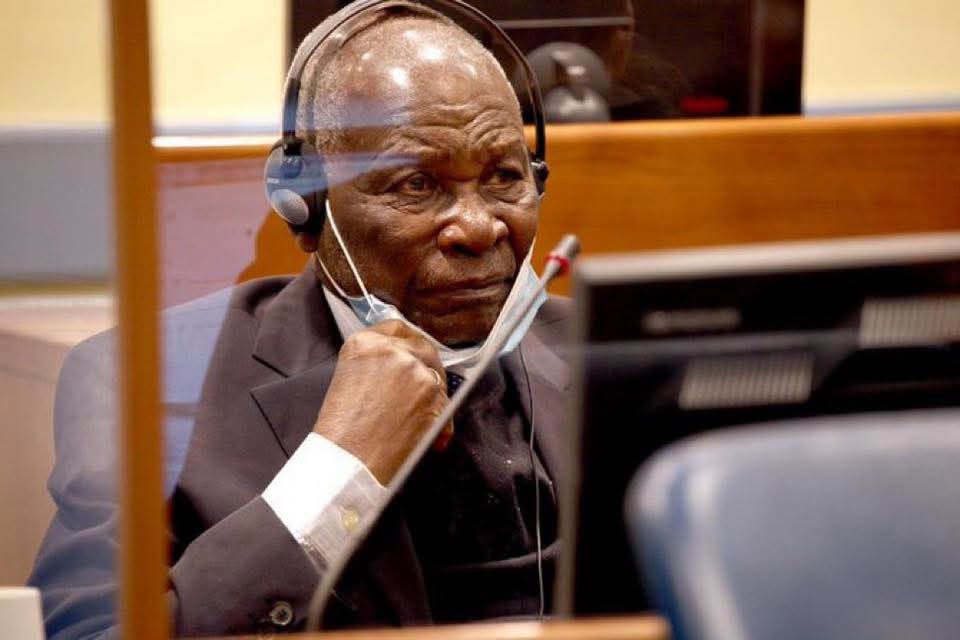
Félicien Kabuga, the Rwandan businessman accused of financing and fueling the 1994 Genocide against the Tutsi in Rwanda, has died in The Hague while awaiting provisional release, the International Residual Mechanism for Criminal Tribunals (IRMCT) has confirmed.
In a statement released Saturday, the IRMCT said Kabuga died while hospitalized in The Hague, Netherlands, where he had remained under United Nations detention following the suspension of his trial due to deteriorating health and advanced dementia.
The UN tribunal further announced that Dutch authorities had immediately launched the standard legal procedures and investigations surrounding his death, while IRMCT President Judge Graciela Gatti Santana ordered a full inquiry into the circumstances.
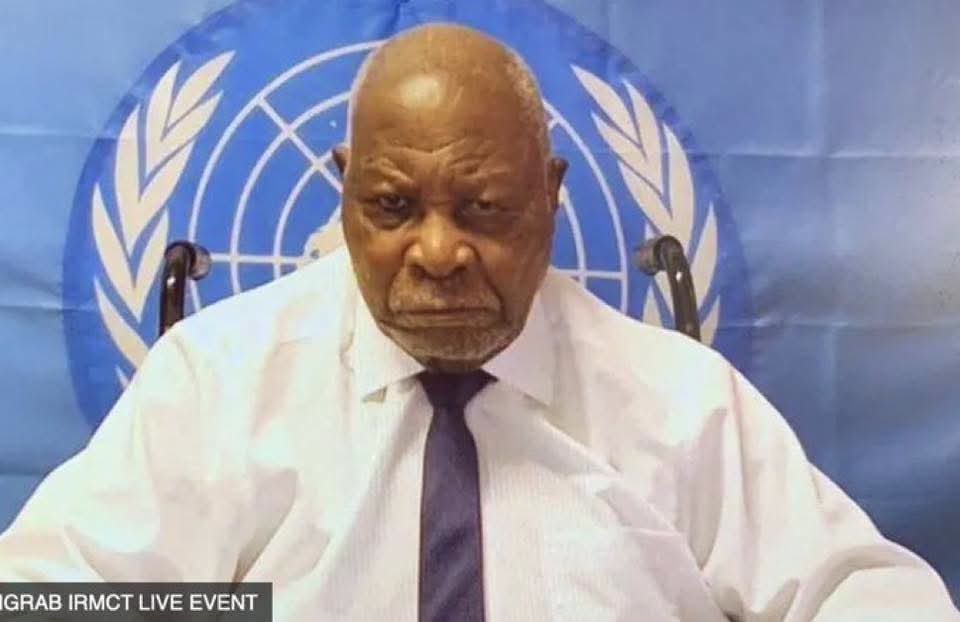
Kabuga, once described as one of the world’s most wanted fugitives, had faced multiple charges including genocide, conspiracy to commit genocide, direct and public incitement to commit genocide, and crimes against humanity such as extermination, persecution and murder linked to the 1994 Rwanda genocide that claimed the lives of more than 800,000 people, mainly Tutsis and moderate Hutus, within 100 days.
Prosecutors accused him of using his wealth and influence to bankroll extremist Hutu militias and support the infamous Radio Télévision Libre des Mille Collines (RTLM), a broadcaster widely blamed for spreading hate propaganda and inciting mass killings during the genocide.
Kabuga evaded capture for more than two decades before his dramatic arrest near Paris, France, in May 2020. He was later transferred to The Hague to face trial before the IRMCT, the UN body that took over residual functions of the International Criminal Tribunal for Rwanda (ICTR).
However, proceedings against him were indefinitely halted in September 2023 after judges ruled that he was mentally unfit to stand trial because of severe dementia and other health complications.
At the time of his death, Kabuga was awaiting transfer to a country willing to receive him under provisional release arrangements after no state had agreed to host him.
His death now closes one of the final major unresolved prosecution cases connected to the 1994 Rwandan genocide — without a final judicial verdict ever being delivered.
