



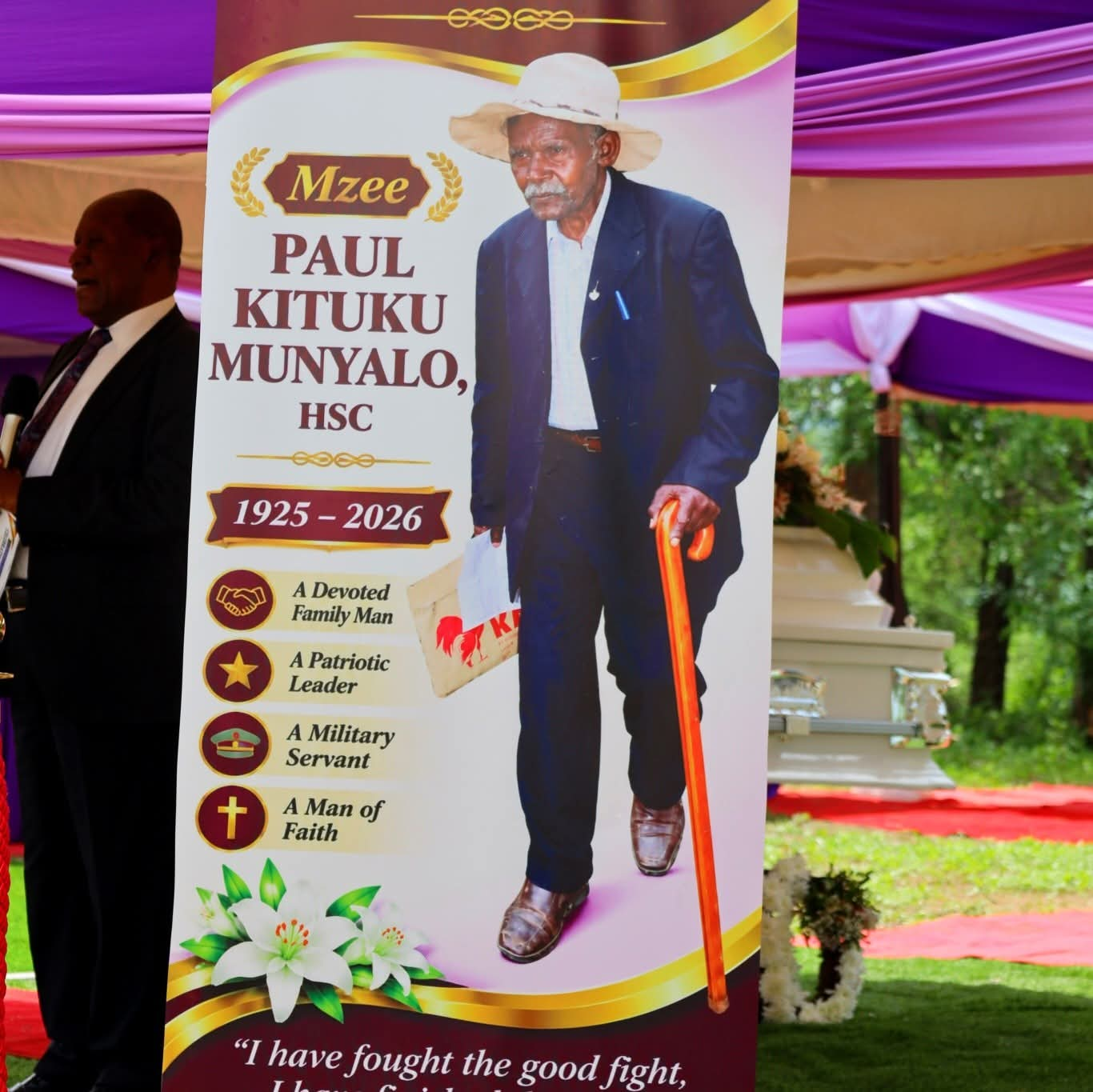
Mzee Paul Kituku Munyalo, who encountered Catholicism while serving in Burma during the Second World War before returning home to help establish the faith in southern Kitui, was aged 101 at the time of his death.
A remarkable chapter in the religious and political history of Kitui South has come to a close following the burial of Mzee Paul Kituku Munyalo, a former World War II soldier who became one of the pioneers of Catholic evangelisation in the region.
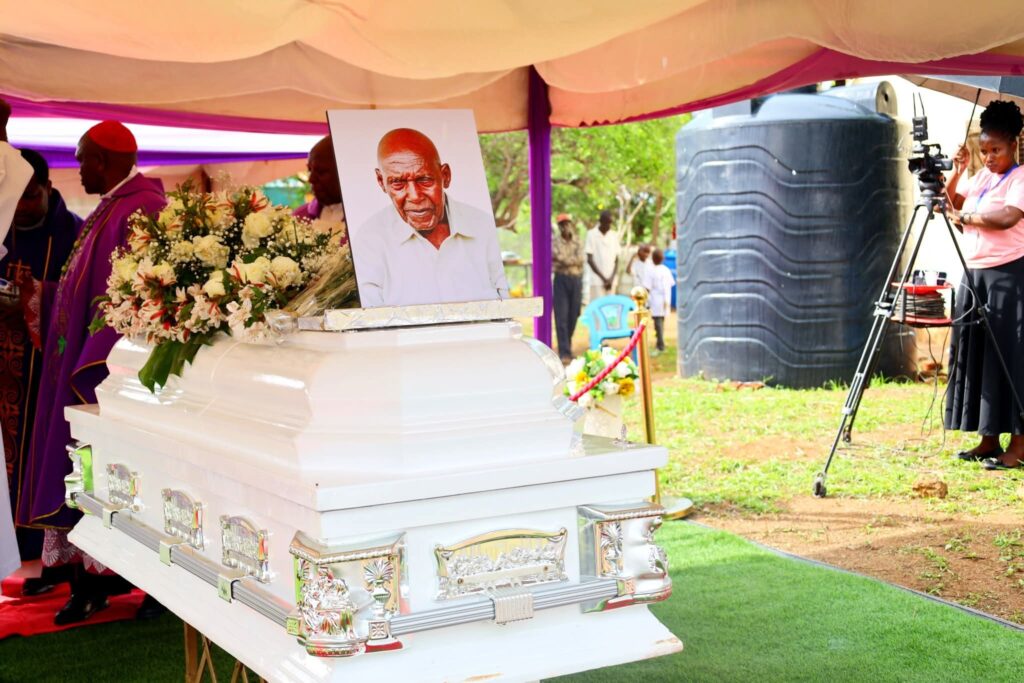
Photo: Channel 15 News
Munyalo, who died on November 1, 2026, aged 101, was remembered for his contribution to the establishment of the Catholic Church in southern Kitui, his leadership in local government and decades of service to his community.
📊 Channel 15 News Opinion Poll
The Bishop of the Catholic Diocese of Kitui led clergy, religious leaders and faithful in bidding farewell to the centenarian, whose life journey took him from the battlefields of Burma, present-day Myanmar, to the early Catholic mission stations of Ikutha.
Born in 1925 in Maaini Village, Ikutha, to the late Munyalo Mutisya and Mulike Sila, Munyalo was the firstborn in a family of six children.
He began his education at African Mission School in Ikutha before joining Government School, now Kitui School, in 1936 after passing his Common Entrance Examination.
His education was interrupted in 1938 when his father, who was then a Senior Chief, discontinued his studies to facilitate his entry into military service during the Second World War.
Munyalo subsequently joined the King’s African Rifles (KAR) and was deployed to Burma, where he fought alongside Allied forces against Japanese troops.
It was during this military deployment that an encounter with a fellow Kenyan soldier changed the course of his life.
According to the account of his life presented by the Catholic Diocese of Kitui, Munyalo became intrigued by a soldier from central Kenya who regularly knelt to pray every morning and evening, made the Sign of the Cross and recited prayers.
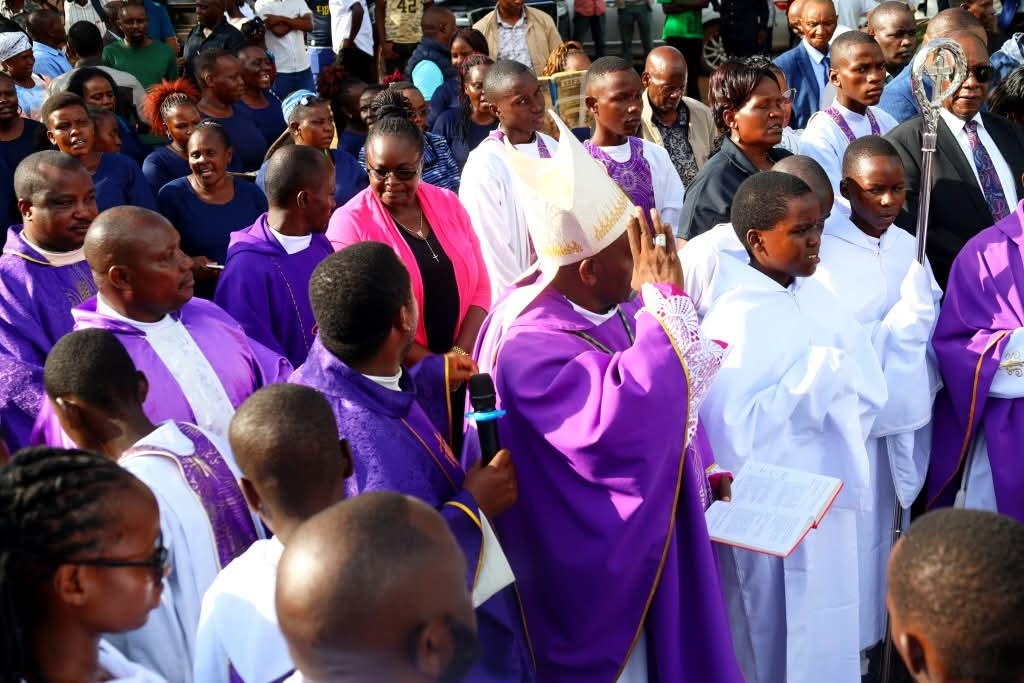
Photo: Channel 15 News.
Curious about the religious practices, he approached the soldier, who introduced him to the Catholic faith.
Munyalo subsequently received religious instruction, was baptised and adopted the name Paul.
When he returned home, he brought with him a new religious identity and became one of the earliest Catholic men in the far southern part of Kitui.
He immediately began sharing his faith with his wife and children before persuading his brother and his family to receive Catholic instruction.
His evangelisation efforts would eventually extend beyond his family, placing him at the centre of the early establishment of Catholicism in the region.
How He Helped Establish Catholicism In Southern Kitui
Upon returning to Kenya, Munyalo sought out Catholic priests who were beginning missionary work in Kitui, becoming an important local collaborator, particularly for Irish missionaries.
His knowledge of the local language, culture and community helped the priests establish themselves and spread the Catholic faith in an area where the African Inland Church (AIC) already had an established presence.
One of his most significant contributions was donating land at Kakungula, where the first Catholic Church station in the area was established.
The missionary work gained momentum in the late 1960s, with Fr Mick Rodgers pioneering the establishment of a secondary school in Ikutha, which also provided an important entry point for Catholic evangelisation.
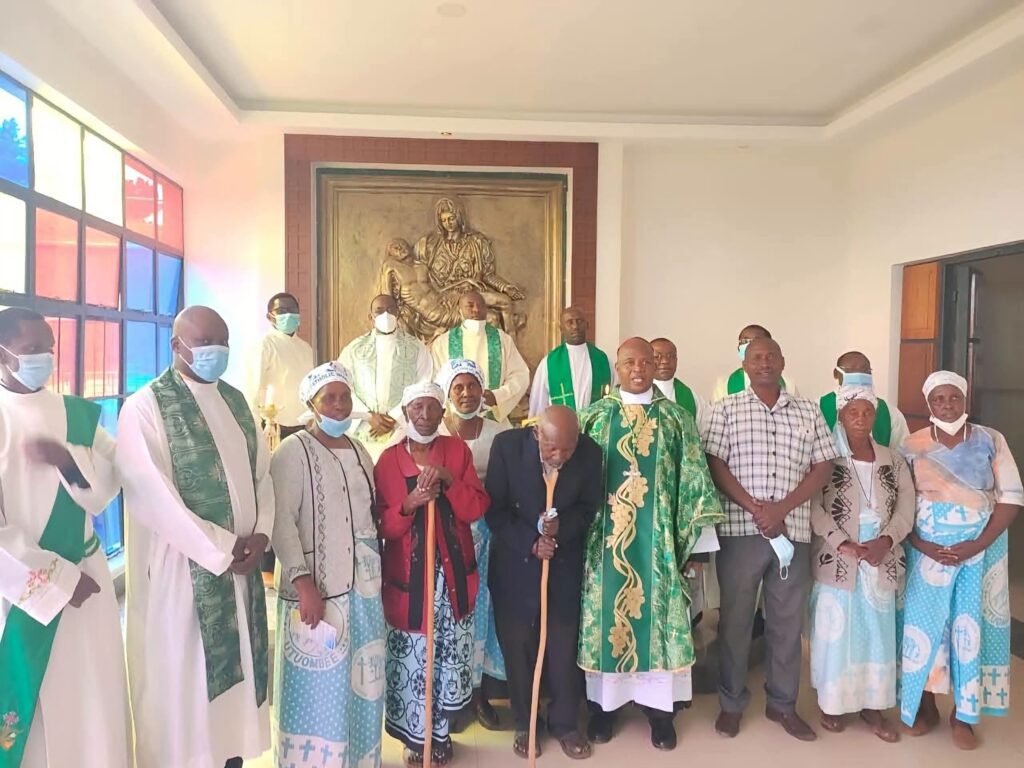
Photo: Catholic Diocese of Kitui.
He was later succeeded by Fr Tommy Barrett, who undertook the construction of the mission house and church. During the construction period, the priest initially lived in two small iron-sheet structures.
Fr Dermot Foley also played a significant role in developing the Ikutha, Kalivu and Kituti outstations from Mutomo, with Munyalo providing invaluable assistance.
In May 1970, Ikutha was officially established as a Catholic parish, marking a major milestone in the expansion of the Church in southern Kitui.
Fr Foley was among its first priests, followed by Fr Pat Kelleher and later Fr P.J. McCamphill.
Through the combined efforts of missionaries, catechists and local collaborators, Catholicism gradually spread to other communities, including Monguni, Ithangathi and Ilenge along the Athi River.
Munyalo’s contribution went beyond that of an ordinary convert. His collaboration with the missionaries helped lay the foundations of Catholic evangelisation in southern Kitui, where the faith continues to serve generations of believers.
Three Terms As Councillor And Two Terms As County Council Chairman
Beyond his religious contribution, Munyalo also played a prominent role in local politics following Kenya’s independence.
In 1963, he was elected the first councillor representing Ikutha Location, serving three consecutive terms until 1979.
His leadership experience subsequently earned him election as Chairman of Kitui County Council, a position he held twice between 1968 and 1972.
During his tenure, he joined six other Kenyan county council chairmen for a one-month seminar in London focusing on local authority management and administration.
He returned to elective politics in 1983 after being re-elected councillor for Ikutha, serving until 1987 when he voluntarily retired from public office.
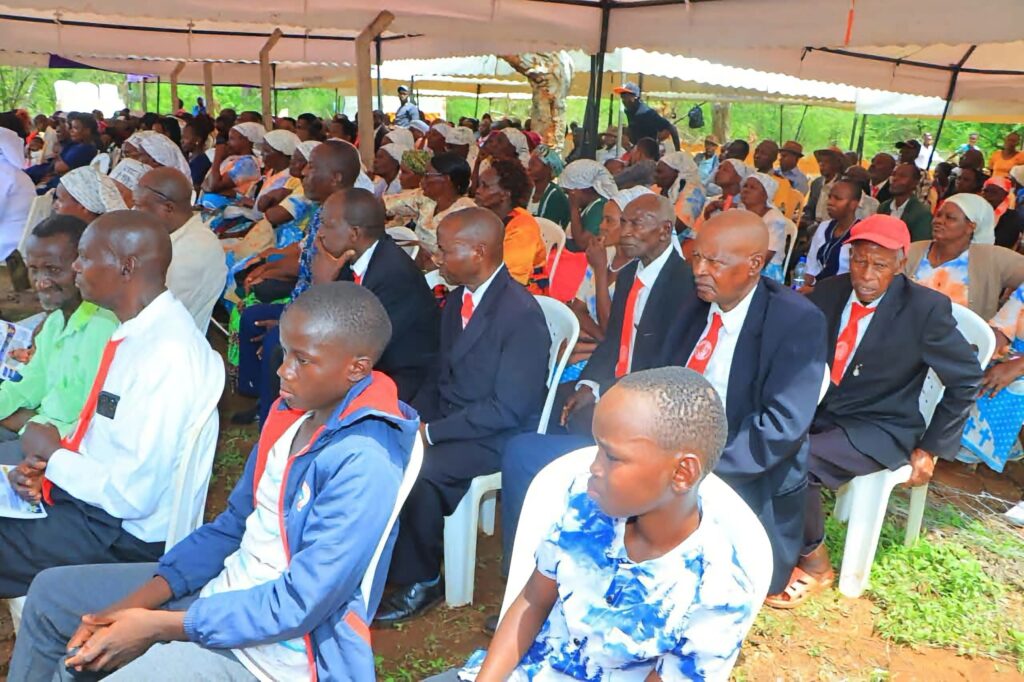
Photo: Channel 15 News.
His years in local government were marked by involvement in community development initiatives, including the establishment of dispensaries, dams, cattle ranches and other development projects.
In recognition of his contribution to public service, he received the Head of State Commendation (HSC) on December 11, 1987, from then President Daniel arap Moi.
A Respected Elder Until His Final Years
After retiring from elective politics, Munyalo remained an influential figure in community affairs, regularly consulted by aspiring politicians and other leaders seeking his experience and counsel.
He also maintained his involvement in the Catholic Church through the Catholic Men’s Association (CMA), St Joseph’s Association and other activities at parish and diocesan levels.
He worked closely with the late Bishop William Dunne, the first Bishop of the Catholic Diocese of Kitui, as well as subsequent bishops, priests and other clergy.
According to the Diocese, Munyalo enjoyed generally good health in his later years and occasionally visited Mutomo Mission Hospital for routine medical check-ups.
However, towards the end of October 2026, his health deteriorated after developing difficulties with feeding, loss of appetite and general weakness.
He died at approximately 3pm on Sunday, November 1, 2026, coinciding with the Solemnity of All Saints in the Catholic calendar.
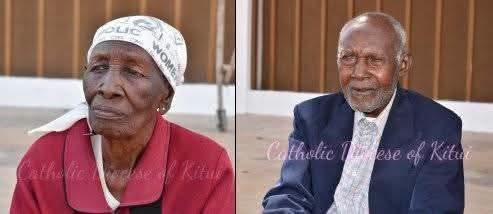
Photo: Catholic Diocese of Kitui.
His death marks the end of a century-long life that connected some of the defining chapters of Kenya’s history, from the Second World War and independence to the development of local government and the expansion of the Catholic Church in Kitui.
For Ikutha and the wider Kitui South region, Munyalo leaves behind a legacy that extends beyond the political offices he occupied. His contribution to the establishment of Catholic institutions helped shape the religious landscape of a region where generations have since embraced the faith.
His story remains an extraordinary account of how an encounter with a fellow soldier on a distant battlefield changed the course of a community’s religious history.
A soldier who left home for war returned with a faith that he would spend the rest of his life helping to establish among his people.
