


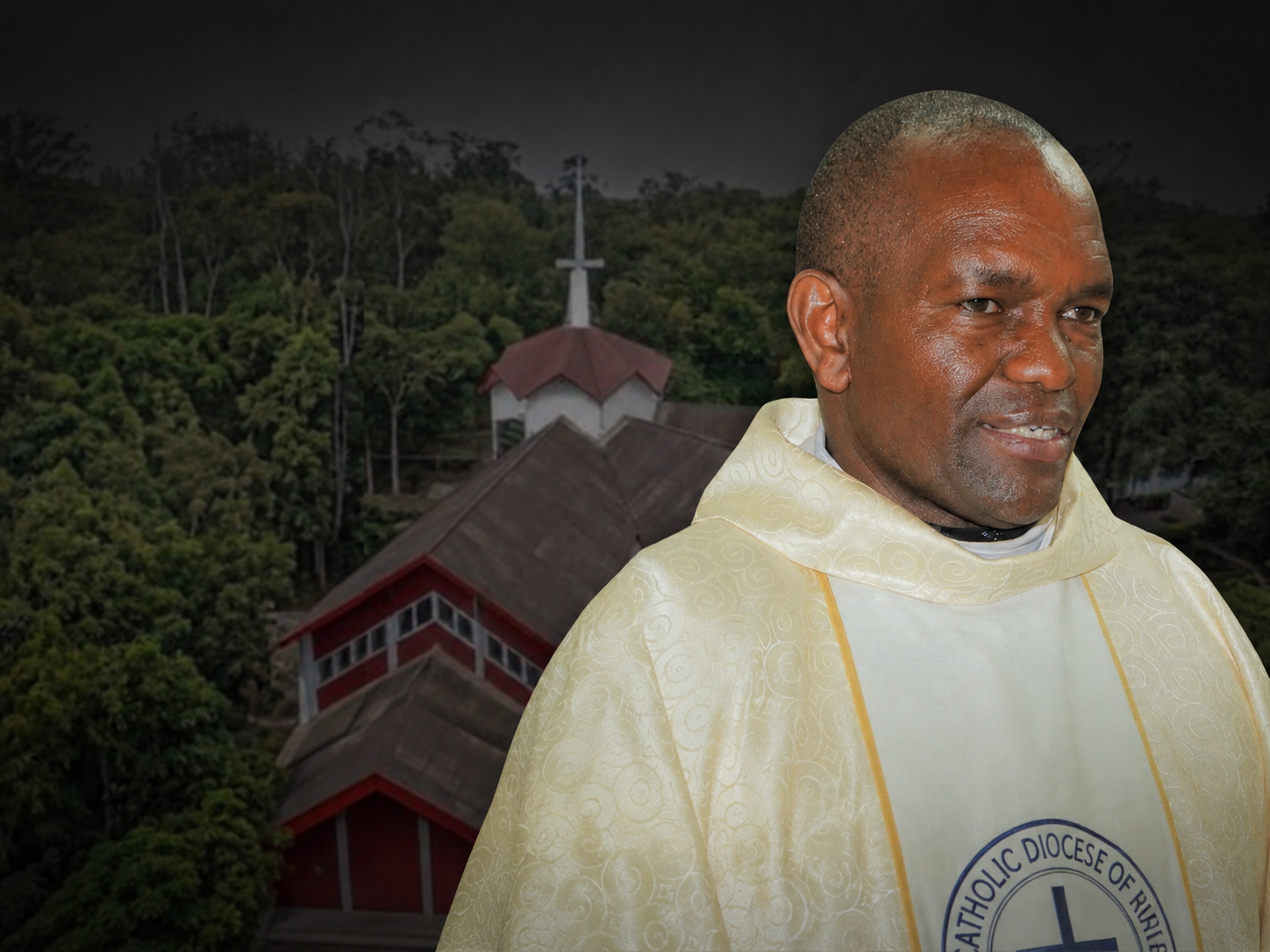
A storm of confusion, panic and behind-the-scenes damage control has engulfed sections of the Catholic Church in Kenya following the now-deleted reports claiming that Rev. Fr. John Mbua Mwandi had been appointed the new Bishop of the Catholic Diocese of Kitui.
Investigations by Channel 15 News reveal that while Fr. Mwandi’s name may not have come as a surprise within Church circles due to his long-standing senior role in the diocese, the manner in which the alleged announcement was made has triggered serious questions about possible breaches of Church communication protocol and Canon Law procedures.
Several sources who spoke to Channel 15 News on condition of anonymity because they are not authorized to discuss internal Church matters confirmed that Fr. Mwandi has served as Vicar General for nearly a decade, even before Bishop Joseph Mwongela was appointed Bishop of Kitui, making him one of the most experienced senior clergy figures within the diocese.
However, insiders say the shock was not necessarily about the alleged appointment itself, but how the information was released publicly before formal Church procedures appeared to have been completed.
The Leak Before the Vatican?
According to information obtained by Channel 15 News, the first public signals emerged shortly before 11am yesterday when The Catholic Mirror, a communication platform associated with the Kenya Conference of Catholic Bishops (KCCB), reportedly shared the alleged appointment on its social media platforms and website.
But investigations by Channel 15 News indicate that moments before the public post appeared, the same communication had already circulated within a WhatsApp group bringing together heads of Catholic diocesan radio stations and presenters from across Kenya.
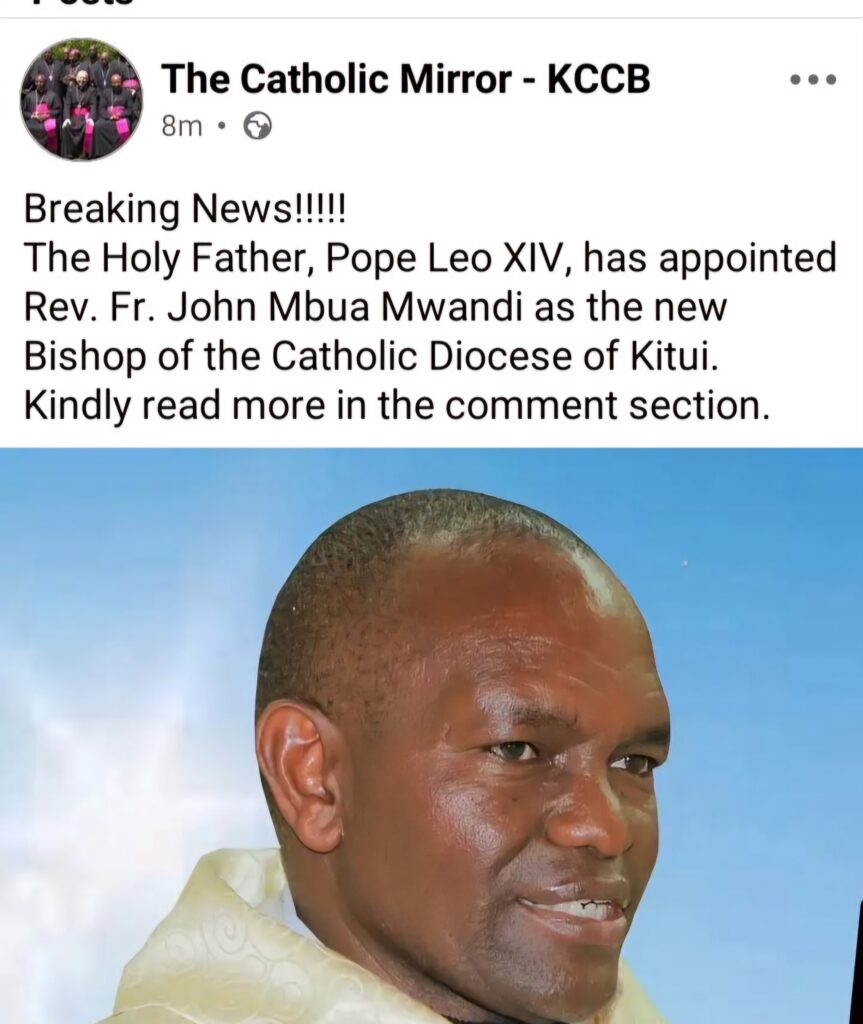
Sources say some diocesan communication officers and Catholic radio stations quickly proceeded to share the information online, treating it as an official Vatican announcement.
One of the stations that went on record was Radio Thome 88.1 FM in Kitui, which reportedly aired the announcement shortly after noon and published celebratory social media posts announcing Fr. Mwandi as the new Bishop of Kitui.
However, confusion erupted shortly afterwards when the social media posts linked to The Catholic Mirror began disappearing. The website publication was also reportedly pulled down, forcing radio stations and Catholic communication officers into an abrupt retreat.
“What followed was a wave of calls, confusion and attempts to contain the situation,” one source told Channel 15 News.
Questions Over Canon Law and Procedure
At the centre of the controversy is whether proper Church procedure was followed before the information was circulated publicly.
Traditionally, episcopal appointments in the Catholic Church are announced simultaneously through the Vatican Press Office in Rome and through Apostolic Nunciatures in respective countries. Such announcements are highly coordinated and normally include official documentation, confirmation timing and proper authentication.

Sources familiar with Church communication procedures questioned why the alleged PDF document circulating online did not bear what they described as the expected formal authentication and procedural details associated with Vatican episcopal appointments.
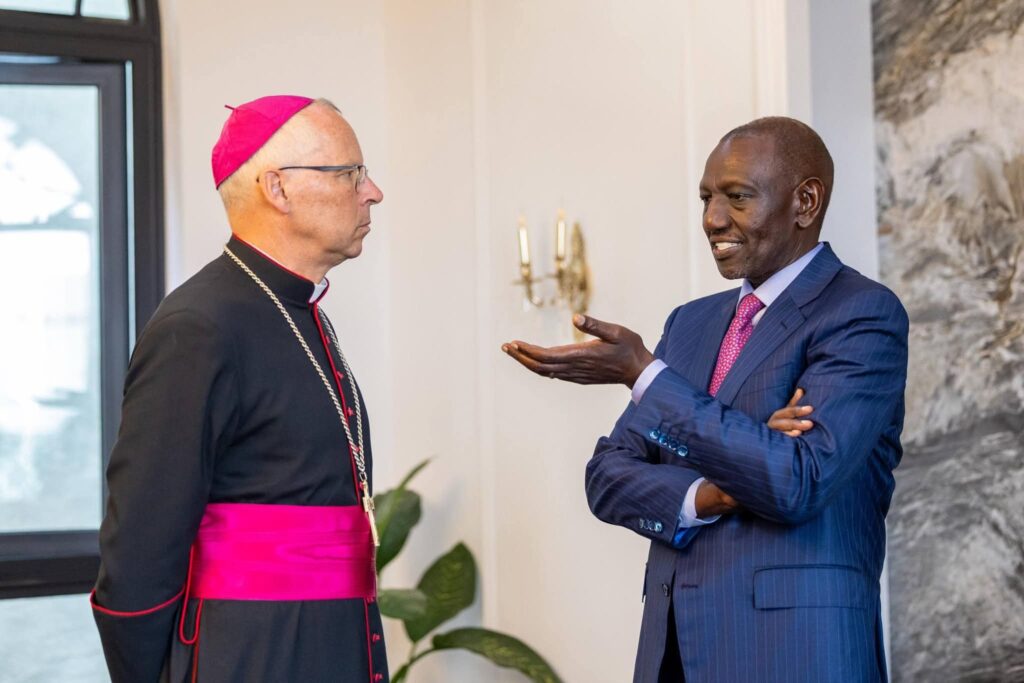
The controversy has also drawn attention to Archbishop Hubertus van Megen, the Apostolic Nuncio to Kenya who was recently transferred by Pope Leo XIV to Germany after serving in Kenya since 2019.
Church insiders are now questioning whether a nuncio already transferred from office would still ordinarily preside over or communicate such a sensitive appointment process, especially if transition procedures had already commenced.
While Channel 15 News could not independently verify the authenticity of the circulated document, multiple Church sources described the sequence of events as “highly irregular.”
Could the Appointment Still Be True?
Despite the communication chaos, senior Church insiders maintain that the alleged appointment itself cannot be dismissed entirely.
“There is a difference between a false appointment and a prematurely communicated appointment,” one source said.
That distinction now lies at the heart of the unfolding crisis.
Canon Law experts note that bishop appointments technically become effective once officially made by the Pope and formally communicated through the Holy See, regardless of local speculation or leaks. However, unauthorized disclosure before official publication can create diplomatic, administrative and pastoral complications within the Church.
The situation has left thousands of Catholic faithful in Kitui trapped in uncertainty — emotionally processing information about a bishop they have not officially been told exists.
For many believers, the psychological and spiritual dilemma is already unfolding: should they celebrate the alleged appointment, ignore it entirely, or wait for Rome to speak officially?
Has This Happened Before?
While premature leaks involving Vatican appointments are rare, they are not entirely unprecedented. In several global instances, reports of episcopal appointments have surfaced before official Vatican confirmation, often causing embarrassment within Church communication structures.
However, Church analysts say public reversals are extremely unusual once an appointment has genuinely been finalized by the Pope, unless extraordinary circumstances emerge.
That raises even deeper questions in the Kitui case:
Was this a genuine Vatican appointment leaked before time?
Was there a breakdown in Church communication protocol?
Or was incorrect information circulated before final confirmation from Rome?
For now, official silence from the Vatican Press Office, the Kenya Conference of Catholic Bishops and the Diocese of Kitui continues to fuel speculation.
Behind closed doors, sources told Channel 15 News that senior Church communication officials held urgent consultations aimed at containing the fallout from the incident.
Until official clarification comes from Rome, the Catholic faithful in Kitui remain suspended between celebration, confusion and uncertainty over who truly spoke too soon — and what happens next.
