



The Kitui gubernatorial succession is steadily crystallising into a three-horse race ahead of the 2027 General Election, with former Governor Charity Ngilu, Kitui Woman Representative Dr Irene Kasalu and Kitui Central MP Dr Makali Mulu emerging as the central figures shaping early political calculations in the county.
What is unfolding is no longer a loose field of aspirants, but a narrowing political contest increasingly defined by party nomination arithmetic, sub-county voting blocs, historical electoral lessons and the evolving influence of a younger, more digitally active electorate.
At the centre of it all is the Wiper Democratic Movement, whose nomination process is widely viewed as the real battleground—one that may effectively determine who eventually appears on the ballot in a county where party structures have repeatedly proven decisive.
Political analysts say the emerging contest reflects both continuity and change in Kitui politics: continuity in the dominance of organised party machinery, and change in the growing unpredictability of voter behaviour driven by generational and regional shifts.
Ngilu: Legacy Politics And Name Recall Power
Former Governor Charity Ngilu remains one of the most recognisable political figures in the region, with a legacy that continues to shape electoral conversations across Kitui East and parts of Kitui South.
Her political strength lies in deep name recognition and historical influence, which still commands emotional loyalty among segments of the electorate. However, analysts note that legacy alone may no longer guarantee dominance in a political environment increasingly influenced by structured mobilisation and internal party dynamics.

Ngilu’s presence in the race ensures that history remains a live factor in the 2027 contest, but whether that history translates into structured electoral advantage remains an open question.
Kasalu: Party Structure And Organisational Momentum
Dr Irene Kasalu enters the race with a different kind of political capital—one rooted in organisational networks and party-aligned mobilisation structures.
As Kitui Woman Representative, she benefits from established grassroots linkages and strong positioning within Wiper structures, giving her an edge in a nomination environment that is expected to rely heavily on delegates and internal party systems.
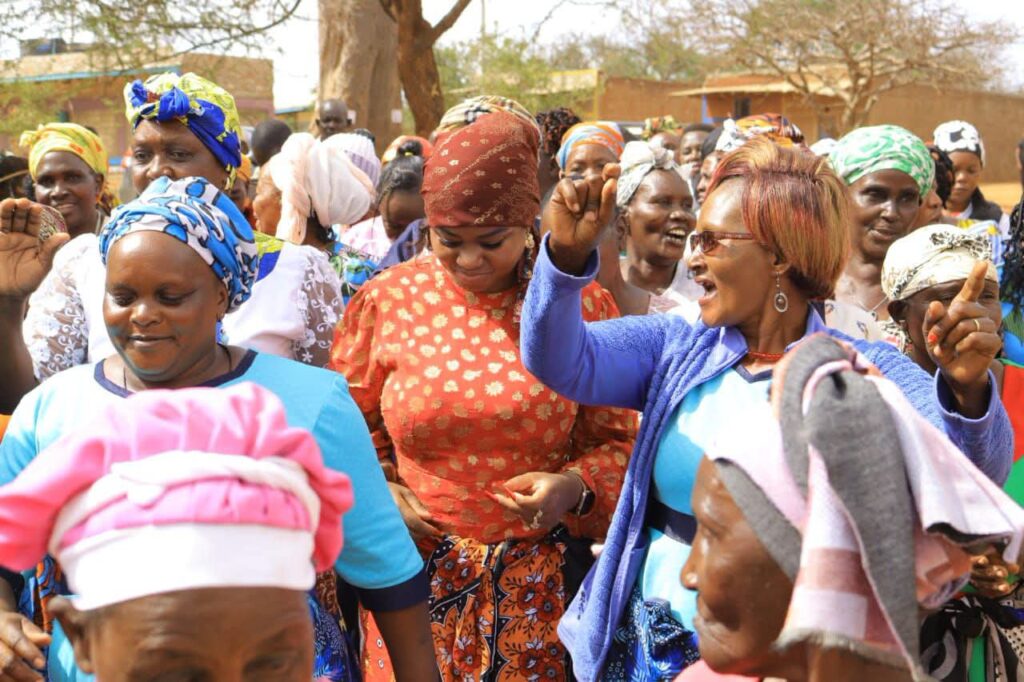
Coming from Mwingi Central, Kasalu also carries potential influence across the broader Mwingi political bloc, although analysts caution that historical voting patterns in the region have not always translated into unified sub-county voting behaviour.
Still, in a tightly structured nomination process, her alignment with party machinery may prove decisive.
Makali: Technical Appeal And Broad Electoral Brand
Kitui Central MP Dr Makali Mulu brings a different political proposition into the race, anchored in a technocratic and development-oriented profile that appeals to voters seeking policy stability over political nostalgia.
His long parliamentary tenure in Kitui Central gives him a solid regional base, particularly in urban and semi-urban centres where issue-based politics is increasingly gaining traction.

However, his challenge lies in expanding beyond his traditional stronghold and converting recognition into countywide mobilisation strength, particularly in areas where identity politics and party structures remain dominant.
Lessons From The Last Two Elections
The 2022 gubernatorial election reinforced the centrality of party machinery in determining outcomes in Kitui.
Julius Malombe, running on a Wiper ticket, secured victory with 198,004 votes, ahead of David Musila’s 117,606, while Jonathan Mueke trailed further behind.
The outcome underscored a key political reality: where Wiper consolidates, it wins.
In contrast, the 2017 election demonstrated the danger of fragmentation. Charity Ngilu emerged victorious with 244,125 votes, followed by Musila with 186,841, while Malombe finished third with 168,171 votes. The split in established political blocs created a pathway for a candidate outside the dominant party structure at the time.
Together, the two elections illustrate a consistent pattern in Kitui politics—fragmentation opens the field, but structured mobilisation closes it.
Sub-County Arithmetic Anr Shifting Political Bases
The emerging 2027 contest is also being shaped by sub-county political dynamics that remain fluid but influential.
Kitui Central continues to provide Makali Mulu with a strong base anchored in urban and administrative influence. Kitui East retains significant legacy influence associated with Ngilu’s political brand, while Kitui South remains a swing zone where organisational strength often outweighs personality politics.
The Mwingi bloc—comprising Mwingi North, Mwingi West and Mwingi Central—emerges as a critical battleground, with Kasalu’s political positioning offering potential advantage if party mobilisation structures hold.
However, analysts caution that Mwingi voting patterns have historically been inconsistent, meaning bloc assumptions cannot be taken as guaranteed electoral arithmetic.
The Running Mate Factor: The Silent Decider
Beyond the main candidates, attention is increasingly shifting to the choice of running mates, which analysts say could determine a significant share of vote consolidation.
In a tightly contested race, deputy governor selections are expected to serve as regional balancing tools aimed at expanding influence beyond core strongholds.
For Kasalu, a running mate from Kitui East or Kitui Central could help counter Makali’s base. For Makali, a partner from the Mwingi bloc could be critical in breaking beyond Kitui Central dominance. For Ngilu, a strategic pick would likely aim at re-establishing structured mobilisation strength in regions where party machinery now plays a bigger role than legacy influence alone.
The Gen Z Factor: A New Political Variable
Adding further uncertainty to the race is the growing influence of Gen Z voters, particularly in urban centres and trading towns across Kitui and Mwingi.
This demographic is increasingly characterised by issue-based voting, digital mobilisation and reduced loyalty to traditional party structures. Concerns around employment, cost of living and governance accountability are shaping their political engagement.
Analysts warn that this shift could disrupt long-standing voting patterns and weaken the predictability of bloc-based politics that has traditionally defined Kitui elections.
The Real Contest : Nomination Before Ballot
Despite the emerging public narratives, political observers argue that the decisive contest will take place within Wiper Party structures, where nomination outcomes are expected to heavily influence the final ballot lineup.
In that context, the three-horse race is not just about popularity, but about organisational depth, internal party alignment and the ability to navigate a political landscape where structure often outweighs sentiment.
As 2027 approaches, Kitui’s political direction appears less about who commands the loudest public presence, and more about who controls the quiet machinery of nomination, mobilisation and regional balance.
The race is open—but increasingly defined by three dominant political forces whose competition is already shaping the county’s electoral future.
