


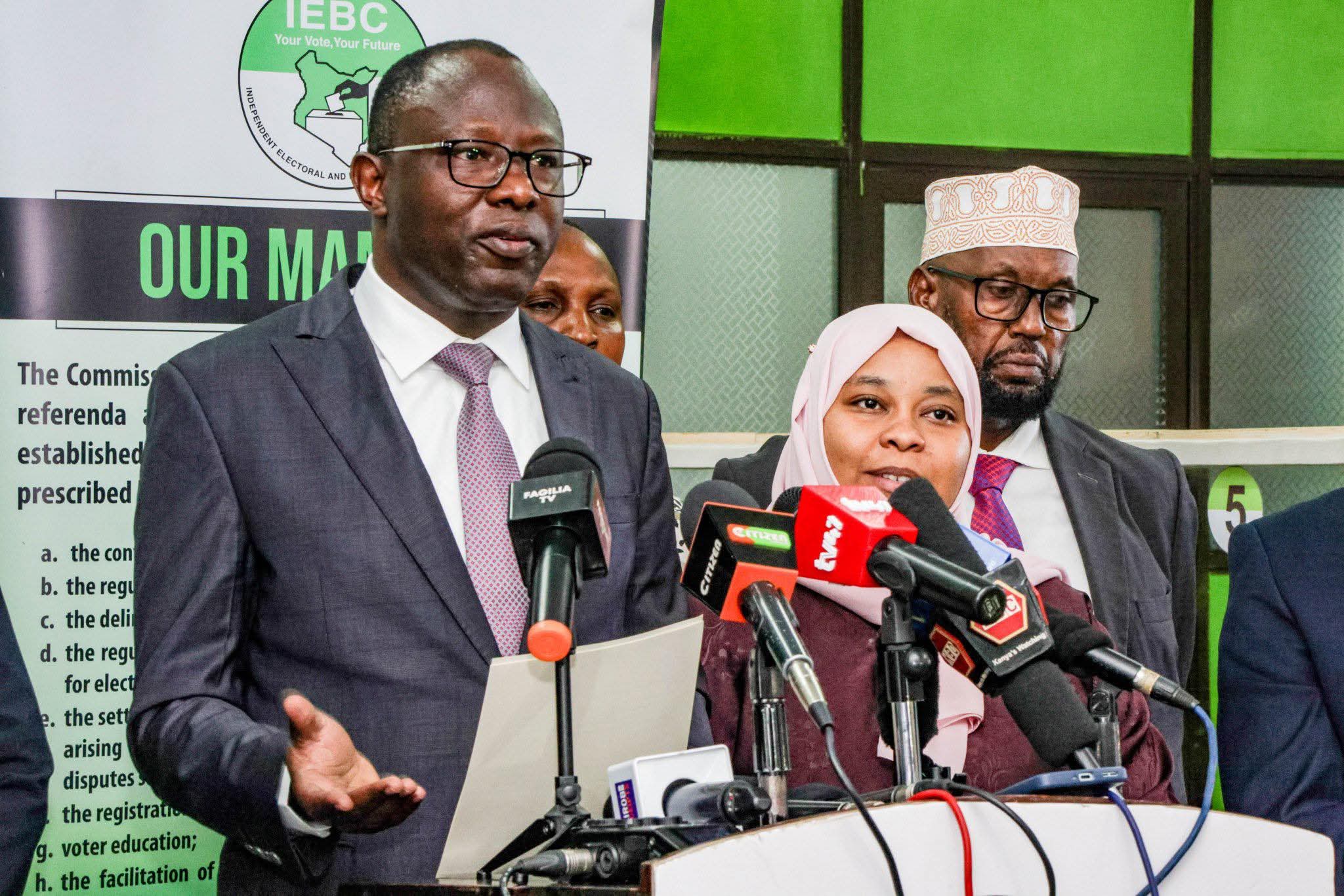
The Independent Electoral and Boundaries Commission (IEBC) has formally frozen the review of constituency and ward boundaries until after the 2027 General Election, citing court battles over census data, leadership gaps, legal risks, and severe time constraints that make a lawful review impossible within the remaining timeline.
Adressing the members of the press on Tuesday, the Commission said the decision follows extensive internal deliberations, legal advice from the Attorney General, and an advisory opinion from the Supreme Court, all of which pointed to a phased approach as the most constitutionally defensible option.
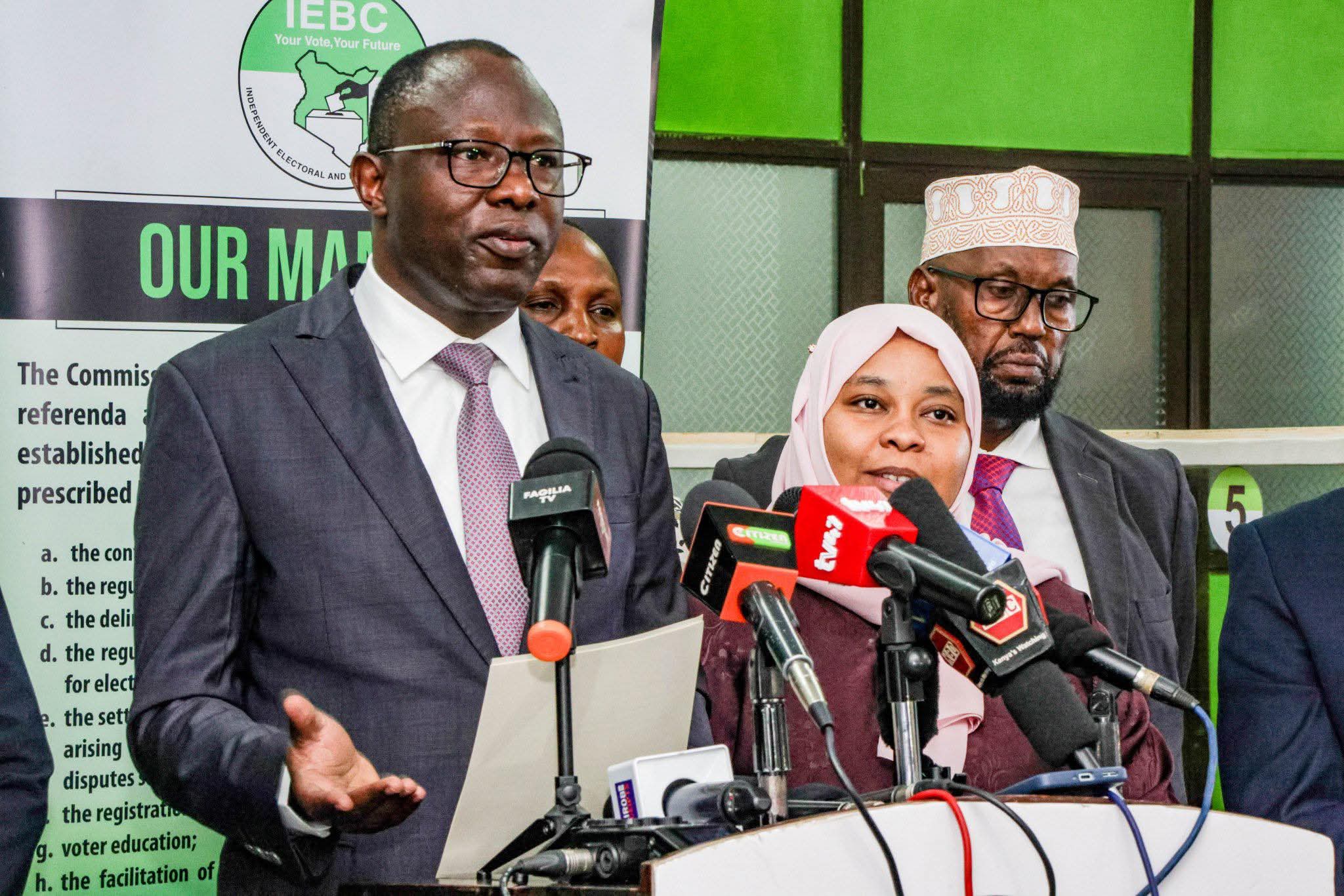
IEBC disclosed that progress on boundary delimitation stalled after the lapse of the previous Commission in early 2023, leaving the institution without Commissioners until July 11, 2025. During that period, the Secretariat could not lawfully make policy decisions or exercise oversight on critical matters such as approving a new Boundary Review Operations Plan or issuing binding directives on boundary delimitation.
The Commission further pointed to a major legal setback involving population data, a cornerstone of boundary reviews. Court cases invalidated the 2019 Kenya Population and Housing Census data for constituencies in Garissa, Wajir, and Mandera counties.
In January 2025, the High Court in Garissa nullified the census results for the three counties, citing failure to meet legal and procedural standards. Although the matter is now before the Court of Appeal, the court ordered that the data be preserved in status quo, effectively rendering it unusable for official purposes by government agencies, including IEBC.
According to the Commission, valid and legally binding census data is a constitutional prerequisite for determining population quotas and issuing the Notice of Intention to Delimit electoral boundaries. Until the ongoing litigation is resolved, IEBC says key stages of the boundary review cannot lawfully proceed.
The Commission also acknowledged growing litigation pressure from sections of the public seeking to compel IEBC to complete the boundary review ahead of the August 2027 election. IEBC warned that continued court action poses a risk to election preparedness depending on how the cases are resolved.
Seeking clarity, IEBC previously moved to the Supreme Court for an advisory opinion on whether the Secretariat could conduct boundary delimitation in the absence of Commissioners.
The apex court advised that boundary delimitation is a core constitutional function that requires the formal application of the Commission’s collective mind, effectively ruling out unilateral action by the Secretariat.
IEBC said competing electoral priorities have further complicated the process.
The Commission is simultaneously managing by-elections, continuous voter registration, electoral law reforms, and early preparations for the 2027 General Election. Undertaking a full boundary review alongside these activities, it warned, would create operational bottlenecks and compromise overall election readiness.
Time constraints were cited as decisive. Under the Boundaries Review Operations Plan, a full delimitation exercise requires at least two years. Article 89 of the Constitution further requires that any boundary review intended to apply to a general election be completed at least 12 months before polling day.
For the 2027 election, that deadline falls in August 2026 — a timeline the Commission says is no longer achievable.
As a result, IEBC resolved to freeze substantive boundary delimitation until after the 2027 polls. Under the phased approach, the Commission will continue with preparatory and technical work such as geospatial data collection, validation, capacity building, and acquisition of tools, while deferring all processes that require the use of national census data.
IEBC also sought to manage public expectations, clarifying that the Constitution caps the number of constituencies at 290, meaning no boundary review can increase or reduce that number without constitutional amendments. Any future review will focus on redefining boundaries and names, not creating new constituencies.
The Commission further noted a legal conflict between the Constitution and the County Governments Act regarding the number of wards, a matter it said can only be resolved by Parliament.
In freezing the boundary review, IEBC said it remains committed to constitutionalism, the rule of law, and the credibility of the 2027 General Election. The Commission pledged to continue stakeholder engagement, pursue resolution of pending court cases, and prepare the ground for a comprehensive and lawful boundary delimitation exercise after the polls.
