


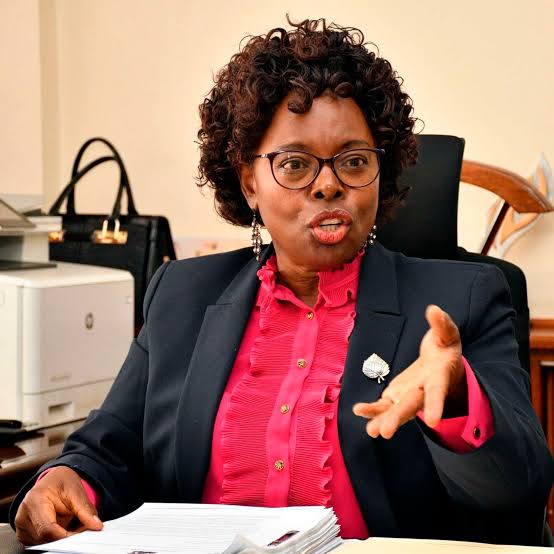
Kenya’s Controller of Budget (CoB) Margaret Nyakang’o has proposed a major policy shift that would see counties’ pending bills older than one year classified as public debt, in a move aimed at curbing their continued accumulation and ensuring suppliers are paid on time.
The call comes against the backdrop of ballooning county arrears, which stood at KSh 176.8 billion by the end of June 2024, according to the CoB’s latest report. Although this marks a slight 3% drop from KSh 181.9 billion recorded the previous year, the figure remains alarmingly high, raising concerns about fiscal discipline and financial transparency at the devolved level.
A large portion of these obligations have been pending for years: KSh 85.4 billion are more than three years old, KSh 20.3 billion between two and three years, while KSh 19.7 billion are between one and two years. Only KSh 48.9 billion of the bills have been outstanding for less than twelve months.
Nairobi County accounts for the largest share at KSh 86.8 billion, followed by Kiambu at nearly KSh 7.9 billion and Machakos at KSh 6.7 billion. The reduction from last year is largely attributed to reconciliations in Nairobi, which cut down its pending bills by about KSh 39.7 billion.
Currently, the Public Finance Management (PFM) Act, 2012 defines county public debt only in terms of loans raised and securities issued by county governments, leaving out unpaid bills. Nyakang’o wants the law amended so that bills older than a year are formally recognized as public debt, which would make them a first charge on county revenues before other expenditures are undertaken.
“This would ensure counties cannot continue accumulating obligations indefinitely and would protect suppliers, many of whom are small businesses, from financial ruin due to delayed payments,” the CoB noted.
The proposal, however, faces hurdles. Many counties argue they lack the fiscal space to clear the mounting arrears quickly, citing shortfalls in own-source revenue collection and delayed disbursements from the national treasury. Another challenge is verification, as some of the pending bills are disputed or lack complete documentation.
Still, analysts say the move could bring much-needed accountability and transparency. By broadening the definition of debt, counties would be forced to budget more realistically, while creditors would have stronger legal backing in demanding timely payments.
If adopted, the proposal would reshape county budgeting and expenditure priorities, with the national government and oversight bodies such as the Auditor-General and Parliament expected to closely monitor compliance.
As the pending bills crisis threatens businesses and service delivery, the Controller of Budget’s push signals a turning point in Kenya’s public finance management — one that could finally bring order to county spending and safeguard the country’s fragile economy.
