


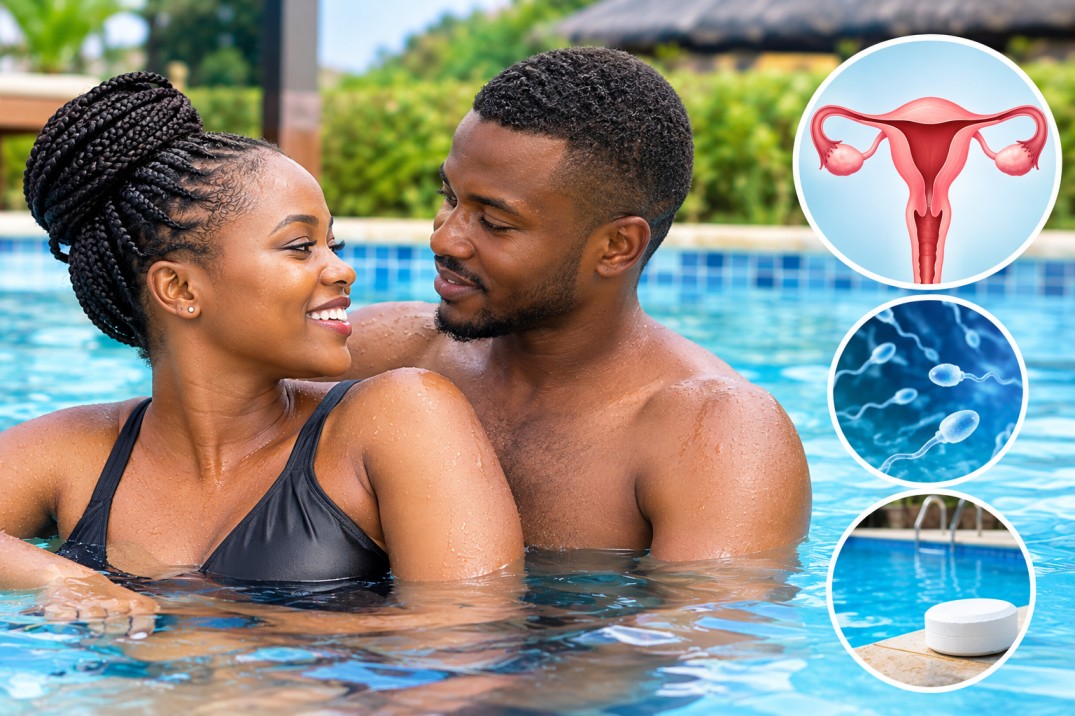
Can a woman get pregnant after having sex in a swimming pool? Can sperm in pool water cause pregnancy? And does chlorine kill sperm?
These are common sexual-health questions, but the answers depend on how semen comes into contact with the female reproductive tract.
Medical experts explain that unprotected vaginal intercourse in a swimming pool can result in pregnancy, while simply swimming in water into which a man has ejaculated does not ordinarily cause pregnancy.
The distinction is important because swimming pool water is not a contraceptive, and neither chlorine nor dilution should be relied upon to prevent conception.
Can you get pregnant from sex in a swimming pool?
Yes. A woman can become pregnant after unprotected vaginal intercourse in a swimming pool, just as she can on dry land.
According to Planned Parenthood, a US sexual and reproductive healthcare organisation, “You can get pregnant if you have sex in a pool, or anywhere else.”
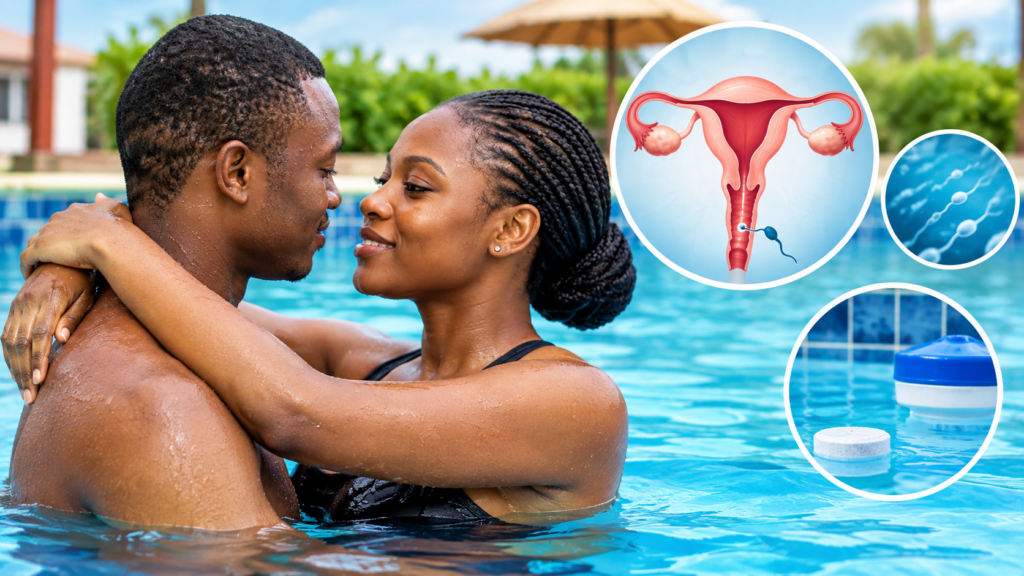
In its article, Can You Get Pregnant If You Have Sex in a Pool?, the organisation explains that pregnancy can occur when ejaculate or pre-ejaculate enters the vagina, regardless of whether sexual activity takes place in water or on land.
This is because sperm can travel through the female reproductive tract towards an egg. If fertilisation occurs, pregnancy may follow.
Columbia University’s health education platform, Go Ask Alice!, makes the same distinction in its article, How Can I Have Safe Sex in Hot Water?
The university’s guidance states that when sperm is ejaculated directly into the vagina, a person is “just as likely to get pregnant as if you were on land.”
The explanation is straightforward: being underwater does not prevent sperm deposited inside the vagina from travelling through the reproductive tract.
Can sperm in swimming pool water cause pregnancy?
The answer is different when a man ejaculates into the pool without having intercourse or depositing semen directly at a woman’s vaginal opening.
Planned Parenthood addresses this question directly in its article, Can Sperm Live in Pool Water? Can a Girl Get Pregnant If There’s Sperm in the Pool?
The organisation explains that sperm do not survive well under the conditions found in water because they become dispersed and separated from the fluids that protect them.
It also notes that it is “incredibly unlikely” that pool water containing sperm would enter the vagina in a way that causes pregnancy.
This means a woman does not ordinarily become pregnant simply by swimming in a pool where someone has ejaculated.
However, the distinction should not be confused with sexual intercourse in water, where semen can be deposited directly into the vagina.
Does chlorine kill sperm?
Chlorine is used to disinfect swimming pools, but it is misleading to claim that it instantly kills every sperm cell.
Columbia University’s Go Ask Alice! explains that swimming pools and hot tubs generally create hostile conditions for sperm outside the body, meaning sperm are likely to die more quickly than they would under more favourable conditions.
The university also cautions that research specifically examining sperm survival in chemically treated water is limited.
Consequently, the strongest scientific conclusion is not that chlorine provides guaranteed protection against pregnancy. Rather, sperm dispersed in pool water face unfavourable conditions, and pregnancy from simply swimming in that water is extraordinarily unlikely.
The situation changes when semen reaches the vaginal opening or is deposited inside the vagina.
How does pregnancy actually happen?
According to the Cleveland Clinic, conception begins when a sperm fertilises an egg, usually in a fallopian tube.
In natural conception, sperm travel through the vagina and cervix, pass into the uterus and may reach the fallopian tubes, where fertilisation can take place.
The Cleveland Clinic explains that conception involves sperm and an egg joining, followed by the development and eventual implantation of the fertilised egg.
This biological process helps explain why the route through which sperm reaches the reproductive tract is central to pregnancy risk.
Semen dispersed throughout a swimming pool is not equivalent to semen deposited inside the vagina during unprotected intercourse.
The Cleveland Clinic provides further information in its medical explainer, Conception: Fertilization, Timeline and How to Get Pregnant.
Are condoms effective during sex in a swimming pool?
Condoms can help prevent pregnancy and reduce the risk of sexually transmitted infections when used correctly, but sex in water presents additional practical challenges.
Columbia University’s health guidance warns that intercourse in water can increase the likelihood of a condom slipping or breaking. Water can also wash away natural lubrication, increasing friction and discomfort.
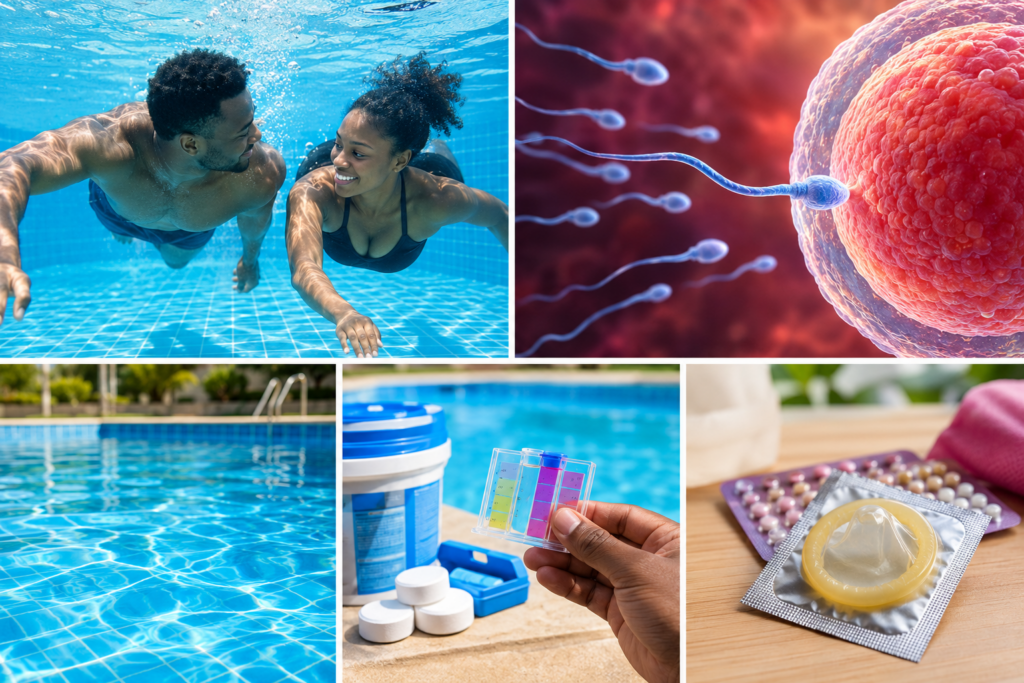
People who have vaginal intercourse in a swimming pool should therefore not assume that the water offers protection against pregnancy or sexually transmitted infections.
Anyone wishing to avoid pregnancy should use a reliable contraceptive method and follow its instructions for correct use.
If unprotected intercourse has already occurred, a healthcare professional or pharmacist can advise on emergency contraception and the appropriate timing of a pregnancy test.
The bottom line
Can you get pregnant from sex in a swimming pool? Yes, if sperm enters the vagina during unprotected intercourse.
Can you get pregnant from sperm dispersed in pool water? Pregnancy from simply swimming in such water is extraordinarily unlikely and is not considered a realistic route to conception.
Does chlorine prevent pregnancy? No. Swimming pool chemicals are not a contraceptive method, and they should never be relied upon to prevent pregnancy.
Medical guidance from Planned Parenthood, Columbia University and the Cleveland Clinic supports the central distinction: the way semen reaches the reproductive tract matters far more than whether sexual activity takes place in water.
Accurate information helps people separate sexual-health myths from established reproductive biology and make informed decisions about contraception.
Channel 15 News — The Full Story First.
