



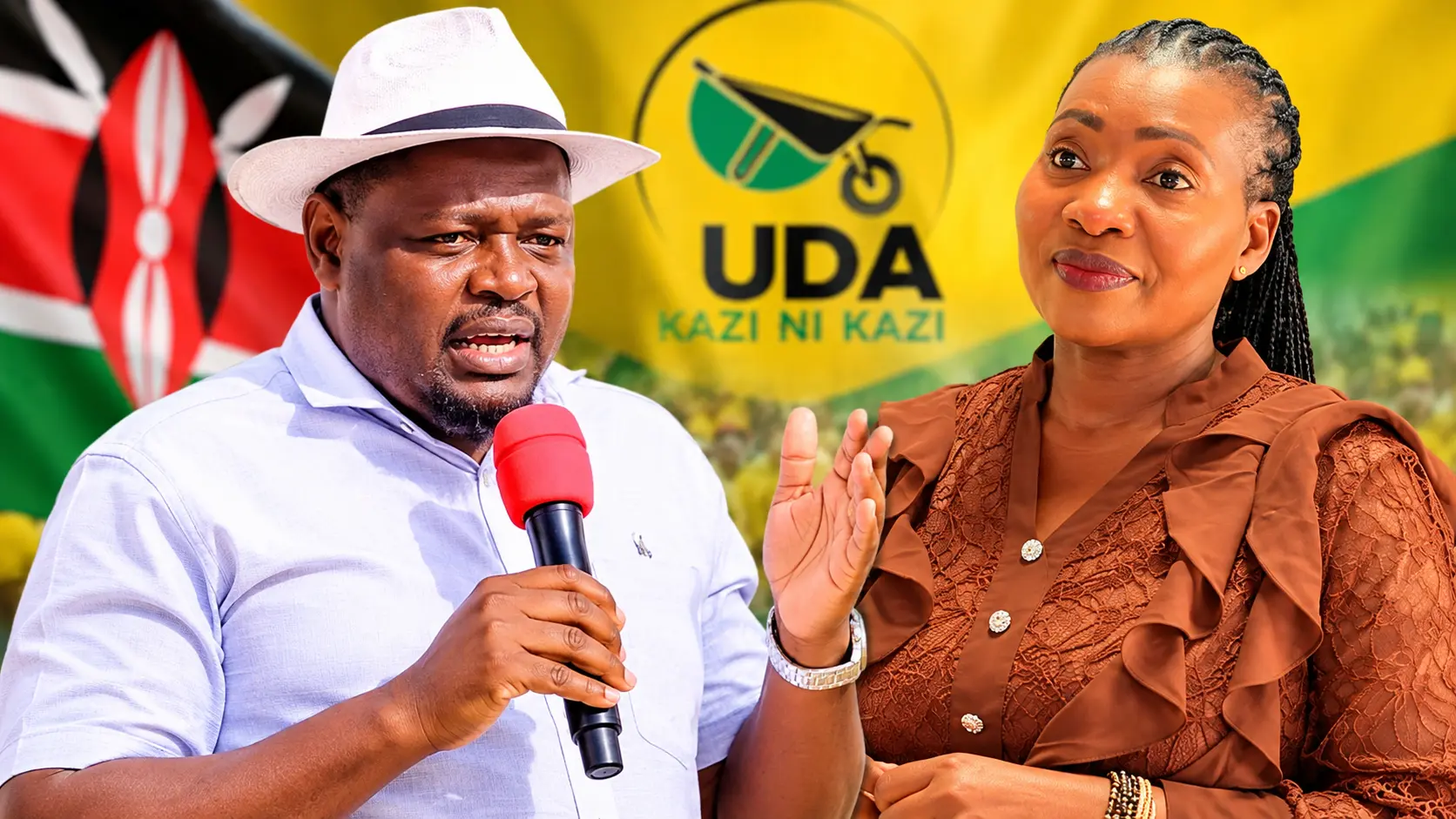
The United Democratic Alliance (UDA) in Kitui County could be heading into a politically turbulent period, with emerging rivalries, competing ambitions and growing tensions among politicians operating under the ruling party threatening to complicate its grassroots mobilisation ahead of the 2027 General Election.
What unfolded in Kyuso on Sunday, November 21, 2026, where a meeting involving UDA leaders and grassroots delegates reportedly degenerated into a political confrontation between Kitui South MP and UDA County Chairperson Dr Rachel Kaki Nyamai and former Mwingi North parliamentary aspirant Charles Mwalimu in absentia, could be symptomatic of deeper divisions within the party rather than an isolated confrontation.
But the political tensions appear to stretch beyond Mwingi North, with competing camps reportedly emerging in Kitui West and even at ward level, raising questions about whether UDA’s internal political battles could eventually undermine President William Ruto’s support in the county.
Kyuso Meeting Exposes Growing Cracks
The latest tensions surfaced during a meeting in Kyuso where a section of UDA leaders from Kitui County, led by Kaki, reportedly met delegates elected during the party’s grassroots elections in April.
Mwalimu, who says he skipped the meeting alongside other Ruto-aligned leaders from Mwingi North, has accused the organisers of locking out genuine elected delegates allegedly perceived to be his supporters.
He claims more than 70 per cent of those who attended were not the legitimate delegates elected at polling stations, further alleging that some of his supporters were denied facilitation because of their political allegiance.
The gathering, which was reportedly meant to mobilise support for President Ruto, allegedly turned into a platform for political attacks against Mwalimu, with Mbaki Mbaki reportedly telling locals to leave him to drink alcohol and pursue his parliamentary ambitions.
Kaki, according to Mwalimu, also challenged him to take her on politically and confront Martha Mati, who is reportedly enjoying her support in the Mwingi North parliamentary race.
The exchange reportedly went beyond political mobilisation, with Mwalimu accusing the leaders of using a party gathering to ridicule his 2022 candidature and diminish his political standing in his own backyard.
Kaki reportedly cited the votes garnered by Mwalimu and former Women Representative aspirant Peninah Malonza in the 2022 elections, with Malonza said to have received approximately 8,000 votes against Mwalimu’s 1,250, while President Ruto garnered about 12,000 votes in Mwingi North.
Mwalimu, however, maintains that his significance in UDA politics cannot be reduced to his previous election performance, insisting he stood with Ruto and the party at a time when doing so in Ukambani came with political risks.
Kitui West Braces For Another Political Showdown
Mwingi North may not be the only constituency where UDA could find itself managing competing political ambitions.
In Kitui West, another potentially bruising contest is taking shape, with Commissioner Muasya reportedly eyeing the parliamentary seat on a UDA ticket, setting the stage for a possible political showdown with Nicholas Waambua, who has been in the political trenches for longer.
The emerging rivalry could create another delicate balancing act for the ruling party, particularly if competing aspirants begin mobilising separate political camps within the same party instead of building a united front.
With political ambitions gathering momentum, UDA could find itself managing rivalries between candidates seeking to use the party’s popularity and structures to advance their individual bids, even as the party seeks to strengthen its support ahead of 2027.
The Battle Has Reached Ward Level
Perhaps more worrying for UDA is that the emerging political tug-of-war is reportedly not limited to parliamentary seats, with competing camps already positioning themselves for ward-level tickets.
In Mulango Ward, a contest for the UDA ticket is reportedly emerging between Kamba gospel musician Stephen Kasolo and David Muvaluku, popularly known as Katajiri.
Kasolo is said to enjoy the backing of a section of UDA’s political machinery associated with Kaki and Kitui Central MP aspirant Bonface Musambi, while Muvaluku is reportedly backed by Livestock Principal Secretary Jonathan Mueke.
The competing political backing has already brought the ward contest into the public spotlight, illustrating how influential political figures could be drawn into local nomination battles well before the official campaign season.
If the emerging alignments deepen, the party could face the difficult task of reconciling supporters of rival aspirants at ward level, where political loyalties are often deeply personal and grassroots mobilisation can determine the party’s fortunes.
A Test For Kaki’s Leadership
As UDA’s county chairperson, Kaki occupies a pivotal position in the party’s political organisation in Kitui. Her responsibility extends beyond backing individual political interests to maintaining cohesion, accommodating competing ambitions and ensuring the party’s grassroots structures remain credible and inclusive.
The emerging confrontations raise questions about whether UDA’s local mobilisation strategy is bringing together supporters of different aspirants or creating new political fault lines that could alienate some of the party’s supporters.
Mwalimu has now appealed to President William Ruto, the national UDA leadership and the party’s Ukambani leadership led by Vincent Musyoka to intervene, warning that failure to address what he describes as impunity could destroy the party from within.
For a party seeking to consolidate its support in Ukambani, internal political battles could prove costly if disgruntled supporters begin feeling excluded, humiliated or politically unwanted.
The danger for UDA may not necessarily be the strength of the opposition, but what happens when its own members begin fighting for political space before the campaign season has fully taken shape.
In Kitui, the battle for UDA tickets may be coming into focus—but the bigger question is whether the party can survive the battles being fought within its own house without paying the price at the ballot.
