


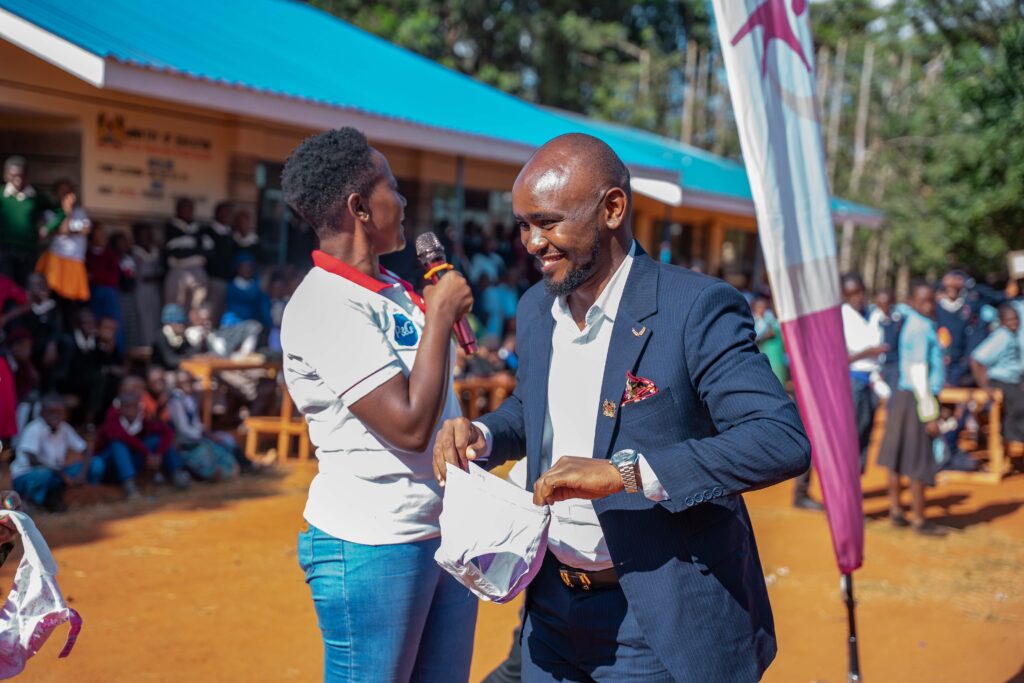
Hundreds of girls from Ngoleni Primary and Junior School and neighbouring learning institutions in Kathiani Sub-County benefited from a menstrual hygiene outreach programme on Thursday as the Peter Uplift Charity Foundation intensified efforts to address period poverty and keep girls in school.
The initiative, held to mark this year’s Menstrual Hygiene Day, was organised in partnership with the County Government of Machakos, PMI Kenya and local schools.

Learners received sanitary towels, reproductive health education and mentorship during the event, which also brought together teachers, parents and community leaders for discussions on menstrual health challenges facing school-going girls.
Organisers said Ngoleni and surrounding schools were selected after assessments showed that many girls in the area struggle to access sanitary products and adequate reproductive health information, forcing some to miss classes during their menstrual periods.
The schools were also identified as having a significant number of vulnerable learners who remain at risk of absenteeism and poor academic performance due to period poverty.
Speaking during the outreach, Peter Uplift Charity Foundation Chief Executive Officer Mr Peter Musya said the initiative was aimed at restoring dignity and confidence among girls while creating awareness around menstrual health.

“No girl should be forced to miss school because of lack of sanitary towels or fear and stigma associated with menstruation. We want girls to feel supported, confident and empowered to pursue their education without interruption,” said Mr Musya.
The youthful foundation boss noted that beyond the one-day sanitary pad distribution exercise, the organisation and its partners are working on sustainable interventions to ensure girls have continuous access to menstrual hygiene products throughout the school year.
He said discussions were ongoing with stakeholders to improve sanitation facilities in schools, including clean washrooms, water access and safe disposal systems for menstrual products.
Mr Musya further said the foundation plans to continue mentorship and life-skills programmes to equip girls with reproductive health knowledge, confidence and guidance from female role models.

School administrators who attended the event said period poverty continues to negatively affect attendance and classroom participation among girls, especially in rural communities where many families struggle to afford sanitary towels.
According to teachers, some learners remain absent from school during their menstrual cycles due to lack of sanitary products and inadequate facilities to manage their hygiene comfortably.

Education stakeholders warned that repeated absenteeism often affects academic performance and increases the risk of girls dropping out of school.
Organisers also used the forum to encourage open conversations involving boys, parents, teachers and community leaders in efforts to break stigma surrounding menstruation.

Health advocates at the event said partnerships between charitable organisations, schools and government agencies remain critical in addressing barriers affecting girl-child education in vulnerable communities.
The outreach comes amid growing calls for increased investment in menstrual health programmes across the country as part of broader efforts to promote education, dignity and equality for girls.
