



A carefully choreographed sequence of events at the Kitui County Assembly in mid-December 2025 has ignited quiet but intense political debate across Ukambani. At the centre of the unfolding drama is Speaker Hon. Kelvin Kinengo Katisya, whose firm handling of House affairs has left observers asking whether he is simply enforcing order and the rule of law, or whether he is increasingly rubbing shoulders—perhaps uncomfortably so—with Kamba land’s political heavyweights to the unease of their parties on the ground.
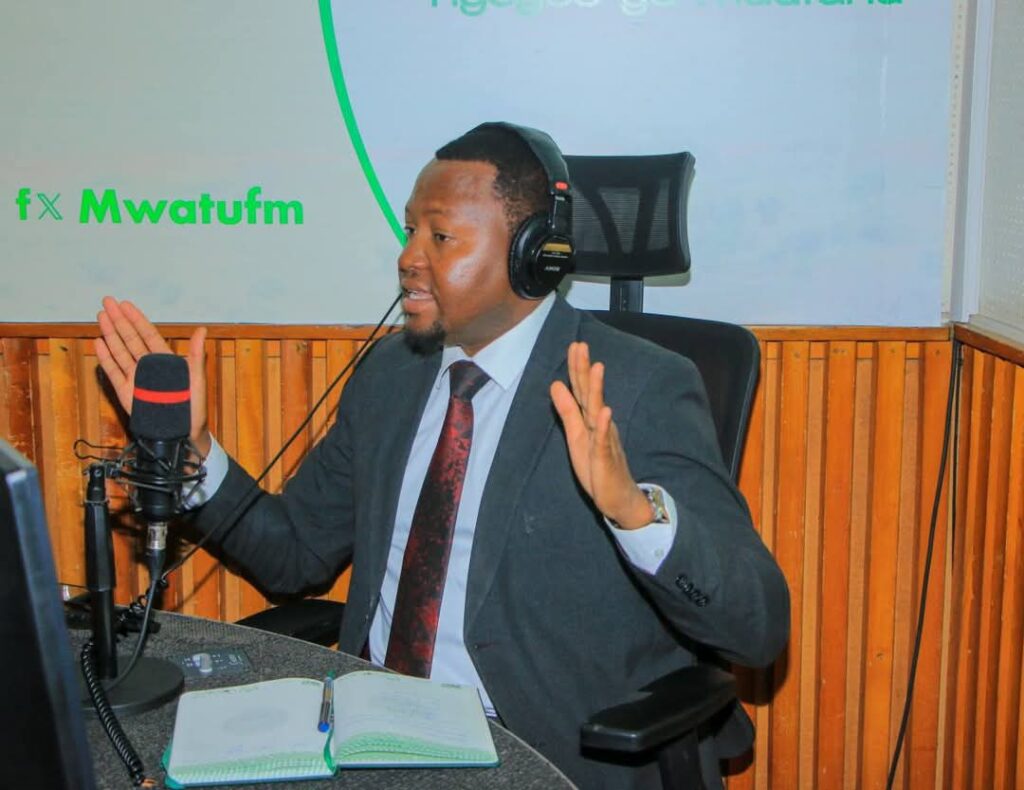
The spark was the dramatic removal of two influential Members of the County Assembly, Chuluni MCA Hon. Mathew Ngovi Vuthi of the Wiper Democratic Movement and Ikutha MCA Hon. Hussein Mwandia of the National Rainbow Coalition (NARC), from the Kitui County Assembly Service Board. Their ouster, approved unanimously during the Tuesday, 16th December 2025 plenary sitting, immediately altered the internal political chemistry of the Assembly and sent ripples far beyond the chamber.
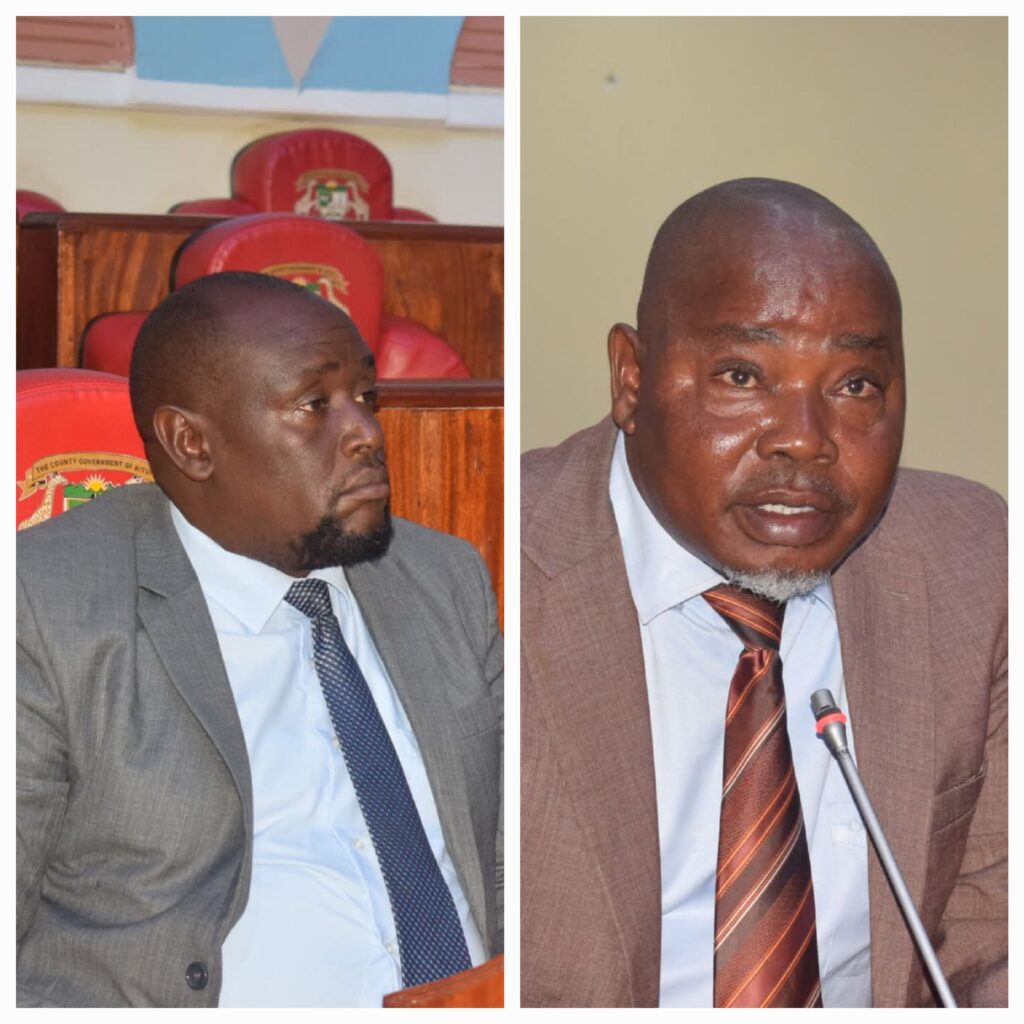
Formally, the Assembly anchored its decision on allegations of grave misconduct. Hon. Vuthi, who served as Vice Chairperson of the Board, and Hon. Mwandia, a Board member, were accused of publicly divulging confidential deliberations of the Service Board that were still under consideration, an action said to be in blatant violation of the oath of office under the County Assembly Services Act and the County Assemblies Powers and Privileges Act. Matters were compounded by claims that both MCAs used vulgar, abusive and unbecoming language against the Speaker, who doubles as Chairperson of the Board—conduct the House said undermined the dignity, honour and authority of the Assembly and its Service Board.
What gave the decision added political weight was the manner in which it was executed. The motions for removal were moved and seconded by the top leadership of both sides of the House, with Majority and Minority leaders and whips speaking in one voice. On the surface, it was a rare show of unity anchored on discipline and institutional integrity. Politically, however, it raised difficult questions. Both Vuthi and Mwandia were not merely individual MCAs; they were official party nominees of Wiper and NARC, parties whose national patrons are Wiper leader Kalonzo Musyoka and former Kitui Governor Charity Ngilu.
In Kitui’s political tradition, nominations to the Assembly Service Board are treated as an extension of party authority based on proportional representation. The swift and decisive removal of both party representatives, without any visible internal resistance, has therefore been interpreted by some as more than routine enforcement of ethics. Critics quietly argue that the move signalled a political realignment, or at the very least a willingness by the Speaker to confront party interests head-on in defence of institutional control.

Supporters of Speaker Kinengo counter that the law leaves no room for political sentiment. In their view, confidentiality and decorum are non-negotiable, and no party flag can be used as a shield against misconduct. To them, the Speaker’s actions were a necessary assertion of authority to protect the credibility of the Assembly at a time when public trust in institutions remains fragile.
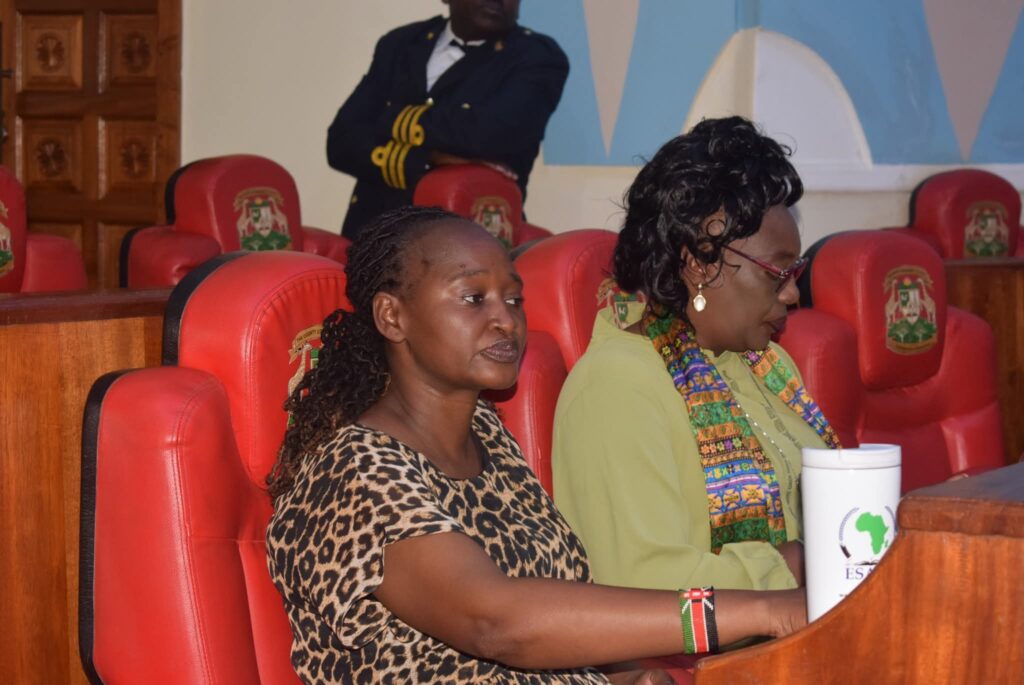
Barely a day later, the House moved with equal speed to fill the resulting vacuum. On Wednesday, 17th December 2025, the Assembly approved the appointment of Hon. Jacquelyne Kalenga, a nominated MCA representing Wiper, and Hon. Muthama Kieti of Athi Ward representing NARC, to the Service Board. Chairing the session, Speaker Kinengo congratulated the new members and pledged his full support, urging them to serve with professionalism and dignity and, pointedly, not to allow politics to influence the work of the Board. To keen political ears, the message sounded less like routine advice and more like a subtle rebuke of party-driven conduct.
The same sitting witnessed a far-reaching recomposition of Assembly committees, touching virtually every critical oversight and legislative sector, from Finance, Health and Agriculture to Justice, Energy and Education. Leadership changes also extended to the politically sensitive Committee on Appointments, where Hon. Jeremiah Musee Mutua replaced Hon. Alex Nganga, while Hon. Gabriel Mutunga Munyao took over from Hon. Hussein Mwandia. With this, Mwandia’s influence within the Assembly’s power structure was effectively neutralised.
These moves have reignited an uncomfortable but unavoidable question within Ukambani political circles: is Speaker Kinengo deliberately insulating the Assembly from party barons, or is he quietly consolidating institutional power with tacit support from select political heavyweights? In a region where neutrality is rarely viewed as neutral, actions that appear to weaken official party nominees are often read as defiance, or calculated repositioning, within wider political alignments.
Some insiders believe the Speaker is consciously projecting himself as a law-first institutionalist, even if that stance unsettles the Wiper machinery associated with Kalonzo Musyoka or the NARC networks historically linked to Charity Ngilu. Others see a more strategic balancing act, one that keeps both camps in check while strengthening the authority of the Speaker’s office ahead of an increasingly charged 2027 political landscape.
Ironically, as these political undercurrents swirl, the Assembly also proceeded to pass substantive business, including the Kitui County Finance Bill, 2025, and adjourned for the December recess with the Speaker commending Members for discipline and dedication. In his closing remarks, Kinengo reaffirmed his commitment to fast-tracking pending legislative and oversight work upon resumption, projecting calm stewardship amid the turbulence.
As the House breaks for recess, the real test may lie outside the chamber. Whether Wiper and NARC leadership remain comfortable with how their representatives were handled—or whether the Speaker’s assertive approach invites quiet pushback when sittings resume in February—remains to be seen.
What is beyond doubt is that Hon. Kelvin Kinengo emerges from this session both strengthened and exposed: strengthened institutionally, yet politically vulnerable. Whether history judges him as the Speaker who elevated the rule of law above party interests, or as one who underestimated the long memory of Ukambani’s political titans, will depend on the next chapter. For now, the ground in Kitui has unmistakably shifted, and the Speaker stands firmly at its centre.
