


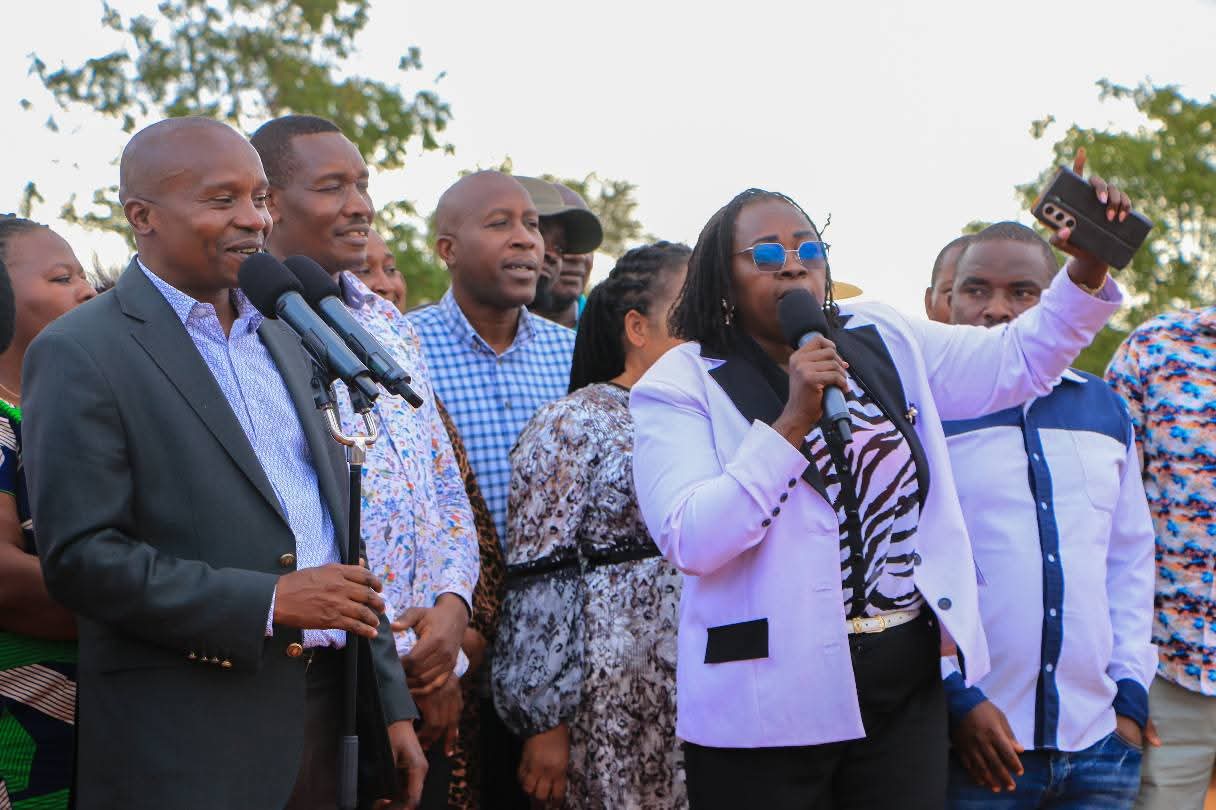
What was meant to be a landmark empowerment event for women and youth in Kitui County has turned into a political and moral scandal after two nominated MCAs from the Wiper Democratic Movement, Hon. Fastina Mwende Salu and Hon. Jacqueline Kalenga, were caught on camera sexualizing empowerment platforms and making disturbing remarks about rape and sex in front of hundreds of constituents.
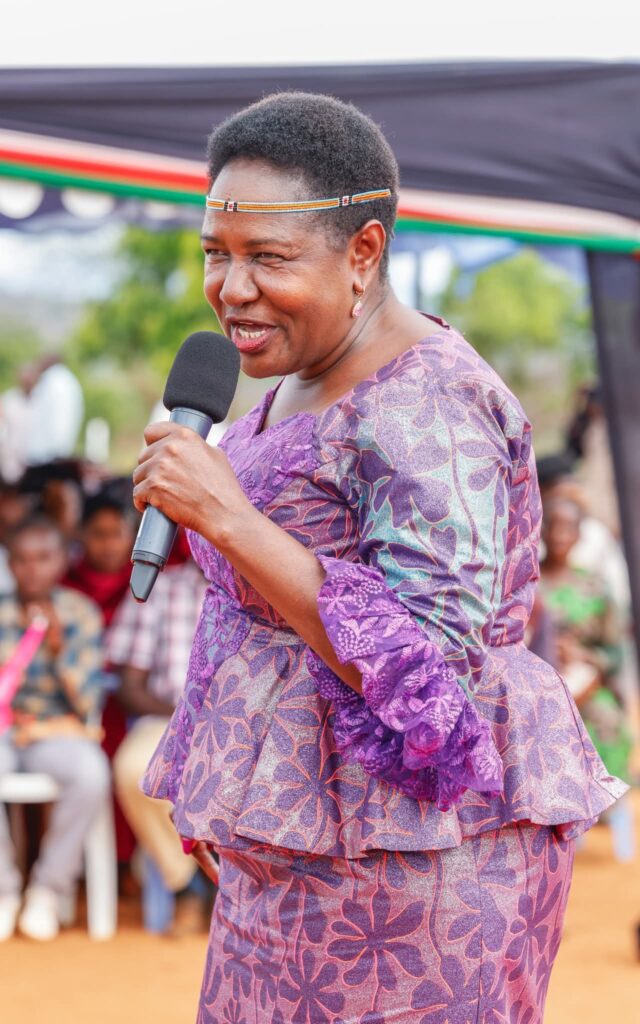
During the forum held on Monday, June 30th at Nguni Boys High School, Salu — who was nominated by Wiper party to represent the interests of women and girls in the Kitui County Assembly — shocked the crowd with a casual yet graphic reference to rape.
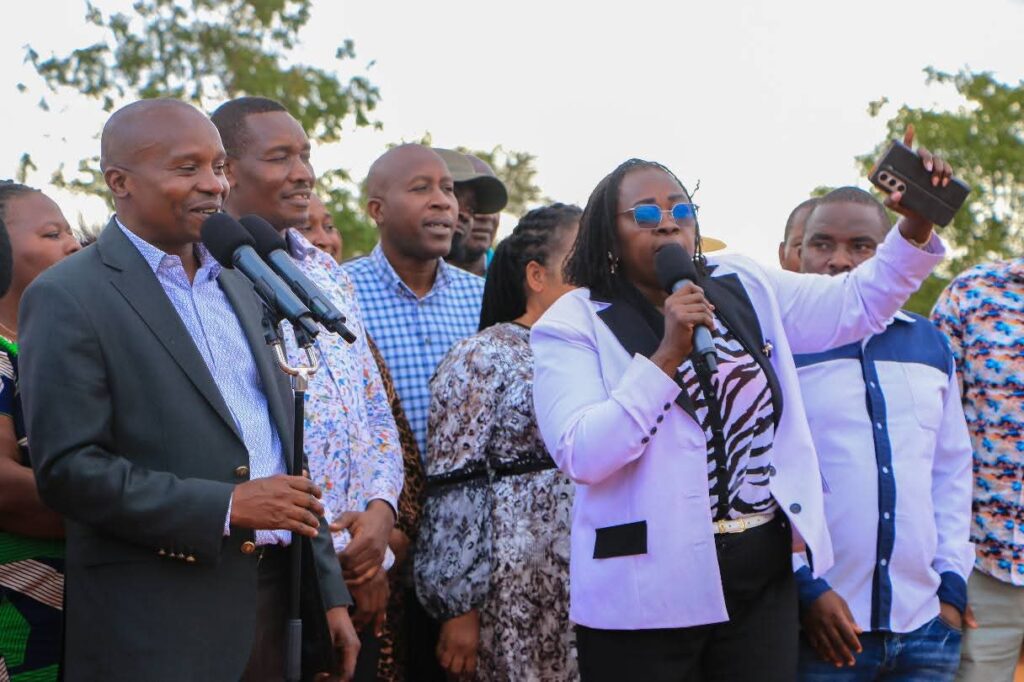
“Sisi wanawake wa Nguni kuna shida… wanabakwa na unajua kubakwa bila kupenda kuna shida ngumu sana. Mimi nilipatana na huyo kijana na karibu nikuambie nilibakwa lakini niliepa,” Salu said, as the audience fell into stunned silence.
Instead of expressing remorse, she followed up with a bizarre anecdote:
“I met him and I asked, are you the one who has sex with women by force? You do the same, I go home — and he went away.”
The reckless remarks has since drawn widespread condemnation from gender rights advocates, clergy, civil society, and even fellow leaders, many of whom questioned whether Salu understood the weight of her words — especially in a region still grappling with rising cases of gender-based violence.
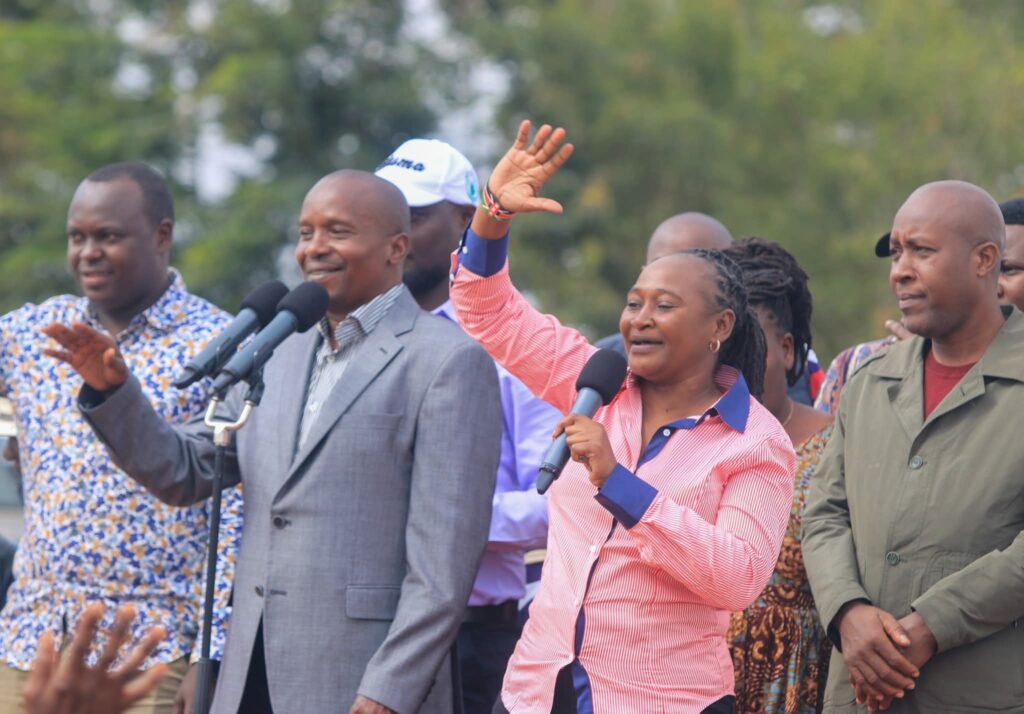
Fellow nominated MCA Hon. Jacqueline Kalenga has also come under fire for repeatedly using sexually suggestive language during empowerment programs, often echoing a controversial phrase popularized by Kibwezi East MP Mwengi Mutuse — “Is it warmer inside or outside?” Originally meant as a political metaphor for inclusion, Kalenga is accused of sexualizing the phrase, frequently asking women and youth: “Kuwa ndani ni moto ama baridi kuliko kuwa nje?” — leaving audiences confused, uncomfortable, and insulted.
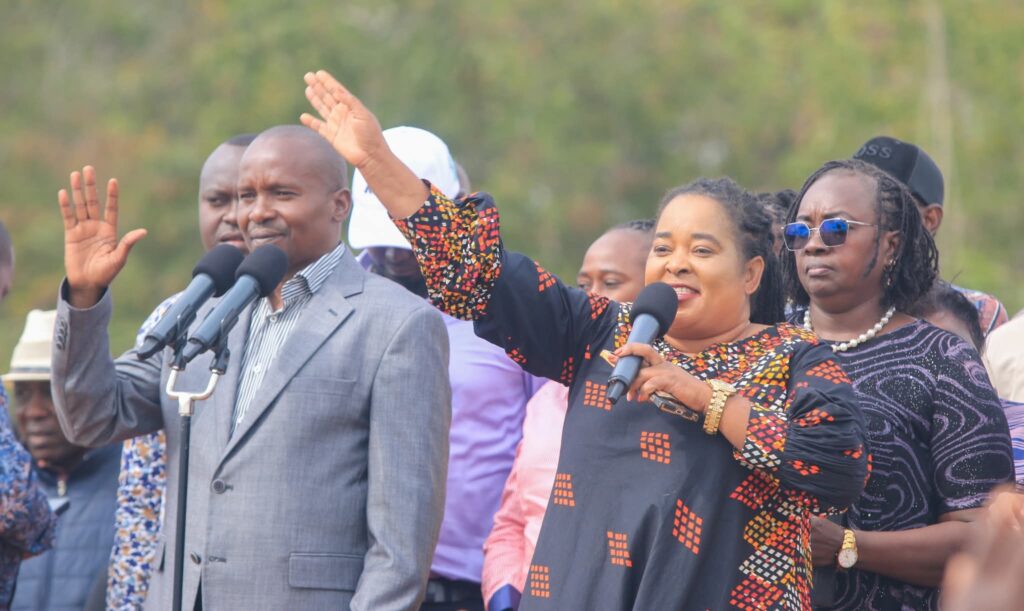
To make matters worse, Kitui County Assembly Majority Leader Hon. Harrison Maluki was part of a group seen counting one million shillings in Ksh 1,000 notes late into the night at the Nguni Deputy County Commissioner’s office, allegedly delaying the distribution of the funds meant for women and youth groups. Witnesses say the process dragged on until 8:30 p.m., forcing exhausted women and youth to wait for hours under unclear circumstances.
One of the attendees, Mary Mutheu from Enziu, who leads a women’s group that had traveled over 40 kilometers for the event, expressed her disappointment and disbelief:
“How can the Majority Leader be seated there handling bundles of money while we were left outside in the cold? Is that transparency? We came to be empowered, not humiliated.”
The optics of a senior Wiper leader involved in such nighttime handling of public funds has sparked serious questions about integrity, internal coordination, and accountability.

In an earlier incident just days before the Nguni event, Kanyangi Ward MCA Hon. Bonface Mukwate — who is also named in a party disciplinary petition — was allegedly involved in a hit-and-run incident where he ran over a man with his vehicle. The incident was captured on camera, witnessed by journalists and documented by traffic police officers at the scene. However, in a shocking twist, Mukwate’s vehicle was mysteriously released back to him despite clear documentation and media evidence of the incident. The lack of accountability has further fueled public anger and deepened distrust in both law enforcement and the integrity of Wiper leadership.
Journalists who attended the Nguni event were also left in disbelief after organizers scrapped the agreed Ksh 38,000 lunch allowance without warning. When questioned, ODM Nominated Senator Beth Syengo, a key co-organizer of the event, dismissively asked, “Who invited the media anyway?”
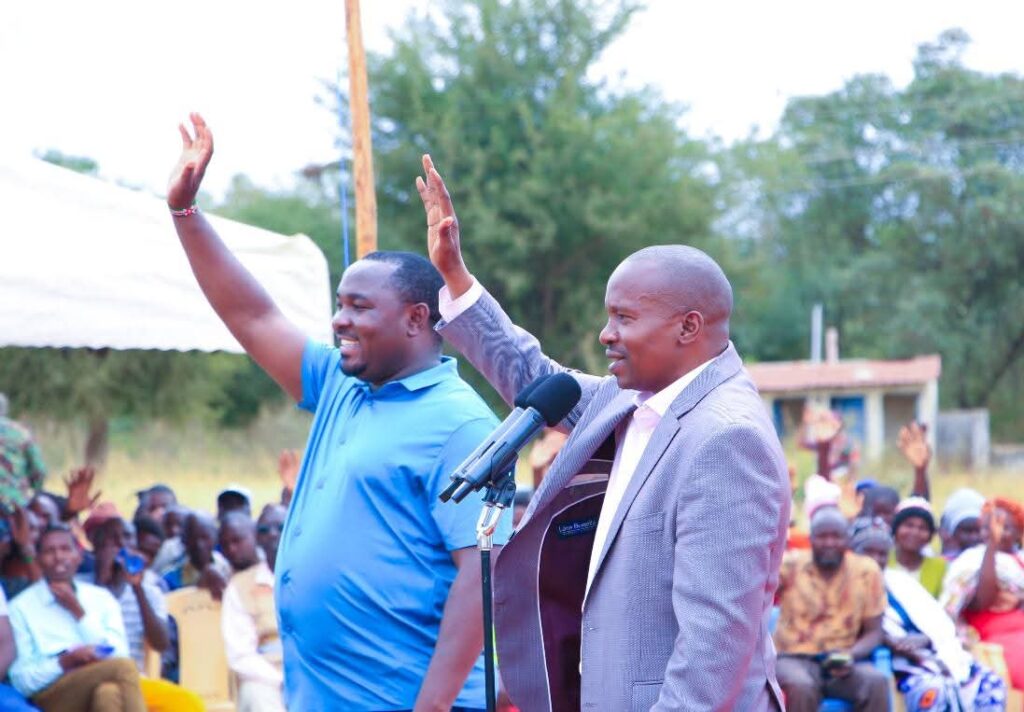
As outrage reaches a boiling point, the Wiper Democratic Movement–Kenya (WDM-K) has formally launched disciplinary proceedings against several MCAs — including Salu, Kalenga, Maluki, Mukwate, and Hon. Priscillah Makumi — for gross misconduct, betrayal of party ideals, and association with rival political camps. In a petition dated June 25, 2025, addressed to the National Chairperson and copied to the Executive Director, the party invoked Articles 2.9, 6.4, and 7.0 of its constitution to begin formal action.
“They have knowingly, consistently, and publicly engaged in behavior that is incompatible with the Wiper Constitution,” the letter reads in part.
This unfolding scandal has forced the Wiper party — long seen as a pillar of Eastern Kenya politics — into a moral and ideological reckoning. Critics argue the nomination process has become a playground for loyalty and theatrics, rather than a merit-based system to elevate leaders with character, integrity, and a genuine grasp of public service.
“These individuals were nominated to champion the voices of the voiceless. Instead, they’ve turned public platforms into vulgar comedy shows while mishandling serious empowerment programs. This is betrayal at its worst,” said a vocal Kitui women’s leader.
As disciplinary hearings begin behind closed doors, public confidence is fast eroding. For Wiper, how it handles this crisis could determine the party’s future standing in Kitui and the broader Lower Eastern political landscape.
