


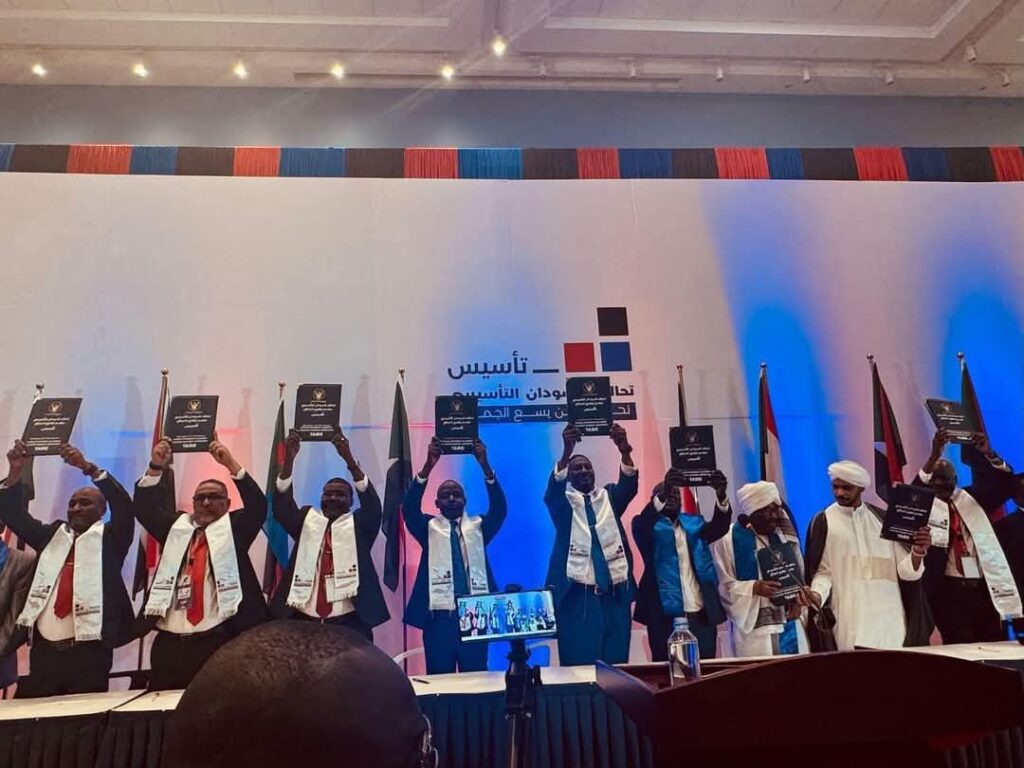
Sudan’s paramilitary Rapid Support Forces (RSF) and allied factions have signed a charter in Nairobi, Kenya, to establish a “Government of Peace and Unity” in territories under their control. This development, announced on February 22, 2025, aims to create a secular, democratic state with a unified national army, directly challenging the authority of the existing military regime in Port Sudan.
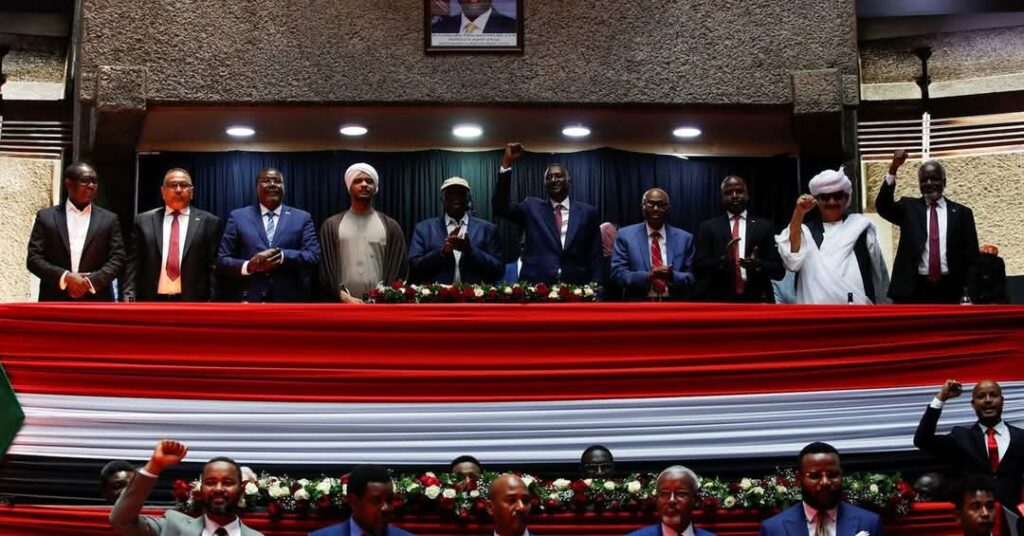
The signing ceremony, held at Nairobi’s Kenyatta International Convention Centre, brought together key rebel leaders, including Abdelaziz al-Hilu of the Sudan People’s Liberation Movement-North (SPLM-N). The RSF, led by General Mohamed Hamdan “Hemedti” Dagalo, currently controls significant regions in Western Darfur and parts of Kordofan, areas that have been flashpoints in Sudan’s prolonged civil conflict.
This dramatic move comes amid an ongoing war between the RSF and the Sudanese Armed Forces (SAF), led by General Abdel Fattah al-Burhan. Since April 2023, the conflict has devastated Sudan, resulting in over 11 million displaced persons, severe food shortages, and reports of war crimes, including ethnic-based massacres in Darfur. The RSF’s announcement of a parallel government signals a formalized break from Khartoum, raising fears of an irreversible partition of Sudan.
International reactions have been swift. The United Nations has warned that the establishment of a rival government could further fracture Sudan and worsen the humanitarian crisis. The African Union (AU) has called for urgent dialogue, fearing regional instability. Meanwhile, the Sudanese government in Port Sudan has accused Kenya of meddling in Sudanese affairs by hosting the RSF-aligned event, leading to heightened diplomatic tensions between the two nations.
Kenya’s involvement has sparked intense debate among analysts. Some view Nairobi’s facilitation of the charter signing as an effort to push for peace negotiations, while others see it as an implicit endorsement of Sudan’s fragmentation. The Kenyan government has defended its position, emphasizing its commitment to regional stability and peaceful resolution of the conflict.
The RSF’s push for a secular state and a unified national army is a direct challenge to the SAF, which has aligned itself with Islamist groups seeking to maintain Sudan’s Islamic governance. This ideological divide is fueling fears that Sudan’s conflict could become further entrenched, with external actors backing different factions.
As the RSF and its allies consolidate power in the territories under their control, the question remains: Is Sudan headed for a protracted civil war, or is this the beginning of a new political reality where two Sudanese governments coexist? Either way, the battle for Sudan’s future has entered an unprecedented phase, one that could redefine the nation’s political landscape for years to come.
